
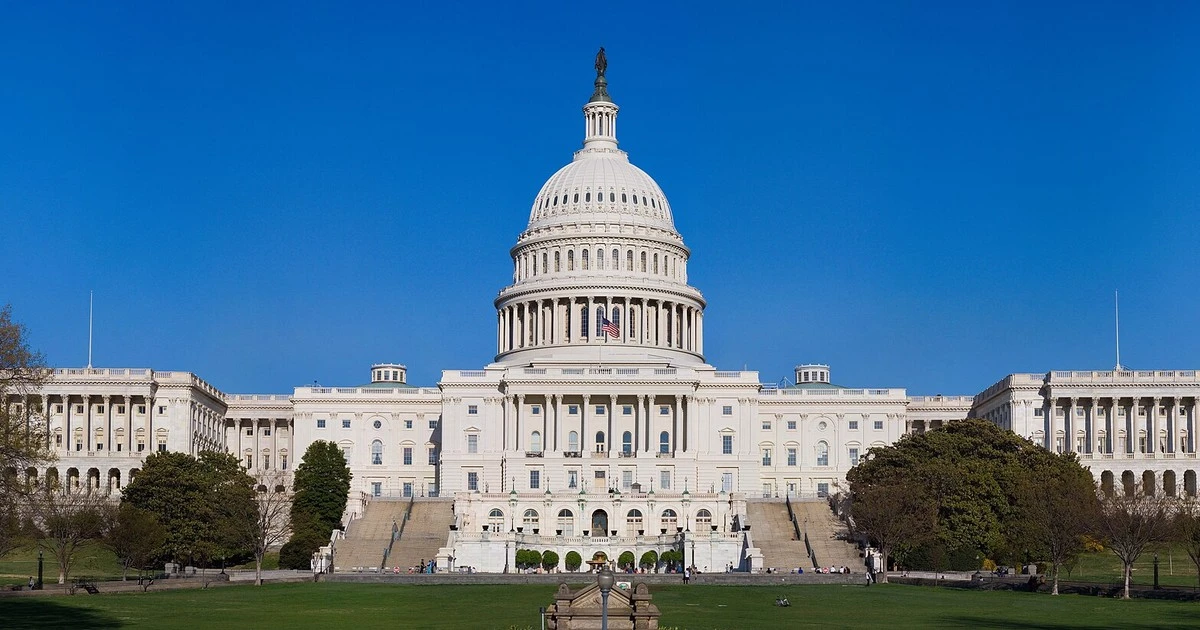
The 100 percent tariff India could face under a new congressional sanctions bill moved a step closer this week, as a House amendment naming ten countries as eligible for the penalty heads toward a floor vote, months after the Senate passed the underlying legislation by a lopsided 86-11 margin in August.
A memorial-named bill nears a House vote
The legislation, H.R. 10076, is titled the Lindsey O. Graham Sanctioning Russia and Iran Act of 2026 and mirrors Senate bill S.5025. It carries the name of the South Carolina Republican, who died on 12 July 2026 at the age of 71 following a sudden aortic dissection. The House version was introduced after his death as a memorial-named companion to the Senate text he had championed.
The House Rules Committee has advanced the bill, and multiple reports point to a floor vote this week. No roll call result has been confirmed as of Wednesday, 16 September 2026, and the House vote should not be treated as complete until one is reported.
How the 100 percent tariff India would work
An amendment from Representative Steny Hoyer, a Maryland Democrat, is central to the bill’s reach. It names ten countries, China, India, Turkey, Azerbaijan, Hungary, Slovakia, the United Arab Emirates, Singapore, Kazakhstan and Kyrgyzstan, as eligible for a presidential tariff of up to 100 percent on major purchasers of Russian energy. Eligibility is not the same as an automatic penalty. The tariff would take effect only if the bill becomes law and the president then chooses to invoke it against a named country’s imports.
What does it mean for India to be “eligible for” this tariff, rather than facing one outright?
Being named in the Hoyer amendment does not trigger a tariff automatically. It hands the president statutory authority to impose one, at a rate of up to 100 percent, at a time and in a form of the president’s choosing, on goods from a listed country judged to be a major buyer of Russian energy. Whether that authority is ever used, against which of the ten countries, and at what rate, remains a matter of presidential discretion even after the bill is signed into law. That discretion is exactly why the 100 percent tariff India faces is not yet guaranteed.
A second tariff, not a replacement
Any tariff imposed under this bill would sit alongside, not replace, the roughly 50 percent tariff the United States already imposed on Indian goods through executive action in August 2025 over New Delhi’s Russian oil purchases, itself a combination of two separate 25 percent measures. How the 100 percent tariff India could face under this new, congressionally authorised bill would interact with that existing executive tariff, whether it would stack on top of it, run alongside it, or require the White House to choose between the two authorities, is not addressed in the bill text or in any reporting found on the Hoyer amendment. That question remains open.
Russia remains India’s top oil supplier
Russia remains India’s largest supplier of crude oil. India’s imports of Russian crude totalled about 47 billion US dollars across the 2025-26 financial year, down from 56.87 billion US dollars the year before. That annual decline sits against a sharp rebound more recently. In the first quarter of the current financial year, April to June 2026, Russian crude imports ran to about 23.61 billion US dollars, up 55 percent year-on-year, out of total India-Russia merchandise trade of 26.82 billion US dollars for the quarter. That scale of trade is exactly why the 100 percent tariff India could face over Russian oil purchases carries real weight.
A threat India has faced before
This is not the first time Washington has threatened to penalise India over its ties to Moscow. In 2022, India faced the prospect of sanctions under the Countering America’s Adversaries Through Sanctions Act over its 5.4 billion US dollar purchase of Russia’s S-400 air defence system. The threat was never carried out. Congress resolved it through a legislative carve-out, a House amendment exempting India, and by August that year Washington had dropped the sanctions threat altogether. Commentary at the time concluded that the United States had accepted India could not be coerced away from its relationship with Russia.
What India said the last time this came up
India has previously responded to an earlier version of this pressure. In July 2025, when an earlier Senate sanctions proposal from Graham first surfaced, before his death, External Affairs Minister S. Jaishankar said India’s embassy and ambassador in Washington had been in direct contact with Graham’s office. Asked about the threat at the time, he said the two sides would “cross that bridge when we come to it, if we come to it.” That remark was made more than a year before this week’s House developments and was not a response to the Hoyer amendment or the current bill.
No business reaction yet
No reaction to this specific House bill or the Hoyer amendment has yet emerged from the Federation of Indian Chambers of Commerce and Industry, the Confederation of Indian Industry, the US-India Business Council or the Indian government. None could be found as of publication, and none should be assumed to be coming.
What comes next
Three points remain unresolved. The House vote itself has not been confirmed, despite the bill clearing the Rules Committee and reports pointing to a vote this week. If the House passes it, and it is reconciled with the Senate’s 86-11 text and signed into law, the tariff power against India and the nine other named countries becomes available to the president, not automatic. The 100 percent tariff India faces would need that signature first.
And even then, how it would sit alongside the tariff already imposed on India last year remains unaddressed in the public record. The 2022 stand-off over the S-400 purchase suggests threats of this kind have not always been carried through against India, but a repeat of that outcome here is not guaranteed and has not been confirmed either way.
What the 2022 stand-off suggests about this week’s vote
Has the House actually voted on this bill yet?
No. As of 16 September 2026, the House Rules Committee has advanced H.R. 10076 and a floor vote is expected this week, but no roll call result has been confirmed.
Would India be taxed at 100 percent automatically if the bill passes?
No. The Hoyer amendment makes India eligible for the 100 percent tariff India could face, but it does not impose one automatically. The president would have to choose to act.
How does this relate to the tariff the US already put on Indian goods?
It is separate. The roughly 50 percent tariff imposed in August 2025 came through executive action. This bill would create a distinct congressional authority, and how the two would interact if it becomes law and is invoked has not been addressed anywhere in the public record.
Has a threat like this stuck before?
Not against India. A near-identical threat in 2022, over the S-400 purchase, was resolved through a legislative carve-out and dropped entirely by August that year.