
India in the World
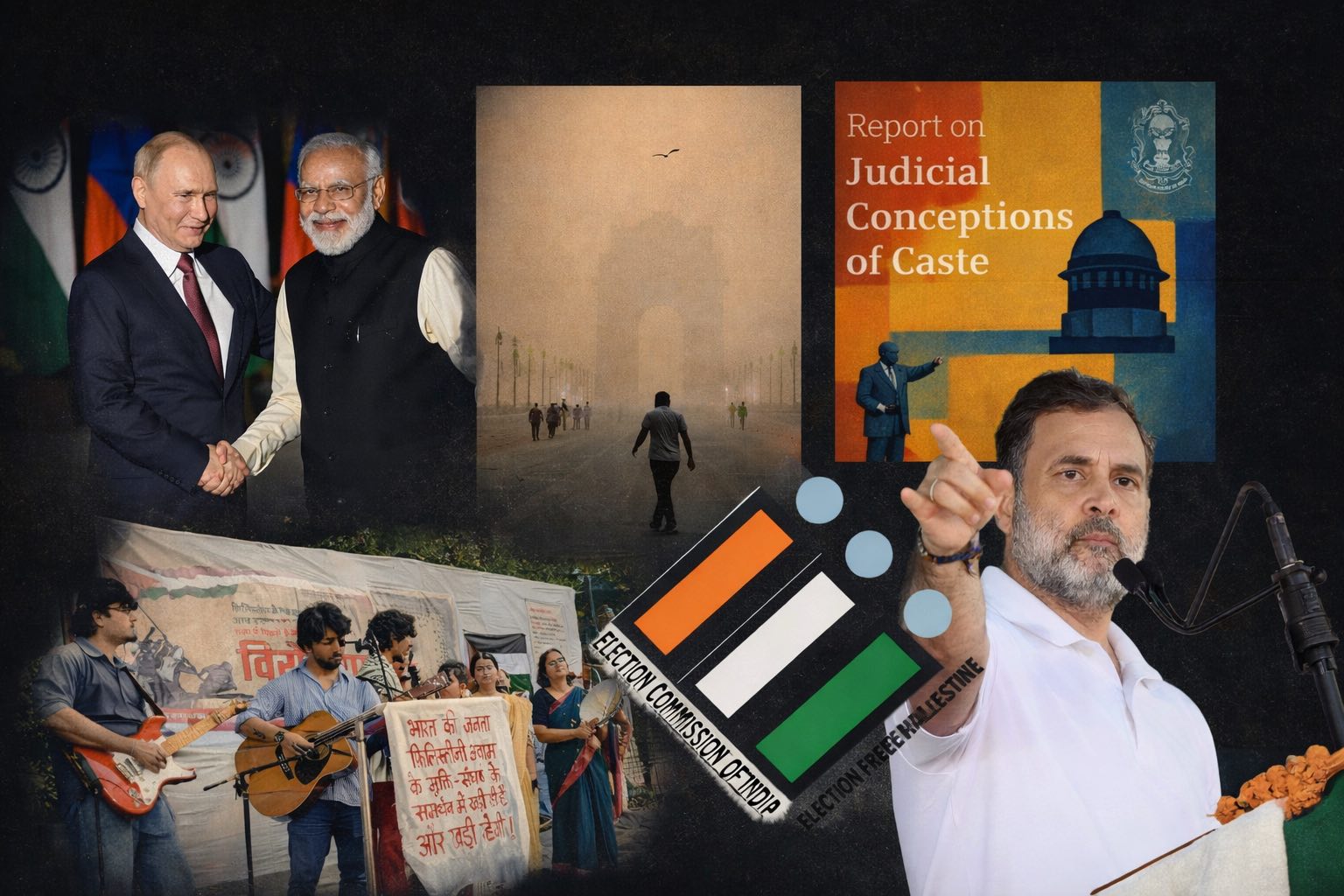
- On the 4th of December, Russian President Vladimir Putin arrived in India, where he was welcomed with a red carpet in a show of resilient ties between the two countries and was invited to the PM’s residence for a private dinner. Prime Minister Narendra Modi defined this relationship as a “guiding star” and the Russian leader promised “uninterrupted” energy supplies. The 23rd annual summit between the two countries, which marks 25 years of strategic partnership, came in a delicate moment, as a day before Putin’s arrival, India abstained from a UN General Assembly resolution demanding the return of Ukrainian children forcibly transferred by Moscow. Ahead of Putin’s visit, the envoys of Germany, France and the United Kingdom had jointly authored an op-ed criticising Russia for not seeking peace and noted that India had also called for a just settlement. The visit centred on economic diversification and ways to shield the partnership from external pressure. The surge is largely driven by Russia becoming India’s top source for foreign oil since the start of the Ukraine war. To bypass the banking sanctions, the two sides have moved away from the dollar. Putin noted that “national currencies” now account for 96% of commercial deals, supported by a network of special rupee Vostro accounts. Yet, this sharp increase has made India a specific target of US President Donald Trump’s tariffs for allegedly fuelling Russia’s war machine. Recently, two largest Russian oil majors were also sanctioned, leading Indian refiners to announce that they are not placing any new orders this month with them. Besides fossil fuels, civic nuclear cooperation is also part of the deals, together with an “Agreement on Temporary Labor Activity” and an “Agreement on Cooperation in Combating Illegal Migration”. The summit produced no major announcements on military platforms or hardware.
- On the 5th of December, India and Russia signed a five-year plan to bolster economic and trade ties, presumably a reaction to Washington’s punitive tariffs and sanctions regime, even as Prime Minister Modi conveyed to Putin that the war in Ukraine must be brought to an end through peaceful means. The focus of the meeting was squarely on economic cooperation and taking forward the roadmap on the “Development of Strategic Areas of India – Russia Economic Cooperation till 2030” that was launched during PM Modi’s visit to Moscow in 2024. To this end, they announced a “Labour Mobility Agreement” that will facilitate Indian skilled workers to work in Russia, where manpower shortages for three million jobs are expected by the end of the decade. The visit also explored mechanisms to balance trade by boosting Indian exports of Indian goods and services to Russia (agricultural products, manufacturing, medicines, etc.).
- On the 9th of December, India and the European Union said they were pushing to conclude a long-pending free trade agreement, even as the end-2025 deadline for finalising the deal appears increasingly difficult to meet. Indian Commerce Minister Piyush Goyal met with an EU delegation led by EU Trade Commissioner Maros Sefcovic to continue negotiations aimed at closing the deal. Talks have been ongoing since they were relaunched in 2022 and gained momentum after political leaders agreed earlier this year to fast-track negotiations. Despite the commitment on both sides, significant differences remain unresolved. Officials say progress has been uneven, with sticking points on tariffs, market access, and how to enforce sustainability commitments. Specific disagreements include EU demands for steep tariff cuts on products like cars, medical devices, wine and spirits and stronger intellectual property rules, while India wants duty-free access for labor-intensive goods and quicker recognition of its growing automobile and electronic industries. Once implemented, the agreement could boost bilateral trade, which reached about €120 billion in 2024.
- On the 18th of December, the Indian Defence Minister Rajnath Singh met Foreign Minister of the Netherlands David Van Weel in Delhi to discuss a range of bilateral security and defence issue, including priority areas for co-development and co-production of defence equipment. In a statement, the Ministry of Defence said the two nations reaffirmed their commitment to enhance military-to-military cooperation, with focus on developing defence cooperation as a key pillar of the strategic partnership. It also stated that the discussions highlighted the shared commitment of India and the Netherlands to a free, open, inclusive and rule-based Indo-Pacific region. They emphasized the need for connecting the defence industries from both nations, especially in the field of niche technology. Defence Minister Singh said people-to-people ties between the two countries are very strong with a large Indian diaspora in the Netherlands serving as a living bridge and strengthening the bonds of friendship.
- Bangladesh has temporarily suspended all consular and visa services at its High Commission in New Delhi and its Assistant High Commission in Agartala, saying the move is due to security concerns. Notices at both diplomatic missions state that these services are stopped “until further notice”. The decision follows the protests staged on the 20th of December by Hindu nationalist groups targeting Bangladeshi diplomatic facilities, sparked by the lynching of a Hindu man in Bangladesh on the 18th of December. On the 21st of December, India’s Ministry of External Affairs said there was no attempt to create a security situation, adding that police dispersed the group within minutes. He said the slogans were raised “in protests against the horrendous killing of Dipu Chandra Das in Mymensingh, while also calling for the protection of all minorities in Bangladesh”. Bangladesh’s foreign affairs adviser Touhid Hossain, however, questioned how protesters were able to enter what he described as a secure diplomatic zone.
Civil society, human rights defenders, and journalists
- On the 3rd of December, hundreds of students, activists and common citizens assembled at Jantar Mantar to protest Delhi’s deadly air pollution. Speaking to journalists, protesters explained how air quality in Delhi is continuously deteriorating, defining it a “state sponsored massacre”. The government tried to delegitimise such protests with mainstream media representing the protestors as “anti-nationals”. Protestors ask the government to admit the gravity of the situation and take action to solve the problem.
- On the 4th of December, the Bombay High Court granted bail to former Delhi University Professor Hany Babu, who has been booked for his alleged role in the Elgar Parishad-Bhima Koreagon conspiracy case. Babu was arrested in July 2020 by the National Investigation Agency (NIA) under the Unlawful Activities (Prevention) Act over alleged links to Maoists in the Bhima Koreagon case. Babu highlighted the fact that he has spent over 5 years and 2 months in prison without any trial. The Bombay High Court has so far granted bail to Rona Wilson and activist Sudhir Dhawale, Sudha Bharadwaj, while the Supreme Court has granted bail to P Varavara Rao on medical grounds, Shoma Sen, Vernon Gonsalves and Arun Ferreira on merits.
- On the 8th of December, after 15 days of detention, a Delhi court granted bail to 10 protesters accused in the Kartavya Path case, a protest organised on the 23rd of November in front of the India Gate against rising pollution. Demonstrators, mostly students, who gathered to demand meaningful government action against Delhi’s toxic air, were arrested by the police over allegations of pepper spray use and serious offences. In particular, the police registered two FIRs (one at Kartavya Path police station and one at the Parliament Street police station) under several provisions of the Bharatiya Nyaya Sanhita (BNS), including assault, contempt of public servants, disobedience to lawful orders, obstructing public servants, and other serious offences. Bail was denied to seven students for alleged connections with the Revolutionary Student Union (RSU), a banned revolutionary student organization in Andhra Pradesh and Telangana. In total, 23 students were arrested in late November with Delhi courts granting bail progressively. As of December 31st, all protesters have been granted bail.
- India observed Human Rights Day on the 10th of December under conditions that activists and journalists say represent the most comprehensive assault on civil liberties in the country’s democratic history. This past year has seen coordinated action across multiple fronts: raids on independent newsrooms, the blocking of platforms documenting communal violence, criminal cases filed against those expressing solidarity with Palestine, and financial strangulation of civil society organisations through regulatory mechanisms. One of the starkest examples of government censorship has been the blocking of independent documentation platforms without legal process or public justification. The most prominent case involved in Hindutva Watch, a research initiative that maintains a database tracking hate speech and religiously motivated violence across India. The platform was abruptly blocked within India’s borders, eliminating public access to one of the few systematic archives documenting the rise in majoritarian violence. Without accessible documentation, incidents of abuse become isolated anecdotes rather than patterns, and the experiences of survivors remain invisible to public consciousness. The assault on documentation comprised also traditional media, with a sustained campaign against independent newsrooms, who saw themselves victims of predawn raids, prolonged interrogation, confiscation of reporting equipment, frozen bank accounts, and criminal prosecution for coverage deemed unfavourable to authorities. Civil society groups have faced some of the most severe consequences, with cancellation of foreign funding licences under the Foreign Contribution Act (FCRA), raids by the Enforcement Directorate and Income Tax department, frozen bank accounts, and suspended operating licences. This highlights how India is a nation where the ability to speak freely is contested, access to information restricted, and the preservation of documented history requires active defence. On the same day, the Committee to Protect Journalist (CPJ) urged India to release all journalists so they can “return to their families and continue their work without fear of reprisal”. In a letter addressed to Prime Minister Narendra Modi and copied to Union Home Minister Amit Shah and Press Council of India chairperson Justice (retired) Ranjana Desai among others, CPJ noted that India’s “continued detention and harassment of journalists risks eroding” its “reputation as the world’s largest democracy and a leading voice of the Global South”.
Hate Crimes and Hate Speech against Minorities
- India recorded 209 cases of hate crimes targeting religious and social minorities in November 2025, according to a new report published by the Justice and Empowerment of Minorities (JEM). The findings highlight growing hostility and institutional bias amid rising concerns over democratic backsliding and minority safety. The report categorises into seven forms of hate-driven harm, with “Acts of Hate”, including verbal abuse, online intimidation and community-targeted slurs, constituting the largest share at 71 cases (34 percent). These incidents overwhelmingly affected Muslim communities, who remain the primary target of religiously motivated hostility in India. Observers say Dalits, Christians and Sikhs were also disproportionately represented among victims. Researchers say hostile media ecosystems have become a driving force in normalising violence and majoritarian rhetoric. Worryingly, the report documents 18 cases (8.6%) of state-sponsored discriminatory practices, including targeted administrative actions, evictions and punitive policies. Right groups say the numbers do not represent isolated incidents but a widening pattern of targeted violence, rising public impunity and a political climate that emboldens majoritarian aggression. Analysts also note that many cases go unreported or unresolved due to fear of retaliation and low trust in police accountability, suggesting the real scale may be significantly higher.
- On the 5th of December, Mohammad Athar Hussain, a cloth vendor from Gagan Dewan locality in Nalanda district, was allegedly tortured and lynched over his religious identity. On the 12th of December, he died at Pawapuri Hospital. The police registered a case on the 6th of December, based on a statement from Mr. Hussain’s wife. The complaint named ten people in the FIR and stated that they had lynched her husband on charge of theft. The Bihar police has subsequently arrested eight people in connection with the mob lynching. Mr. Hussain’ brother shared the detail of the incident with the media. He said that on the 5th of December, while he was returning home from work, his bicycle got punctured. On the way, he approached some people, asking about a shop to fix the bike nearby. The group of people asked his name and as soon as he revealed it, Mohammad Athar Hussain, they began hitting him with a burning piece of wood.
- On the 16th of December, a Bharatiya Janata Party (BJP) youth wing member from Gurugram named Shaurya Mishra was arrested by cyber-crime police for sharing a fabricated and inflammatory social media post claiming that a Hindu college student had been raped and murdered by her Muslim classmate, a story with no basis in fact. Mishra’s post used a collage of unrelated photos lifted from various online sources and falsely described a communal “love-murder” to stoke tensions and hatred. The Gurugram Police clarified that no such incident occurred, and after the post went viral and raised concerns about public order, they registered an FIR and detained Mishra under relevant sections of the law for spreading fake news, promoting enmity between groups and sharing obscene, misleading content. Authorities also noted that despite official warnings on the post that the claims were false, Mishra neither deleted nor corrected it, prompting further legal action.
- On the 16th of December, a 31-year-old migrant worker from Chhattisgarh named Ramnarayan Baghel was lynched to death by a mob in Palakkad, Kerala, that suspected him being a Bangladeshi national. Baghel had arrived in the area four days earlier in search of work and was staying with relatives when he allegedly lost his way and drew suspicion. The video of the assault was circulated online, and one of the attackers can be heard asking Baghel if he was a Bangladeshi. Kerala’s minister for local self-governments, M.B. Rajesh, condemned the killing, calling Baghel a “victim of Sangh Parivar’s hate politics”. Rajesh said that among Bhagel’s attackers were RSS – a right-wing Hindutva paramilitary organisation – workers who have faced criminal cases in the past. The minister said the violence was rooted in racial and communal prejudice, propagated by hate-driven politics. The state government assured support to the victim’s family, including compensation of at least ₹10 lakh.
- On the 18th of December, the Karnataka’s Legislative Assembly passed the Karnataka Hate Speech and Hate Crimes (Prevention) Bill, 2025, presenting it as a tool to curb hate speech. While framed as a protective measure, the Bill raises concerns about expanding state discretion, equipping the executive and police with broad powers to interpret, monitor, and restrict expression in the name of preserving “harmony”. A central issue lies in the Bill’s definition of “hate speech”, which includes any act that may create “disharmony” or “ill‑will”, which may enable the state to target legitimate criticism or dissent. Other provisions that raise concerns are Clause 4, which allows police officers and magistrates to take “preventive action” if they have “reason to believe” that a person is likely to commit an offence, and Clause 5, which targets directors of NGOs and civil society organisations, who will be considered responsible for any offence committed by their organisations.
Religious Freedoms and Minority Rights
- A new study conducted by the University of Melbourne in partnership with the Supreme Court of India found that, although the Court has often upheld Dalit rights through landmark constitutional rulings, its language has frequently reinforced caste hierarchies rather than challenged them. The study examines “constitution bench” rulings from 1950 to 2025, relevant because they set legal precedents, are taught in law schools, invoked in courtrooms and cited by later benches. A recurring pattern identified in the study is the tension between progressive legal outcomes and regressive language. Academics believe there was no intention from the judges to insult or demean Dalit people, but rather that they were genuinely unaware of the implications of the language they were using and what it revealed about their attitudes. The report suggests that the struggle for caste equality is not only fought in judgments and statues, but in metaphors, analogies and everyday linguistic choices.
- The Special Intensive Revision (SIR) exercise has intensified the worries of the Rajbanshis, a community of North Bengal who is already burdened by land loss, democratic decline and ongoing struggles for dignity and autonomy. People are amassed at SIR help centers, where they get warned of the possibility of being left out of the voter rolls. The problem is twofold: some still risk being wrongly targeted as illegal migrants and face deportation to Bangladesh. Moreover, almost every family has a migrant worker relative outside of West Bengal, and their name may vanish from the record if they are unable to go back in time for the SIR. These fears are compounded by the community’s historical decline in demographic share despite being the largest single Scheduled Caste group in the state. Recent floods and natural disasters have further worsened the situation by destroying essential documents such as voter IDs, Aadhaar cards and land records, making it difficult even for long-settled residents to prove their citizenship. As a result, what is framed as a routine administrative exercise has become a deeply unsettling experience, transforming voter list revision into a perceived threat to belonging and representation.
- On the 24th of November, the BBC published an article analysing how India’s voter roll revision affects migrant workers. On the 4th of November, the Election Commission started the Special Intensive Revision (SIR) to revise electoral rolls across 12 states and federally administered regions. The aim of the exercise, according to the EC, is to ensure that no eligible voter is excluded, and no ineligible name remains on the roll. To do so, pooling booth-level officers visit households across town and villages, collecting personal identity details and voter card numbers. This exercise, however, creates several problems for migrant workers. For most of them, an unplanned trip home translates into extra unplanned costs and lost wages. Some also worry about the gaps in their official documents, which is a common problem across rural areas in India. Another problem that might occur is SIR’s interference with the workers’ access to welfare schemes. And for those from West Bengal, which borders Bangladesh, there is an added fear of being asked to prove their citizenship, as this year saw hundreds of people arrested on suspicion of being illegal migrants. Under the guidelines, there is a provision to fill the SIR form online, but most migrant workers told BBC they were either unfamiliar with the process or found it “too risky”. A major worry is the time, as there are millions of migrant workers spread across India and not everyone might be able to travel back home twice: once for SIR and again for election. People say that, as most migrant workers lack job security, the SIR exercise is causing them stress. For this reason, help desk in big cities could be useful to assist these workers.
Internet and Technology
- On the 1st of December, different newspapers raised serious privacy concerns as the Ministry of Communications has directed smartphone makers to pre-install a government-owned cyber security app, Sanchar, Saathi, on all new devices, and ensure users cannot delete it. On the 2nd of December, presumably as a result of the backlash, the telecommunications minister said that the app was optional. However, the government has not withdrawn its official notification which mandates the installation and non-removal of the app. The government launched the Sanchar Saathi app in January, claiming the initiative is “for curbing misuse of telecom resources for cyber frauds and ensuring telecom cyber security”. The direction to pre-install the app, the government says, is “to check the genuineness of mobile handsets”. For devices already in the supply chain, manufacturers have been told to push the app through software updates. However, Apple policies say that the company pre-installs only its proprietary apps and they prohibit installation of any government or third-party app before sale of a smartphone. News agencies said that Apple does not comply with a mandate to preload its smartphones with a state-owned cyber security app and will convey its concerns to New Delhi. As of now, only Russia and presumably North Korea have attempted this level of intrusiveness on personal phones of all citizens. The Internet Freedom Foundation has written a statement that describes the direction as a “sharp and deeply worrying expansion of executive control over personal digital devices”.
- On the 3rd of December, in what appeared to be an overnight change of mind, the Department of Telecommunications (DoT) revoked its order directing phone makers to mandatorily pre-install the state-owned Sanchar Saathi application. The previous order had sparked controversies not just from digital rights group, but also around the impact on the business of big mobile phone makers such as Apple and Google. In fact, they were planning to push back against the order with concerns about privacy and system security. The Ministry of Telecommunications said that, given the Sanchar Saathi’s app increasing acceptance, the government has decided not to make the pre-installation mandatory for mobile manufacturers. Civil society activists had raised concerns about the potential implications on people’s privacy by mandating the app, since preloading it defeats the principles of choice and consent, while leaving the potential for “functional creeping” (a gradual expansion of a system beyond its original purpose) in the future.
- More than half of the takedown notices issued by the Indian government to X have been justified on the grounds of “disturbing public order”, according to disclosures made in court. The data became public in December 2025 though filings by the Ministry of Home Affairs (MHA) before the Delhi High Court. Between March 2024 and November 2025, the government issued 91 takedown notices covering 1,100 URLs. About 50% of these were flagged for public order concerns, making it the most common reason cited for content removal. A significant number of requests also related to content allegedly targeting political and public figures. Takedown activity increased during the 2024 Lok Sabha elections, when authorities said they acted against content they claimed was spreading misinformation or attempting to influence the electoral process. The notices were issued under Section 79(3)(b) of the Information Technology Act through the government’s Sahyog poartal. X has challenged this mechanism in court, arguing that content removals should instead follow the stricter procedure under Section 69A of the IT act, which includes clearer legal safeguards.
Political Parties
- On the 9th of December, during the Lok Sabha, leader of the opposition Rahul Gandhi accused the Election Commission of India (EC) of colluding with the ruling Bharatiya Janata Party (BJP) to manipulate elections and undermine Indian democracy. In his address during the electoral reform debate in Lok Sabha, Rahul Gandhi claimed that “everything in India that exists today has emerged from the vote, and the RSS is trying to capture that”. He claimed that the BJP and the ECI are working together to “steal the mandate” and control electoral outcomes, arguing that institutions meant to be independent are instead being used to favour the ruling party. Gandhi raised three pointed questions to the government and the poll body intended to highlight this alleged collusion, including concerns about changes in how election officials are selected and how the voter list revision is being handled. His speech framed the issue as a direct threat to democratic processes and the fairness of future elections.
- On the 12th of December, Leader of Opposition in the Lok Sabha Rahul Gandhi demanded a discussion in parliament on rising air pollution in Indian cities, saying that the government and the opposition can come together to address the “blanket of poisonous air” without blaming each other. In a rare show of consensus, Union parliamentary affairs minister Kiren Rijiju agreed to Gandhi’s suggestion and said that the matter had already been raised at the Business Advisory Committee (BAC) meeting and he would return to the House after a decision was taken. Rahul Gandhi explained how this is not an ideological issue; millions of children are getting lung disease, people are diagnosed with cancer, elders struggle to breathe. “We can show the country that we can work together to solve something critical”, he added.
Police and authorities
- The city of Haldwani in Uttarakhand was placed on high alert as the Supreme Court prepared to deliver a ruling in a contentious land encroachment case that could affect the lives of more than 4,300 families, about 50,000 residents, living on railway land in Banbhoolpura. Ahead of the anticipated verdict, hundreds of police officers, paramilitary personnel and security forces were deployed, sensitive areas cordoned off, and authorities placed 23 people in preventive detention with many others “bound down” to maintain order. The dispute stems from a PIL originally related to illegal sand mining, after which the Uttarakhand High Court in 2022 directed that residents be given a week to vacate the land claimed by Indian Railways, with force authorised thereafter for eviction. That order sparked significant panic and protests, leading the Supreme Court to stay the eviction directive on humanitarian grounds, noting that “50,000 people cannot be evicted overnight.” A joint survey in 2016–17 identified 4,365 alleged encroachments in the area, which includes three localities, Gafoor Basti, Dholak Basti and Indira Nagar, and accommodates schools, mosques, madrassas, a health centre and a temple. While residents say they have lived there for generations, the Railways cites historical notifications and land records to assert ownership. Locals and political representatives have expressed anxiety about the verdict, citing the absence of a relocation or rehabilitation plan despite earlier Supreme Court directions.
Judiciary
- Internal disagreements have surfaced within the Election Commission of India (ECI) over the Special Intensive Revision (SIR) of electoral rolls. Commissioner Sukhbir Singh Sandhu cautioned in a draft order that the exercise could unintentionally harass genuine voters, particularly the elderly, disabled, and poor, who may struggle to provide the required documents. In the final order, references to the Citizenship Act were removed, leaving only general constitutional provisions, which has raised concerns among critics that the SIR could function as a de facto citizenship verification process, similar to aspects of the NRC. The article also notes that the first phase of SIR in Bihar caused widespread confusion, logistical strain, and a drop in the number of registered voters, illustrating the very risks Sandhu had warned about. Many observers argue that the way the SIR is being implemented blurs the line between routine voter list updates and citizenship determination.
- On the 8th of December, the Union Governments opposed a plea by detained Ladakhi activist Sonam Wangchuck to virtually follow or access online the Supreme Court proceedings in his own case from inside Jodhpur Jail in Rajasthan, where he is being held under the National Security Act (NSA). During the hearing, solicitor general Tushar Mehta argued that granting such access would create an “unhealthy precedent” by prompting other “convicts” to demand similar allowances. Wangchuk’s counsel stressed that he was neither “accused” nor a “convict” as he has never been arrested or convicted in any case. His only request was to observe a proceeding that directly concerned “his fundamental right to personal liberty”. The government also rejected Wangchuck’s separate request to appear in the case via video conferencing from jail. His counsel, senior advocate Kapil Sibal, informed the bench that Wangchuck wished to join the proceedings electronically, but Mehta objected, reiterating that granting such access would obligate similar facilities for other detainees across the country. Wangchuck has been detained under the NSA since 26 September 2025, two days after protests in Ladakh over demands for statehood and Sixth Schedule protections turned violent, resulting in deaths and injuries. His wife, Gitanjali Angmo, filed a petition challenging his detention, arguing the order was based on outdated FIRs and speculative allegations with no legal or factual justification. The Supreme Court has scheduled further hearings on the matter.
- On the 23rd of December, the Delhi High Court suspended the jail term of expelled BJP leader Kuldeep Singh Sengar, who is serving life imprisonment after being convicted in the 2017 Unnao rape case, and was granted conditional bail. Sengar remained in jail in a separate case related to the custodial death of the survivor’s father. This crime was one of the most horrific in India in recent years. The survivor, who can’t be named under Indian laws, alleged that she had approached Sengar for a job in June 2017 and was kidnapped and raped for more than a week by him and others. The high court’s decision to free Sengar in the rape case was based on whether the assault could be considered “aggravated” or not. Under the POCSO Act (Protection of Children from Sexual Offences), a sexual assault is treated as aggravated, and therefore punished more severely, if it is committed by someone who holds a position of trust or authority. Sengar’s legal team argued that, although he was a legislator, elected representatives are not explicitly listed as “public servants” under the relevant provisions of the Act. The Delhi High Court accepted this interpretation. It held that since the offence could not be classified as aggravated assault, the applicable minimum sentence was seven year’s imprisonment, a term that Sengar had already completed. As a result, the court suspended his sentence and granted him bail, a decision that triggered nationwide outrage. On the 26th of December, the Central Bureau of Investigation (CBI) challenged the High Court’s order in the Supreme Court, arguing that Sengar, as an elected legislator, is a public servant holding a “constitutional position of trust and authority”. On the 28th of December, protests continued in Delhi, with protesters demanding the cancellation of Sengar’s bail. The survivor and her mother, along with social activists and several supporters, were present at the site.
Business & economy
- The Indian government has confirmed in a parliamentary reply that the state‑owned Life Insurance Corporation of India (LIC) has invested ₹48,284.62 crore in companies belonging to the Adani Group. This comes two months after reports suggested that the Modi government had quietly devised a $3.9 billion rescue plan for the financially stressed Adani conglomerate by funnelling LIC funds into the group. When asked by MPs Mohammed Jawed and Mahua Moitra for a full list of LIC’s private‑sector investments, the government declined, arguing that releasing a detailed list and could harm LIC’s operational interests.
- Adivasi communities in Chhattisgarh and Jharkhand have faced widespread land dispossession linked to power and mining projects backed by the ruling Bharatiya Janata Party (BJP) and the Adani Group. For several years, Adivasi lands and forests have been diverted for industrial use, resulting in widespread deforestation and displacement. Villagers allege that land acquisitions were carried out through forged documents, manipulated Gram Sabha resolutions, and coercive practices, undermining legal protections meant to safeguard Adivasi consent and self-governance. In Chhattisgarh, major Adani investments have intensified concerns over the loss of Adivasi land and livelihoods. Similar allegations have emerged in Godda, Jhardkhand, where a 1,6000 MW thermal power plant operates on land reportedly transferred through manipulated approvals, despite being located in a Scheduled Area. Opposition parties and activists claim these projects were facilited throigh highly concessional land deals and politically motivated decisions, especially ahead of elections. Protests by Adivasi communities have also occured in Madhya Pradesh, where coal mining projects involve large-scale forest diversion and forced evictions.
- In December, the Madhya Pradesh government fully withdrew its controversial land pooling scheme in Ujjain, scrapping four proposed town development plans liked to preparations for the 2028 Simhastha Kumbh after sustained opposition from farmers’ groups and political pressure. The Bharatiya Kisan Sangh (BKS), a farmers’ organisation affiliated with the RSS, had threatened large-scale protests, including an indefinite sit-in, arguing that the land pooling framework would lead to the permanent loss of fertile agricultural land for development. Earlier attempts by the government to modify rather than cancel the policy failed to satisfy farmers. The withdrawal marks a significant government climbdown, though officials may still need to revise their strategy for Ujjain’s development ahead of the festival.
- On the 22nd of December, protests broke out across Rajasthan in response to a new definition of the hills which could expose more than 90% of the 692‑kilometre stretch to mining and construction activities. Facing backlash, Union Environment Minister Bhupender Yadav specified that mining will be restricted to just 0.19% of the Aravalli hills, with no new leases approved until a comprehensive study is completed. Kavita Srivastava, national president of the human rights group People’s Union for Civil Liberties, commented that Rajasthan should file a review petition in the Supreme Court against the order, warning it could spell doom for the Aravalis.
Compilation by: Diaspora in Action for Human Rights and Democracy.