

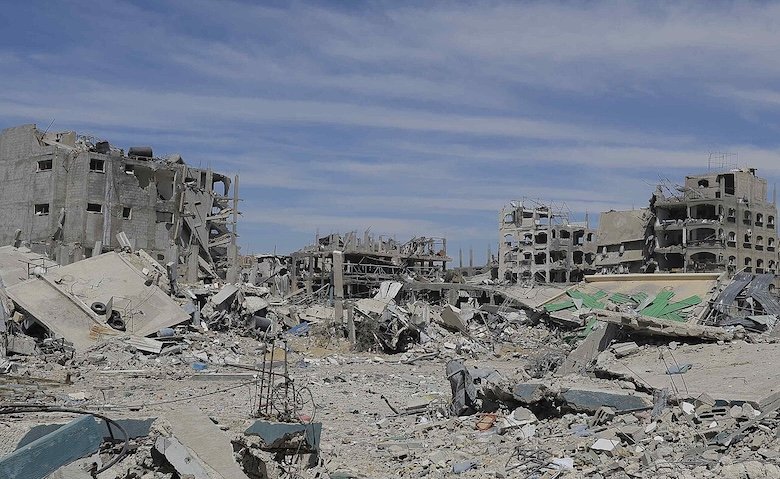
India continued supplying weapons, ammunition and military components to Israeli defence companies despite repeated warnings that the equipment could facilitate serious violations of international law in Gaza, a major new investigation by Amnesty International has found.
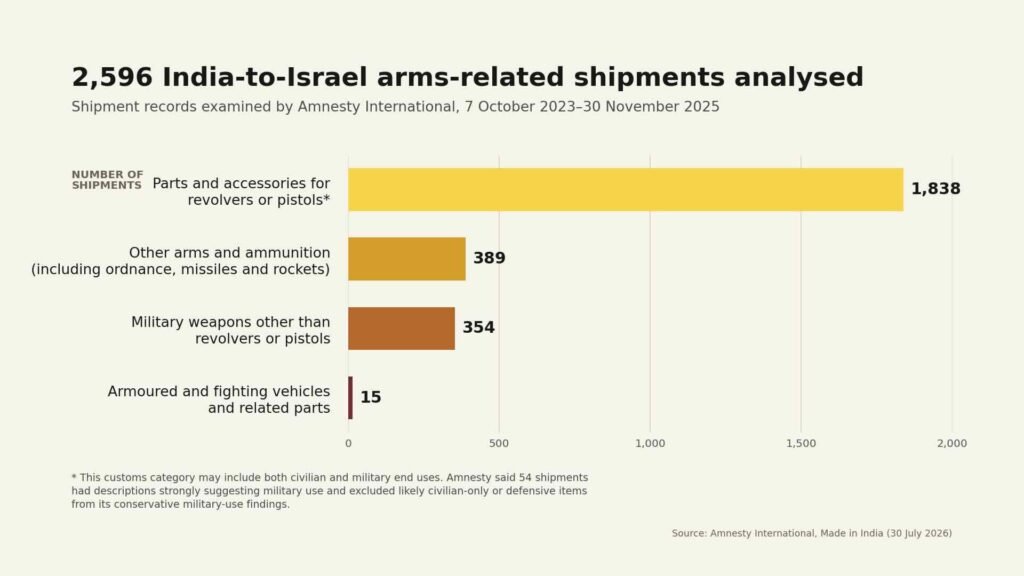
The 42-page report, Made in India: The Supply of Weapons and Ammunition to Israel, analyses 2,596 shipments sent from India to Israel between 7 October 2023 and 30 November 2025.
Amnesty said its investigators conservatively identified at least 390,516 parts for military-grade small arms, 564,970 components of explosive ordnance—including drone warheads and artillery-shell casings—and 298 military-vehicle components supplied to major Israeli companies with direct links to the Israeli military.
The shipments included components for Negev machine guns used by Israeli forces, 155mm high-explosive artillery shells, warheads for SkyStriker loitering munitions and launchers for 81mm mortars, according to the investigation.
Amnesty said the transfers exposed India to the risk of complicity in genocide, war crimes and crimes against humanity. Companies and their executives could also face civil or, in some circumstances, criminal liability if they knew their products were likely to be used in international crimes, the organisation warned. Read Amnesty International’s investigation.
“Our research reveals India’s continuing support to the Israeli military and defence sector despite the genocide in Gaza,” Amnesty International Secretary General Agnès Callamard said.
She called on the Indian government to immediately stop authorising weapons exports to Israel and ensure that companies operating under Indian jurisdiction did not contribute to crimes under international law.
State-owned companies among nine firms named
The investigation named nine Indian companies, three of which—Munitions India Limited, India Optel Limited and Advanced Weapons and Equipment India Limited—are wholly owned by the Indian government.
Amnesty argued that exports by those state-owned enterprises constituted transfers by the Indian state itself, directly engaging India’s obligations under international law.
The six private companies identified were PLR Systems Private Limited, Indo-MIM Private Limited, Kalyani Strategic Systems Limited, Alpha Elsec Defence and Aerospace Systems Private Limited, Ashoka Manufacturing Private Limited and Premier Explosives Limited.
Among the report’s findings:
- PLR Systems, a joint venture between Adani Defence and Aerospace and Israel Weapon Industries, allegedly exported 10,571 feeding-tray components for Negev machine guns and 33,033 bolt carriers and related assemblies.
- Indo-MIM allegedly exported more than 59,637 automatic sears, which enable firearms to fire automatically, to Israel Weapon Industries. Two additional consignments recorded only by weight may have contained approximately 4,000 more.
- Kalyani Strategic Systems, a Bharat Forge subsidiary, allegedly supplied 9,600 bodies for 155mm artillery rounds to Israel Military Industries, which is owned by Elbit Systems.
- State-owned Munitions India allegedly supplied Elbit Systems with 1,000 completed 155mm high-explosive artillery shells.
- Alpha Elsec, a joint venture involving Elbit Systems, allegedly shipped 122 five-kilogram explosive warheads in December 2025. Amnesty linked the specifications to the SkyStriker loitering munition, debris from which has been documented in Khan Younis.
- State-owned Advanced Weapons and Equipment India allegedly exported 120 launchers for 81mm mortars to Elbit Systems in February 2024.
- India Optel allegedly supplied 178 sensors and electronic components to Semiconductor Devices Limited, an Israeli defence company founded as a joint venture between Elbit Systems and Rafael Advanced Defense Systems.
Amnesty also identified exports of armoured-vehicle components and specialised metals used in military ammunition.
The recipients included Elbit Systems, Rafael Advanced Defense Systems, Israel Aerospace Industries and Israel Weapon Industries—all major suppliers to Israel’s military.
Findings likely underestimate actual trade
Of the 2,596 shipments analysed, Amnesty determined that at least 788 contained items intended for military use. The larger dataset also included goods capable of both civilian and military use.
The organisation said it systematically excluded consignments that might have been for civilian purposes, as well as components likely intended solely for anti-missile defence systems. It also excluded data that could not be reconciled or independently verified.
As a result, Amnesty said the reported quantities were likely to substantially underestimate the scale of India’s contribution to Israel’s military supply chain.
India’s arms-export system was criticised in the report as opaque and structurally inadequate. Amnesty found no explicit requirement for exporters to conduct human-rights due diligence and said the confidential licensing process provided little public accountability.
India is not a party to the Arms Trade Treaty, having abstained when it was adopted in 2013.
Warnings preceded many shipments
Amnesty argued that Indian authorities knew, or should have known, of the risk that exported weapons could facilitate international crimes.
In January 2024, the International Court of Justice ordered provisional measures in South Africa’s genocide case against Israel. The orders did not determine the merits of the case, but placed states on notice of a serious risk to rights protected under the Genocide Convention. The ICJ subsequently issued additional provisional measures.
The UN Human Rights Council called on states in April 2024 to stop transferring arms and military equipment to Israel to prevent further violations of international humanitarian and human-rights law. India abstained from that resolution.
Despite those warnings, India and Israel signed a new memorandum of understanding on defence cooperation in November 2025, intended to deepen collaboration in areas including technology, development and production, according to India’s Ministry of Defence.
Amnesty said India’s continuing authorisation of exports could violate its obligation under the Genocide Convention to employ all means reasonably available to prevent genocide, as well as its obligation under the Geneva Conventions to ensure respect for international humanitarian law.
Amnesty, the UN Independent International Commission of Inquiry on the Occupied Palestinian Territory and several Palestinian, Israeli and international human-rights organisations have concluded that Israel’s conduct in Gaza constitutes genocide. Israel has rejected the accusation, calling the genocide charge “false and outrageous” and maintaining that its military campaign is directed against Hamas. Israel’s official position.
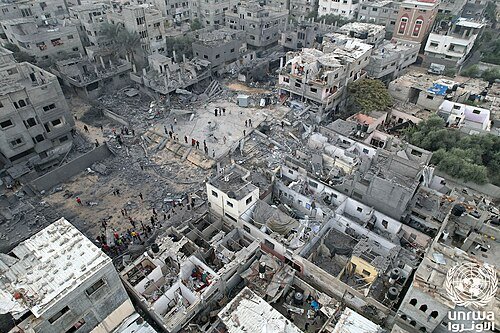
According to figures provided by Gaza’s Ministry of Health and cited by the UN humanitarian agency OCHA, more than 73,000 Palestinians had been killed and over 173,500 injured by 1 July 2026. OCHA notes that figures not yet verified by the UN are attributed to their original source. OCHA’s Gaza impact snapshot.
Supreme Court declined to halt exports
In September 2024, India’s Supreme Court dismissed a petition brought by 24 former civil servants, scholars and activists seeking the cancellation of existing export licences and a halt to new permissions for arms transfers to Israel.
The court said granting the requested orders would require it to make findings about the conduct of another sovereign state and could force Indian companies to breach international contracts. It held that decisions on export restrictions belonged to the executive, which must consider economic, geopolitical and other interests. Read the Supreme Court judgment.
Amnesty said the ruling left no effective judicial avenue for challenging arms-export licences and placed responsibility squarely on the Indian government.
The organisation wrote to the Indian government and all nine companies named in its investigation during June and July 2026. It said none had responded by the time the report was published on 30 July.
Amnesty has called on India to impose a comprehensive arms embargo on Israel, end defence-related business with Elbit Systems, Rafael and Israel Aerospace Industries, reform its export-control system and accede to the Arms Trade Treaty.
It also urged Indian authorities to investigate the nine named companies and responsible officers for possible civil or criminal responsibility where there were reasonable grounds to believe their conduct may have contributed to crimes in Gaza.