

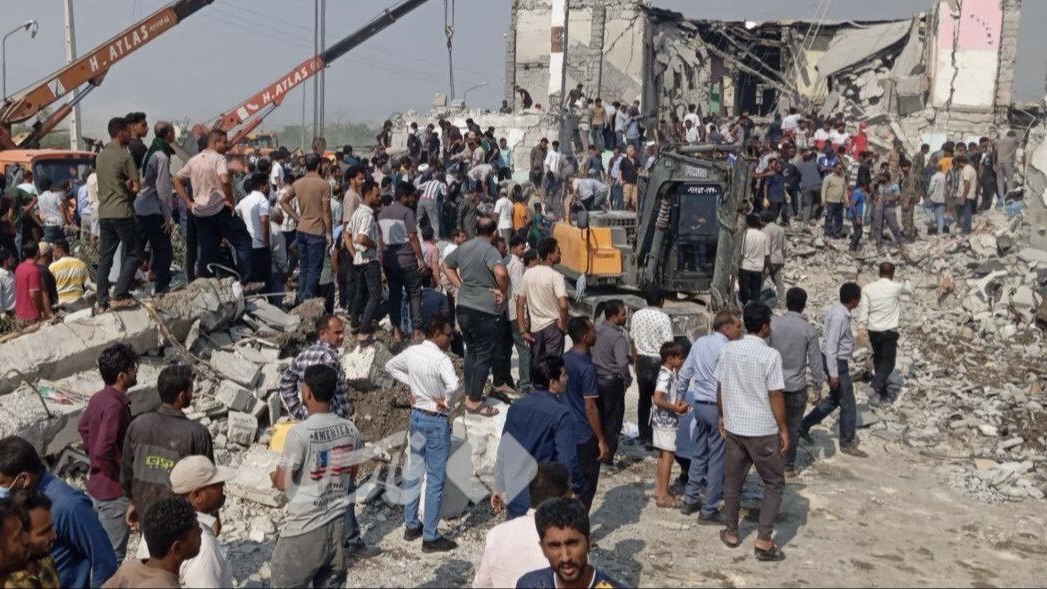
Having just formed the Board of Peace, the United States and Israel have begun the board’s first war, this time on Iran. The US-Israel attack launched early on February 28, on sites in Iran has already caused devastation, including the deaths of at least 60 little girls from an elementary school in Minab (Hormozgan Province), and dozens of others across the country. The latest estimates put the death toll at 201.
In fact, the attack on Iran on February 28, 2026 was not the first strike on Iran. Israel and the US have been in a state of war against Iran for decades, either through direct military strikes (as recently as June 2025) or through the long hybrid war imposed on Iran (including punitive US sanctions that began in 1996).
Neither Israel nor the United States value the United Nations Charter, whose Article 2 has been routinely violated by both (neither face condemnation in the UN Security Council, which impacts the reputation of the Charter). For decades now, the United States and its Global North allies have demonized Iran, treating its politics as terrorism and its government as dictatorial. They have essentially created the argument that attempts to overthrow the government in Tehran is legitimate even if it is a violation of the UN Charter.
However, US President Donald Trump does not have the appetite for a long war. He has a short-attention span and seeks quick victories that can quickly give him a headline for the news cycle, like the kidnapping of Venezuela’s President Nicolás Maduro on January 3, 2026 and the executive order to prevent the sale of oil to Cuba on January 30. Trump hoped for a similar outcome: the assassination of Iran’s Supreme Leader Ayatollah Ali Khamenei or the president, Masoud Pezeshkian. But the US-Israel strikes failed to kill either senior Iranian leader. Despite Trump’s call for regime change, so far there has been no change in political leaders. The Israeli-US strike in June 2025 did not destroy Iran’s nuclear energy project, nor did the strike in February 2026 destroy Iran’s political system.
The history of unilateral strikes on Iran
The current Israeli-US military campaign against Iran began in January 2020, when the United States assassinated General Qasem Soleimani in Baghdad, Iraq. General Soleimani was the head of the Islamic Revolutionary Guards Corps (IRGC) and the architect of the “axis of resistance”, which was the first circle of defense for Iran: the idea that if the United States or Israel tried to strike Iran, then Iran’s close allies from Hezbollah (Lebanon) to Ansar Allah (Yemen) would strike both Israel and the US military bases.
The killing of Soleimani was a blow to the axis, but three years later, a set of events disrupted the axis that he had designed. Israel’s genocide against Palestine weakened Hamas, its war in Lebanon disrupted Hezbollah (especially the assassination of Sayyed Hassan Nasrallah in September 2024), and the installation of the former al-Qaeda leader Ahmed al-Sharaa as President of Syria in January 2025 led to the removal of all pro-Palestinian groups from the country. Having relatively broken this first circle of defense, Israel and the United States struck Iran in June 2025 with some Iranian retaliation but nothing like it would have been had Hezbollah and the factions in Syria been able to strike Israel.
After the June 2025 strike on Iran’s nuclear energy facilities, Israel and the United States said that it had destroyed Iran’s capacity to build nuclear weapons. If this was the case, then why didn’t the United States make a deal with Iran and withdraw sanctions? After all, Iranian President Masoud Pezeshkian came to power in 2024 with a “reform” agenda, formed a cabinet that included a neoliberal finance minister (Ali Madanizadeh), and therefore showed that he was willing to be concessionary to Western-controlled institutions such as the International Monetary Fund (IMF) and the International Atomic Energy Agency (IAEA). However, in response to US-Israeli strikes in June 2025, Iran ended its inspection agreements that it had made with the IAEA. The IMF noted the weak outlook for Iran but saw that this was largely due to US-imposed sanctions and – from its perspective – the subsidy regime in Iran.
Madanizadeh placated the IMF by pushing an austerity budget. This created the social distress that was inflamed when the US intervened to disrupt the Iranian rial and deepen the economic crisis in the country. Sections of the bazaaris or the small traders in Iran, the base of the Islamic Republic, who felt the blunt of the inflation turned against the government but not necessarily against the system itself. The US and Israel, as well as the foreign media, deliberately misread the situation, proclaiming erroneously that the people of Iran are against their republic. Despite the attempt by Pezeshkian’s government to meet the United States on its terms, the US and Israel pushed for an unrealistic maximalist end game, namely the overthrow of the Islamic Republic.
Nuclear program or regime change?
That maximalist end game was driven by the demand by the US and Israel that Iran end an illusionary nuclear weapons program. Iran has, for decades, said that it is not interested in nuclear weapons, and Pezeshkian’s Foreign Minister Abbas Araghchi repeatedly has said that Iran will never develop such weapons. Iran has said that it is willing to discuss the issue of its nuclear program, but that it will not put the reality of the Islamic Republic on the table (or the actuality of the December 1979 Iranian Constitution). Hours before the February 2026 attack, the negotiations between Iran and the United States had come close to an agreement. Oman’s Foreign Minister Sayyid Badr bin Hamad al-Busaidi said that a “peace deal is within our reach” and that Iran agreed to zero stockpiling. In other words, Iran had been ready to accept most of the demands being imposed upon it against its nuclear energy program. That the US-Israel attacked in this context shows that Iran’s nuclear project is not the real issue for Washington and Tel Aviv. They are committed to regime change.
If the US-Israeli war is a war for regime change then it is a war that cannot be won without enormous loss of human life. There are nearly 100 million people in Iran, a large section of whom will defend their republic till their death. A few days after the US kidnapped Maduro, Khamenei went to the shrine of his predecessor Grand Ayatollah Seyyed Ruhollah Musavi Khomeini (1900-1989). It is interesting that Khamenei is now 89 years old, the same age as Khomeini when he died. It was almost as if he went to see his old friend and mentor to take courage from him. An assassination of Khamenei will not demoralize the supporters of the Islamic Republic but will instead lift him into the sphere of martyrdom and strengthen their resolve. With Iran, the US and Israel have no realistic strategy to win. They might kill large numbers of people. But they cannot break the will of Iranian patriotism.
First published by Peoples Dispatch.