Checked 27 November 2026. Two ballot papers, different numbering instructions and a closing time that matters: the Victoria election 2026 is a practical test as well as a political choice for someone voting in the state for the first time. Election-day voting centres open from 8 am to 6 pm on Saturday 28 November, in Victorian local time.
The immediate job is to check eligibility, locate a current voting centre and read the instructions on both papers. Indian heritage, an Australian job or permanent residence does not by itself establish a right to vote in a state election. For newly naturalised citizens, the distinction between immigration status and electoral eligibility deserves particular attention.
Who can vote in the Victoria election 2026?
Enrolment generally requires Australian citizenship, age 18 or over and residence at the Victorian address for at least a month. The Victorian Electoral Commission also identifies a limited historical eligibility category for certain British subjects. Check its enrolment guidance against your circumstances rather than assuming that a rule for council elections also applies to Parliament.
An Indian citizen holding an Australian temporary visa or permanent residence should not assume that paying taxes makes them eligible. Conversely, a naturalised Australian should not assume that their citizenship ceremony automatically resolved every electoral record. Use the commission’s enrolment checker, especially after a move or name change.
Enrolment and voting are compulsory for eligible people under the applicable rules. If a record does not appear as expected, ask the commission or a voting-centre official what to do. A missing online search result should prompt a check, rather than an immediate decision to stay home.
Can you still vote if you missed the enrolment deadline?
The commission says eligible people who missed the close of roll can still attend a voting centre and obtain help to enrol and vote. The roll closed at 8 pm on 3 November, but its current election notice describes the process for people who missed it.
For that situation, the notice lists an Australian passport, Australian driver licence or learner permit, a council rates notice in the person’s name, or an appropriate utility bill in their name and at their current address where the other listed documents are unavailable. These are instructions for the relevant enrolment situation, not a claim that every enrolled voter must produce a passport.
If you were already enrolled and moved before the close of roll without updating the record, the commission says to vote for the old address at this election. Explain the circumstances to staff. Do not submit a second vote because you are uncertain whether an earlier one used the correct district.
Does a how-to-vote card decide your preferences?
No. It shows how a candidate or group would like you to number the ballot. The commission describes it as a suggestion. Your ballot remains your choice, and the official instructions determine how to complete it correctly.
Where can you vote on Saturday?
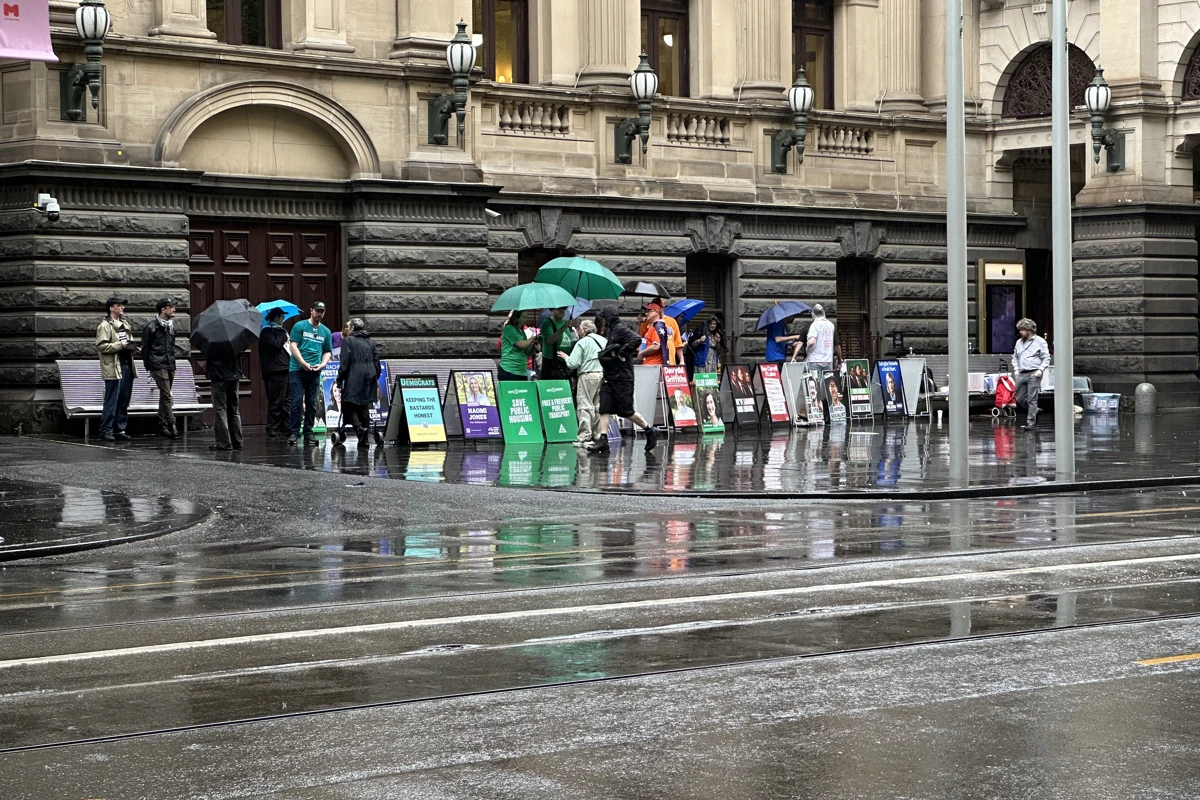
You can vote at any voting centre in Victoria, although voting outside your district may take longer. Use the commission’s current election venue locator, linked from its election page, rather than travelling to a school or hall simply because it hosted an earlier election.
Check the exact address, opening hours and accessibility information before leaving. A familiar building can have a different entrance, and a venue used for a federal election need not be a state-election venue. Keep the official location details available on your phone, particularly if another family member is driving.
The practical plan should allow time for travel, a queue and help with the ballot if needed. The published closing time is 6 pm. Avoid building the trip around arriving at the last possible minute, especially if work, public transport or care responsibilities could delay you.
How do the two ballot papers differ?
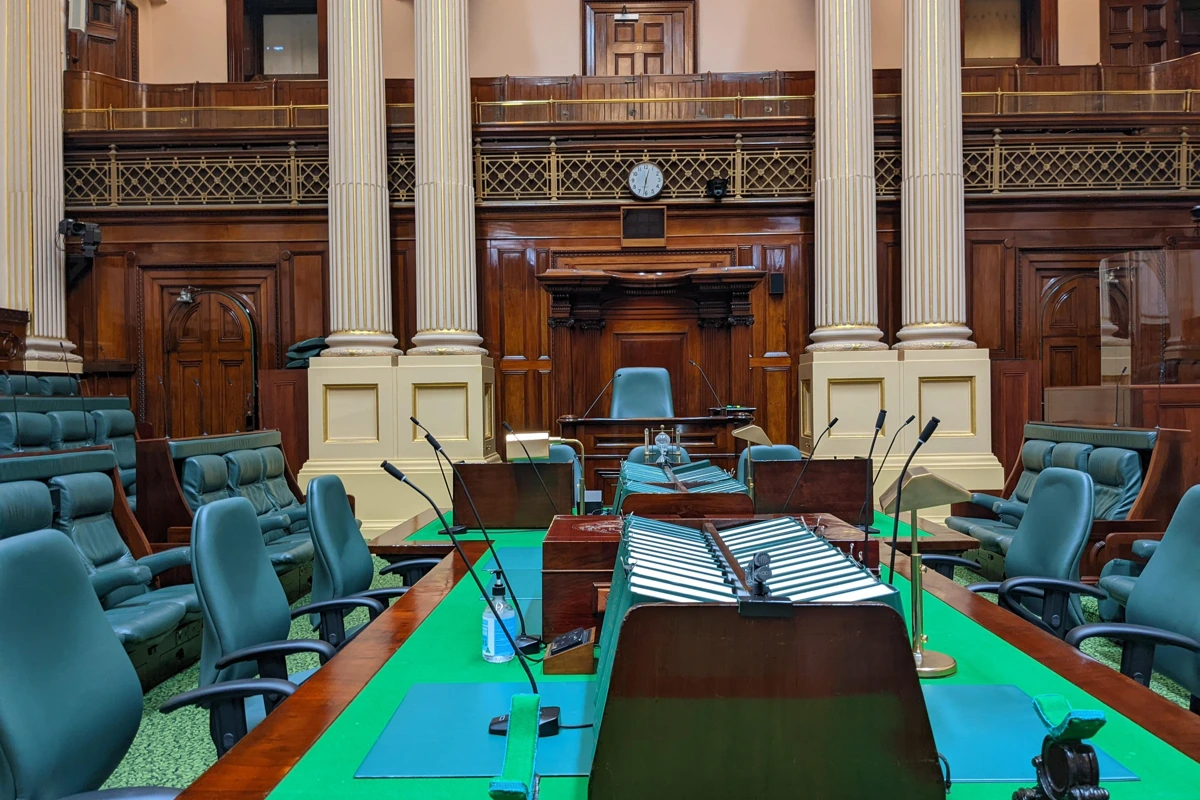
The small lower-house paper requires a number in every box; the larger upper-house paper requires at least five numbered preferences, whether voting above or below the line. Those are the commission’s current state-ballot instructions, which should take priority over someone’s recollection of an earlier election.
| Ballot | What the voter chooses | Numbering instruction |
|---|---|---|
| Legislative Assembly, lower house | A representative for the district | Number every box in preference order, beginning with 1 |
| Legislative Council, above the line | Groups of candidates | Number at least five boxes; do not also number below the line |
| Legislative Council, below the line | Individual candidates | Number at least five boxes; do not also number above the line |
Use numbers rather than ticks or crosses. Start at one and work carefully through your order of preference, avoiding repeated or missing numbers. The commission says you may continue numbering more than five candidates below the line. Ask staff if an instruction is unclear before placing the paper in the ballot box.
The state Parliament’s election explanation distinguishes the two chambers: voters choose one Assembly member for their district and five Council members for their region. That institutional difference explains why the papers look different. It does not require voters to select five separate lower-house candidates as equal first choices.
Our earlier reporting on political participation among Chinese and South Asian Australians addresses barriers to participation. A practical response at the voting centre is to ask for clear procedural help while keeping the political decision your own.
What language and accessibility help is available?
Voting centres provide information in languages other than English, and voters can ask a friend, carer, trusted person or election staff for assistance. The commission’s voting-options page says centres carry information in 29 languages as well as English.
Language assistance should make the process understandable. It should not become pressure to support a particular candidate. Before accepting help, say whether you need the written instructions explained, assistance with marking the paper, or directions through the venue. These are different requests.
The commission lists wheelchair-height or table-top voting screens, magnifying sheets and maxi pencils at election-day centres. Its venue locator includes accessibility ratings. Someone who needs a particular entrance or physical adjustment should check the individual venue rather than relying solely on the presence of a general accessibility symbol.
Telephone-assisted voting is available to eligible people who are blind, have low vision or have a motor impairment and need help casting their vote. It is not a general replacement for attending because a queue is inconvenient. Follow the commission’s eligibility and registration instructions for that service.
What if your postal ballot has not arrived?
The commission advises people whose postal ballot pack has not arrived by Friday 27 November to vote in person, or by phone if eligible. New postal-vote applications have closed. A request for a postal ballot is not itself a completed vote.
If you already have the pack, follow its instructions for completing and returning it, including the 6 pm election-day requirement identified by the commission. Its voting-options page also explains dropping completed papers at a voting centre. Read the declaration and return instructions carefully rather than putting loose papers into an ordinary envelope.
People interstate or overseas should use the commission’s dedicated away-from-Victoria guidance. Do not assume that a Saturday service available in Melbourne is also operating at an interstate electoral office. The relevant location’s arrangements determine what is possible.
How should families check election messages before forwarding them?
Verify procedural claims against the electoral commission, particularly claims about eligibility, cancelled venues, ballot numbering and deadlines. A party’s argument about policy is different from an official instruction about whether or how a person can vote.
When a message arrives in a community chat, check its date and original link. An old instruction can look current when separated from its publication year. A screenshot can omit the qualification underneath a headline. Forwarding the current official page is more useful than adding another unverified summary to the group.
The same caution applies to claims about an entire community’s political preferences. Our earlier suburb-level analysis of diaspora voting concerned a previous federal election. It is not a prediction of how any individual Indian-Australian will vote in this state contest.
What if you make a mistake on the ballot?
Ask election staff for help before submitting it. The commission’s ballot guidance includes a section on mistakes, and its EasyVote guide explains correcting an error. Do not assume that an accidental mark means you should leave without voting. Tell staff what happened and follow their instructions. A first-time voter can take time to read the paper without allowing a campaign volunteer or another voter to decide the preferences. The distinction between help with the procedure and control over the political choice applies throughout the visit.
What should you check before leaving home?
Confirm your enrolment situation, choose a current voting centre, check its accessibility details and allow time before 6 pm Victorian time on 28 November. Bring any documents required for your particular enrolment issue, together with the official instructions you need to refer to.
Discuss transport and care arrangements with anyone accompanying you, but keep each person’s ballot choice separate. A household can share a journey without sharing a political preference. Someone who has voted before can explain where to queue while leaving election staff to resolve uncertainty about the formality of a ballot.
Once voting closes, follow the commission’s published counting information and results. Early figures and campaign claims are not the final declaration. For a first-time voter, the immediate success is simpler: an eligible person reaches the right service, understands both papers and casts their own vote correctly.