In a dramatic escalation of trade tensions, US President Donald Trump has ordered a 50% tariff on Indian imports in retaliation for India’s continued purchase of discounted oil from Russia — a move Delhi has slammed as “unfair, unjustified and unreasonable”.
The executive order, which adds an additional 25% duty to an existing 25% tariff, comes into effect on 27 August. It targets key Indian exports such as textiles, auto parts, gems and jewellery — sectors that provide millions of jobs across India. Electronics and pharmaceuticals are exempt for now.
India’s foreign ministry said it was “extremely unfortunate” that the US was penalising actions taken by “several other countries… in their own national interest”, and vowed to “take all actions necessary to protect its national interests”.
The tariff hike, announced days after US envoy Steve Witkoff visited Moscow for peace talks, underscores Trump’s increasing willingness to impose secondary sanctions to undermine Russian trade globally. Speaking at the White House, the president warned “this is just the start… You’re going to see a lot more”.
Trump also accused India of indirectly “funding Russia’s war machine” and dismissed concerns about global energy security, claiming Delhi doesn’t “care how many people in Ukraine are being killed”.
From ‘great friends’ to bitter fallout
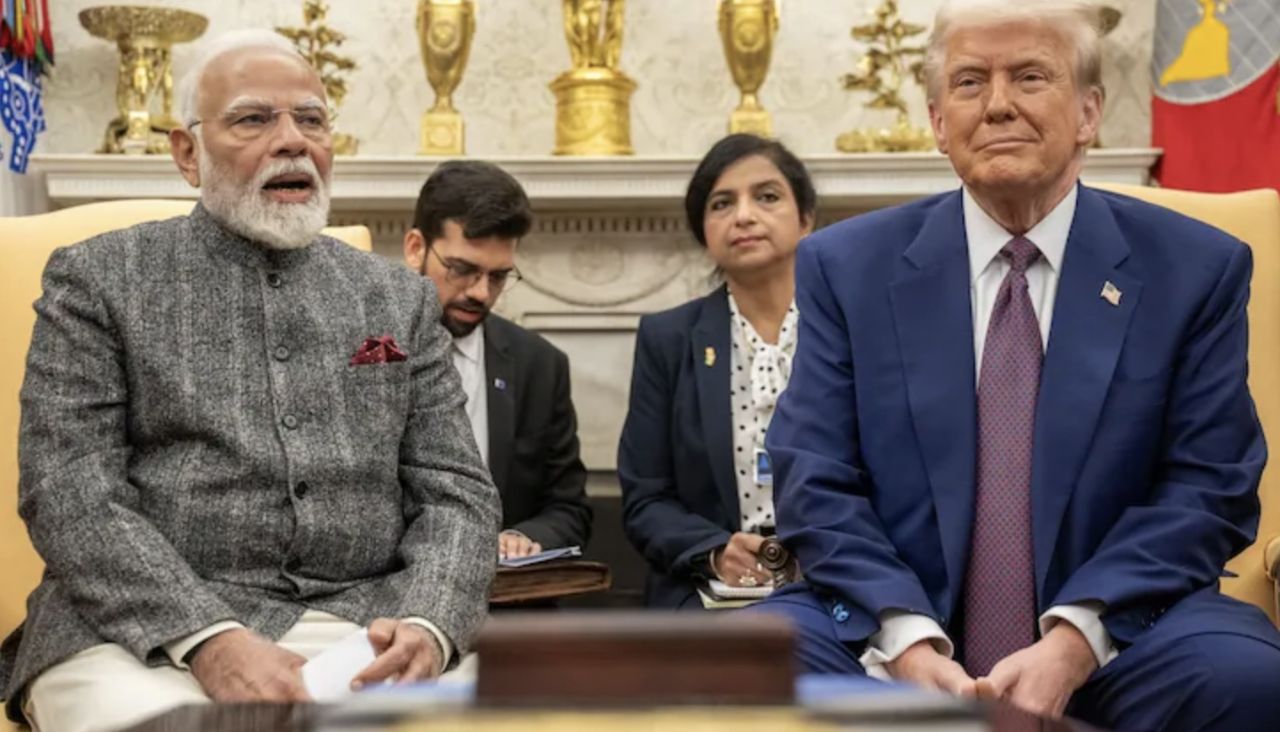
Just months ago, Indian Prime Minister Narendra Modi was among the first world leaders to visit Washington during Trump’s second term, with both leaders pledging to double bilateral trade to US$500 billion by 2030.
But ties have since unravelled rapidly. Trump recently called India’s economy “dead” and revived threats of penalising India for its membership in the BRICS grouping alongside China and Russia. His repeated references to Pakistan as a partner — and claims that the US mediated in India-Pakistan ceasefires — have also irked New Delhi.
Last week, the White House welcomed Pakistan’s army chief and offered the country a preferential tariff rate and an oil exploration deal — a move Indian analysts called “galling” and “deeply provocative”.
Despite this, India has so far avoided retaliatory action, hoping diplomacy could de-escalate tensions. But with elections approaching in both countries, political pressures are growing. “This is a Catch-22 for Delhi,” said analyst Michael Kugelman. “It must avoid appearing weak while keeping doors open for trade negotiations.”
Trade at risk, trust eroded
Industry bodies warn the tariffs could slash Indian exports to the US by up to 50%. The Federation of Indian Export Organisations called the move “extremely shocking”. According to the Global Trade Research Initiative, over half of India’s US-bound exports are now at risk.
India argues its pivot to Russian oil was prompted by western redirection of energy supplies after the Ukraine war broke out — a move initially encouraged by Washington to stabilise global energy markets. Russia now supplies more than a third of India’s crude oil, compared to less than 1% in 2021.
The diplomatic rift marks a reversal of two decades of strengthening ties, underpinned by bipartisan consensus and shared interests in technology, defence and the Indo-Pacific.
Yet observers say the fundamentals remain strong. “There’s a lot of trust baked into this relationship,” Kugelman said. “But because of the extent of the current malaise, it could take a long time to rebuild.”
Anand Mahindra: Seize opportunity in crisis
Indian business leader Anand Mahindra offered a strategic perspective on the unfolding crisis, writing on X:
“The ‘law of unintended consequences’ seems to be operating stealthily in the prevailing tariff war unleashed by the U.S… Shouldn’t India too seize this moment to shape a virtuous consequence for itself?”
Mahindra urged the Indian government to radically improve the ease of doing business through a genuine single-window clearance system and unleash tourism as a foreign exchange engine. He concluded:
“We cannot fault others for putting their nations first. But we should be moved to make our own nation greater than ever.”
Outlook uncertain
While cooperation continues in sectors like space, IT and defence — most notably a recent joint satellite launch — analysts warn that meaningful trade negotiations are unlikely under a climate of public mistrust and political brinkmanship.
Delhi has drawn red lines on sensitive sectors like agriculture and dairy, but the US continues to push for broader access. Former Indian ambassador Jitendra Nath Misra believes Trump’s harsh rhetoric may be a negotiating tactic — but one with high risks.
For now, India walks a tightrope between economic pragmatism and domestic political pressure. Whether the two democracies can reset course — or spiral further into a tariff war — may shape the trajectory of one of the world’s most consequential partnerships.