The untold story of the enduring friendship between Anzac and India, forged amidst the hardships of Gallipoli in 1915, took center stage at the Australia India Institute’s Anzac Day gathering on on Monday in Melbourne.
Professor Peter Stanley, a renowned Australian military historian from UNSW, illuminated lesser-known aspects of the military alliance between Australia and India, enriching the event with insightful revelations.
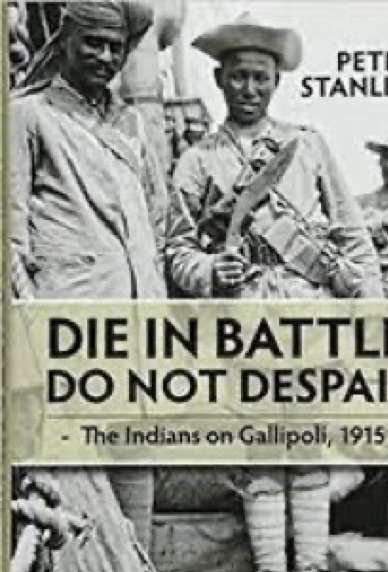
Professor Stanley, the keynote speaker, had undertaken the first study of the Indian Army’s part in the Gallipoli campaign in his book Die in Battle, Do not Despair.
Professor Stanley keynote address focussed on the friendship formed under fire and on the forgotten contributions of the Indian force to Australia’s national story as they “served alongside the ANZACs in the trenches for the whole Gallipoli campaign, defending the frontline against the Turkish attacks for the first few weeks, and then supporting t he ANZAC advances in periods for the rest of the campaigns”. Professor Stanley noted that this all happened during the time of ‘White Australia Policy”.
Present among the guests were Dr Sushil Kumar, Consul General of India, and the Honourable Tim Watts MP, Assistant Minister for Foreign Affairs, with Minister Watts sharing his insights on the enduring bonds between Australia and India.
“Although small by comparison to the Australians, the Indian troops’ efforts were valiant and played a critical role in some of the major offensives of the campaign,” said Lisa Singh, CEO of the Australia India Institute.
As part of the event, a special ‘Bahadur’ painting was officially unveiled and presented to the Institute. It was painted by mouth by Leading Air Craftsman Mridul Ghosh, a resident of the Paraplegic Centre for Armed Forces in Pune, India. The painting features a portrait of Australian Private John Kilpatrick Simpson, whose courageous efforts to rescue wounded soldiers for medical attention earned him the nickname ‘Bahadur – bravest of the brave’ from the Indian troops.
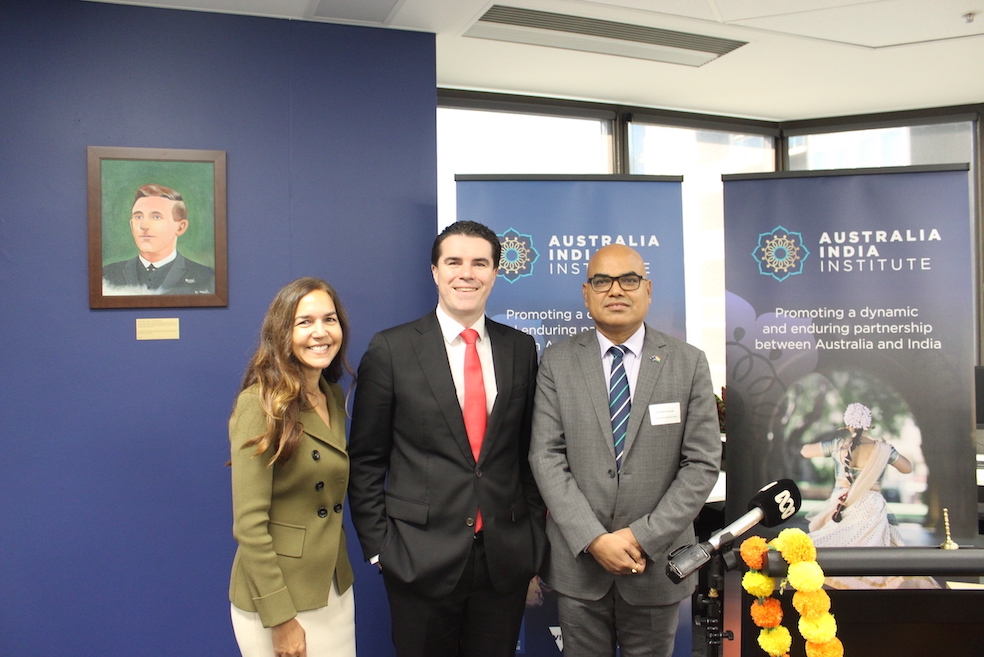
“This event is not just about commemorating the past; it’s about reclaiming untold stories and presenting them in a new light,” said Lisa Singh, CEO of the Australia India Institute.
“By shining a spotlight on the contributions of Indian troops at Gallipoli, we aim to commemorate the breadth of the Australia-India friendship that first formed on the battlefield,” she added.
Mark Trayling, grandson of Indian Navy Commander JB “Dick” Simmons spoke about his meeting with the painter Mr Ghosh in Pune and requesting him to commission the ‘Bahadur’ painting.
Tim Watts, MP, Assistant Minister for Foreign Affairs and Trade, also spoke on the occasion.