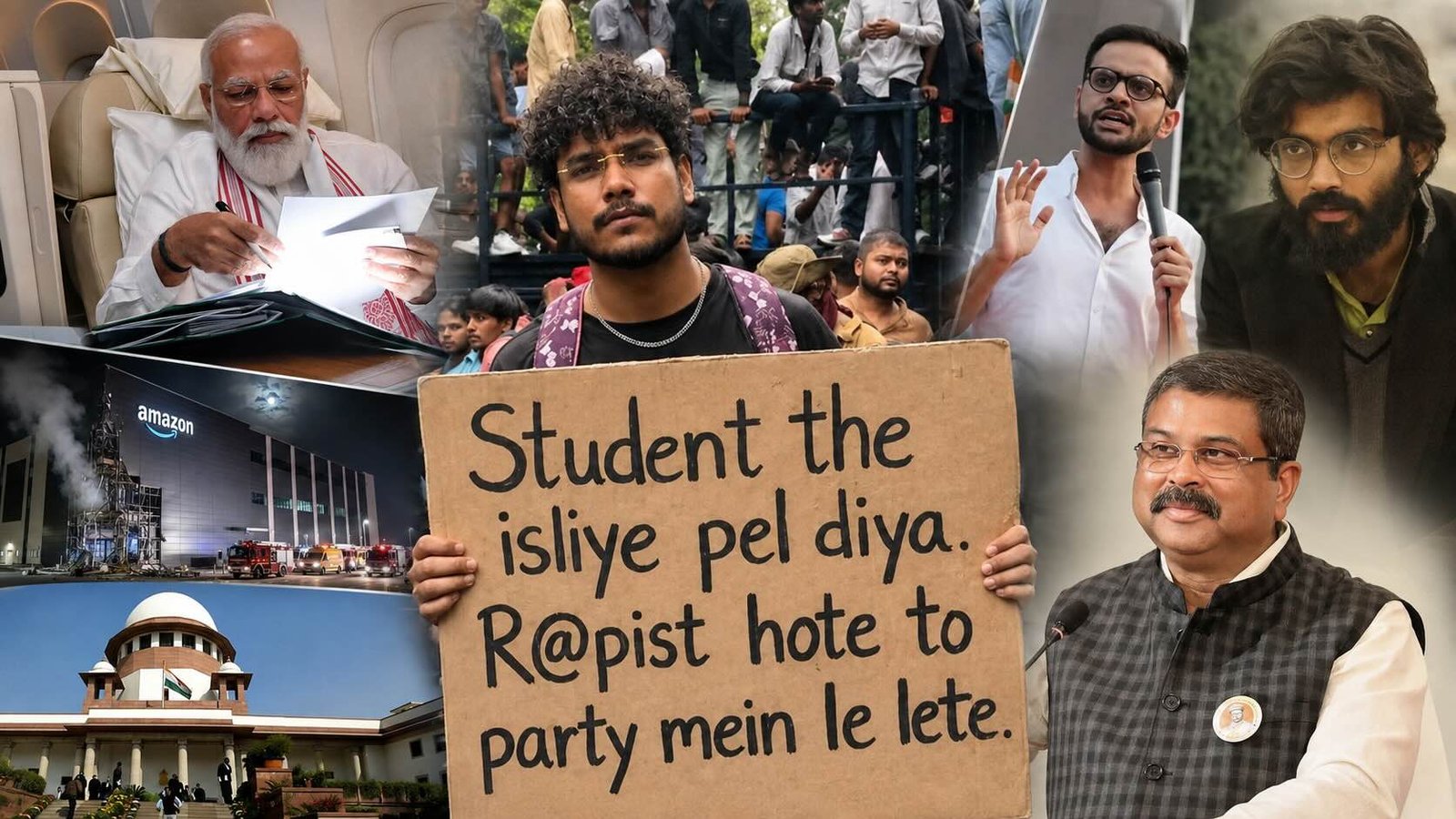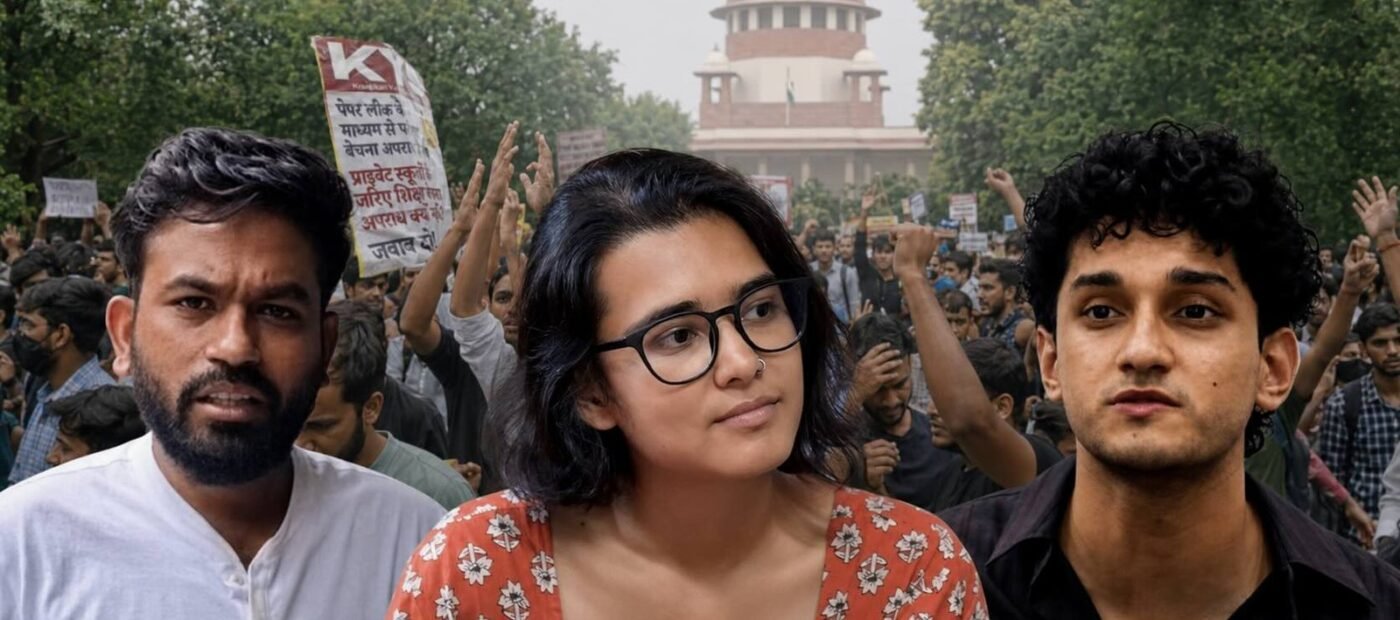
The Supreme Court of India has quashed criminal cases registered across the country over the July student protests led by the Cockroach Janta Party (CJP), while barring police from filing fresh cases connected with the same demonstrations.
Invoking its extraordinary powers under Article 142 of the Constitution, the Court ordered on Tuesday that first information reports relating to protests held between July 20 and 25 must not be pursued or investigated and should be treated as closed for all purposes.
Following the ruling and renewed assurances from the Union government, the CJP withdrew its call for another protest march in Delhi on September 5.
A three-judge bench comprising Chief Justice of India Surya Kant and Justices Joymalya Bagchi and V Mohana said it was intervening to protect the future prospects of young people who had participated in the demonstrations in good faith.
“Keeping in view the future prospects of the young protesters who came to participate in a peaceful protest to raise their voice in support of certain demands, we deem it appropriate to invoke our powers under Article 142 of the Constitution in order to do complete justice between the parties,” the Court said, according to Bar & Bench.
The protests, held in Delhi and several states, were organised amid anger over paper leaks and other failures affecting students, including the cancellation of NEET-UG 2026. Demonstrators had demanded accountability and the resignation of then Union Education Minister Dharmendra Pradhan.
Relief extended across India
The Union government and the governments of Bihar, Maharashtra, West Bengal and Assam had formally asked the Supreme Court to quash cases registered within their jurisdictions.
The Court, however, extended the protection nationwide. It ruled that comparable FIRs registered in any other state or Union Territory must also be considered closed, even where the relevant government had not filed an application before the Court.
No state or Union Territory may register a fresh FIR over incidents connected with the protests between July 20 and 25, the bench directed.
The judges clarified that the ruling arose from the particular circumstances of the dispute and should not be treated as a precedent in other cases.
The use of Article 142 allowed the Supreme Court to bypass procedural difficulties involved in withdrawing cases after FIRs had already been registered. Ordinarily, police would have been required to complete their processes and submit closure reports, which individual magistrates could accept or reject.
During an earlier hearing, the Court had indicated that it was prepared to use its constitutional authority to bring the cases to an end.
Limited exception for 2,873 people
The Court created a limited exception allowing Delhi Police to register a single fresh FIR involving 2,873 people whom the government says have serious criminal antecedents.
Any investigation under that FIR must be confined to allegations of bodily harm or destruction of property during the demonstrations. Those affected will retain their right to challenge the case and pursue other remedies available under the law.
Solicitor General Tushar Mehta had told the Court that the exception was intended to cover people suspected of serious criminal activity rather than peaceful protesters generally.
The government’s allegations against the 2,873 people have not been tested or established in court.
CJP spokesperson and co-convenor Saurav Das said people who had genuinely committed grave crimes should be investigated and prosecuted, but questioned why people described by authorities as “hardened criminals” had allegedly been allowed to move freely in society.
Compensation policy ordered
The Supreme Court also recorded the Union government’s commitment to compensate families of students who died by suicide following the cancellation of NEET-UG 2026.
It directed the government to formulate a nationwide compensation policy, in consultation with states and Union Territories, within three months. Compensation must then be provided to the affected families.
The policy is expected to create a regular mechanism for handling comparable compensation claims across India, rather than limiting relief to the families involved in the present litigation.
The commitments on withdrawing cases, preventing new FIRs and compensating bereaved families arose from an agreement reached between the government and CJP representatives following the July agitation.
Mehta told the Court that the government stood by those assurances.
September march withdrawn
The CJP had announced another march in Delhi for September 5 amid concerns that the commitments made to protesters would not be implemented.
After the Solicitor General reiterated the government’s position and the Supreme Court gave the assurances judicial force, Das formally withdrew the march on behalf of the organisation.
“In view of the positive assurances of the Government of India and the judicial sanctity bestowed upon them today, and in view of the order being passed by this Court, the CJP deems it appropriate to withdraw the call for the march on September 5 and looks forward to compliance with today’s order,” he told the bench, as reported by LiveLaw.
Das thanked the Court as well as lawyers for both sides for helping achieve the resolution. The CJP described the ruling as a historic victory for the young people who took part in the demonstrations.
The petitions before the Supreme Court also raised allegations that police had used excessive force against protesters in Delhi and Bihar. The quashing of the FIRs removes the immediate threat of prosecution for most participants, but implementation of the compensation scheme and the tightly defined Delhi Police exception will remain subject to scrutiny.