
India in the World
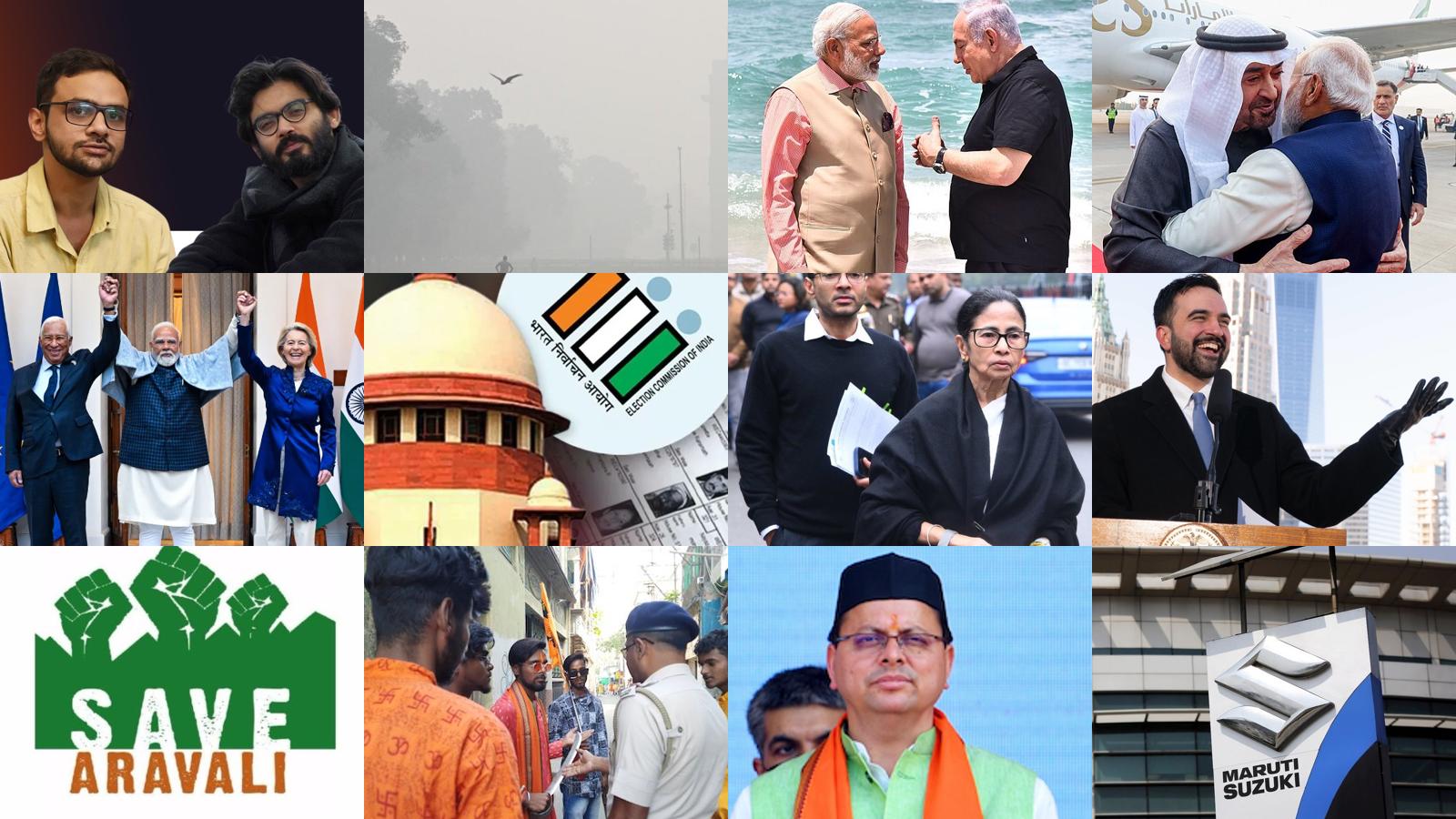
- On the 7th of January, Prime Minister Narendra Modi spoke with Israeli Prime Minister Benjamin Netanyahu to discuss ways to further strengthen the strategic partnership between India and Israel. In a post on X, Modi wrote “Glad to speak with my friend, Prime Minister Benjamin Netanyahu and convey New Year greetings to him and the people of Israel”. The call marked Modi and Netanyahu’s first direct engagement in 2026, continuing a series of conversations since late 2025 centered on the West Asia crisis and the Gaza Peace Plan, with Modi reaffirming support for peace initiatives and Netanyahu underscoring India’s diplomatic backing.
- Diaspora in Action for Human Rights and Democracy (DAHRD) has urged the Indian government to reaffirm its commitment to international law, peace and solidarity by unequivocally condemning the US military attack in Venezuela. On the 4th of January, India released a statement that expressed “deep concern” but avoided naming Washington or condemning the military strikes that seized the Latin American leader. DAHRD defined this response as “unconvincing” and “half-hearted”, saying that it raises serious questions about the erosion of India’s historic moral leadership. Ritumbra Manuvie, Co-founder and executive director of DAHRD, said that “the latest event in Venezuela constitutes a new, blatant, and illegal act of aggression against a sovereign state, regardless of one’s opinion of the Caracas government,” and that such a weak response from India raises serious questions about its willingness to uphold the very principles it has long claimed to defend. DAHRD emphasized that as a founding BRICS member and a leading voice in the Global South, India occupies a unique and moral position in today’s international order. For this reason, the condemnation is not only a moral imperative but a strategic necessity for solidarity, credibility and cohesion within the BRICS itself. “India must once again assume its historic role, not as a passive observer, but as a global leader capable of condemning aggression wherever it occurs, regardless of the actors involved,” it added.
- In the first days of January, Indian families have been left unable to contact relatives in Iran following a near-total internet and telecom shutdown imposed by Iranian authorities amid nationwide protests. The blackout has affected thousands of Indians in the country, including students, workers and pilgrims, cutting off access to messaging apps, calls and even landlines in some areas. India’s Ministry of External Affairs issued advisories urging citizens to avoid protests and remain cautious, while the Indian Embassy in Tehran said it was working to verify the safety of nationals and reported that students at several universities were safe. Despite these assurances, families in India have expressed anxiety over the lack of information, with some calling for evacuation as communication disruptions persist.
- On the 12th of January, German Chancellor Friedrich Merz made his first official visit to India, meeting Prime Minister Narendra Modi for discussions aimed at strengthening economic and strategic cooperation. The two leaders met with CEOs in Ahmedabad to discuss expanding cooperation across trade, investment, technology, renewable energy, and strategic sectors. Their talks emphasized deepening collaboration through new Memorandums of Understanding and the creation of an India‑Germany Centre of Excellence to promote joint innovation and technological advancement, while also reviewing ongoing partnerships in education, skills, defense, security, research and sustainable development.
- On the 19th of January, United Arab Emirates (UAE) President Sheikh Mohamed bin Zayed Al Nahyan spent three hours in New Delhi, during which the two nations signed a letter of intent to establish a framework for strategic defence partnership. The trip marked Sheikh Mohamed’s fourth visit to India, reciprocating PM Modi’s seven visits to the Emirate. Five documents were exchanged and seven announcements made during this visit, covering defence, space, energy, food security and investment. Billed as top outcome, the strategic defence partnership letter of intent aims to expand cooperation in counter-terrorism, maritime security, cyber security, defence industrial collaboration, advanced technologies and special forces training, with the two sides set to negotiate a Framework Agreement.
- On the 26th of January, India and the EU have finalized a free trade agreement, celebrated by European Commission President Ursula von der Leyen as the “mother of all deals.” The pact significantly opens India’s market to EU’s Member States, especially in manufacturing and services with easier access for European products as cars, wine, and industrial products. The deal is expected to sharply reduce tariffs on 96.6% of goods traded by value (particularly on iron and steel, plastics, chemicals, machinery, and pharmaceuticals) and to double EU exports to India by 2032, saving EU companies around €4bn (£3.5bn) in duties annually. The agreement is part of a broader cooperation package announced during a summit in Delhi on the 27th of January, coming at a moment when the EU and India both face economic pressure from Donald Trump’s tariff threats and China’s economic influence. Major highlights of the deal include emphasis on technology collaboration, cooperation across the entire tech value chain- from research and innovation to business adoption- and joint work in semiconductors, AI, quantum technologies, 6G, clean tech, and cybersecurity. Both sides have also concluded a mobility agreement designed to make it easier for Indian students, workers, and professionals to move across all 27 EU member states, at a moment when the United States is raising costs and tightening requirements for H‑1B and other visa categories used by Indian nationals. Commenting on the deal, von der Leyen said that “Europe and India are making history today […]. We have created a free trade zone of 2 billion people, with both sides set to benefit.” The agreement marked a new milestone in EU–India relations, but failed to protect democratic institutions, the rule of law, and respect for human rights.
Civil society, human rights defenders, and journalists
- On the 5th of January, the Enforcement Directorate (ED) conducted searches at the homes and offices of veteran climate activists Harjeet Singh and Sanjay Vashist, both prominent figures in climate policy advocacy, especially for the Global South. The action, officially tied to alleged violations of the Foreign Exchange Management Act (FEMA) over foreign funding received by Singh’s NGO Satat Sampada, occurred months after the arrest of another climate activist, Sonam Wangchuk, by the National Investigation Agency. The ED stated it had received intelligence at the COP30 climate summit in Brazil suggesting that some climate activists were undermining India’s positions on key issues such as fossil fuel use. Officers anonymously quoted suggested this prompted scrutiny of Singh’s foreign funding. During this investigation, Singh was briefly arrested by the Uttar Pradesh excise department over liquor bottles found at his residence and was granted bail. ED allegations include that Satat Sampada received roughly ₹6 crore in foreign remittances covertly, purportedly to promote the Fossil Fuel Non‑Proliferation Treaty (FF‑NPT) agenda within India. The ED claims this initiative, though framed as climate advocacy, could expose India to legal challenges internationally and “severely compromise the nation’s energy security and economic development” by advocating for the accelerated phase‑out of fossil fuels. Singh’s NGO denied the allegations as “baseless, biased, and misleading,” asserting that his international travel and climate work were professional and focused on representing developing countries’ concerns. Meanwhile, ED officials said that other climate activists or organisations whose campaigns may be seen as hostile to India’s energy security are also being examined.
- On the 5th of January, the Supreme Court denied bail to student activists Umar Khalid and Sharjeel Imam, who have spent more than five years in pre-trial detention in relation to the so-called “larger conspiracy” case arising from the 2020 Delhi riots. At the same time, the top court granted bail to human rights defenders Meeran Haider, Gulfisha Fatima, Shifa Ur Rehman, Shadab Ahmed and Saleem Khan, also booked under the Unlawful Activities (Prevention) Act (UAPA) with the prosecution alleging they were among the “masterminds” behind the riots against the discriminatory Citizenship Amendment Act (CAA). Umar Khalid and Sharjeel Imam were denied bail primarily because the Supreme Court considered them to hold a “central and formative role” distinguishing them from other co-accused who were granted bail. The court found a prima facie case under anti-terror laws (UAPA) and ruled that their prolonged pre-trial detention and trial delays did not automatically justify bail. Additionally, the court imposed exceptionally restrictive conditions for future bail applications, allowing them to reapply only after the prosecution completes the examination of protected witnesses or after one year, effectively placing their release largely at the discretion of investigative authorities. The top court’s decision sparked international dissent. Amnesty International India’s Chair of Board, Akar Patel, said “this judgment underscores a deeply worrying pattern in which prolonged pre-trial detention is becoming normalised”. He added that justice cannot prevail while individuals remain imprisoned for years without trial for exercising their right to peaceful protest. Regarding the new bail conditions, he states how they unduly restrict the detainees’ right to seek regular judicial review of whether their detention remains lawful and necessary. The move feels like “categorising one section of the population as internal enemies or suspects, treating them with another class of laws, or rather in a legal shadow,” said a political commentator in New Delhi. Human Rights Foundation submitted an individual complaint to the UN Working Group on Arbitrary Detention (WGAD) urging them to consider Khalid’s detention arbitrary and in violation of international law. “Khalid stands as a brave symbol of dissent in an increasingly authoritarian India. For five years, Khalid has remained India’s most prominent political prisoner-his case exemplifying the lengths Modi’s government will go to crush dissent, particularly from the Muslim minority,” said HRF Legal and Research Officer Hannah Van Dijcke. Days before the Supreme Courts’ ruling, United States lawmakers formally wrote to the Indian Ambassador, expressing grave concern over the continued denial of bail, repeated procedural delays, and the normalization of prolonged pre-trial detention in these cases. In parallel, public solidarity has intensified. New York Mayor Zohran Mamdani recently sent a message to Umar Khalid, reaffirming that he has not been forgotten and that democratic voices across the world continue to stand with him. In his letter from the jail, Umar Khalid describes how Tihar Jail has become more crowded and noisy since his interim bail, making solitude scarce just as he struggles to process the Supreme Court’s refusal to grant him bail again and explains how daily routines (such as reading or feeding cats) help him preserve a sense of humanity amid despair.
- On the 14th of January, senior Kashmiri journalist Bashaarat Masood was called to report to the Cyber Police Station in Srinagar, where he was asked to sign a bond admitting to an unspecified “mistake” and promising not to repeat it. He then understood the bond was linked to a story he reported on political reactions to the recent police action seeking information about the Valley’s mosques and who runs them. He refused to sign it when he learned the reason behind the bond was him being a threat to public law and order for the story he wrote. Because of his refusal, he was made to report to the station for three more days. After this incident, at least two other reporters have been called in by the police. This episode is part of a broader pattern in Jammu and Kashmir where journalists report being routinely summoned, questioned about their sources, social media posts, and editorial decisions, and pressured informally rather than through legal procedures. Press freedom advocates warn that these practices contribute to harassment, intimidation, and growing self-censorship, significantly shrinking the space for independent and critical journalism in the region.
- On the 23rd of January, the Bombay high court granted bail to cultural activists Sagar Gorkhe and Ramesh Gaichor in the Elgar Parishad case, after they had spent over five years in jail. Arrested in September 2020 under the Unlawful Activities (Prevention) Act for their alleged links to banned Maoist organisations, the two are members of Kabir Kala Manch, a cultural group known for anti-caste activism. As a condition of bail, both men must furnish bonds of ₹1 lakh and report monthly to the National Investigation Agency (NIA). Sixteen persons have been arrested at different points in time in relation to the Elgar Parishad case. One of them, Jharkhand- based Jesuit priest and activist Father Stan Swamy, died in custody in 2021, at the age of 84. With the release order of Gorkhe and Gaichor, only human rights defender Surendra Gadling will continue to remain in jail from among the arrested 16. Gadling was among the first to be arrested, in June 2018, and has since then remained in jail. Hany Babu, an academic teaching at Delhi University was granted bail only last month. The Bharatiya Janata Party government at the Union has received criticism globally for unjustly arresting human rights defenders and keeping them under prolonged incarceration.
Hate Crimes and Hate Speech against Minorities
- On the 4th of January, a group of eight migrant workers from West Bengal was allegedly attacked and driven out of a bread factory in Chhattisgarh’s Surajpur district by Bajrang Dal members. The workers were subjected to severe violence after they asked the factory owners for fair wages. One of the workers explained that they asked Bajrang Dal members why they were attacking them, and they replied that it’s because they are Bangladeshis. Even after the workers showed them their Aadhaar cards, the beating did not stop, with the factory owner not intervening. The brutal attack has sparked fear over the workers’ village, as most families have members working elsewhere as migrant labourers. Questions of migrant workers’ safety, especially those who speak Bengali, are being raised in light of other recent attacks in Odisha, Delhi, Rajasthan and Haryana.
- On the 7th of January, a 45-year-old Muslim man was allegedly beaten up to death by a group of unidentified individuals on suspicion of cattle theft in Jharkhand’s Godda district. The deceased was identified as Pappu Ansari, a resident of Ranipur village under the Pathargama police station area. He was reportedly assaulted by a group of men who accused him of stealing cattle. Deputy Superintendent of Police J.P.N. Chaudhary confirmed the incident and said a probe had been initiated to determine the sequence of events and identify those responsible.
- On the 13th of January, the India Hate Lab, a project of the Centre for the Study of Organized Hate (CSOH), released its report on hate speech events in India in 2025, which describes a sharply worsening landscape in which anti‑minority rhetoric- particularly targeting Muslims and Christians- became a normalized and continuous feature of public life, with verified in‑person incidents rising beyond the already unprecedented levels recorded in 2024. The report attributes this escalation to a decade of intensifying Hindu nationalist mobilization, noting that political leaders, affiliated Hindu nationalist organizations, religious figures, and local influencers routinely framed minorities as disloyal, dangerous, or demographically threatening, while major elections in Delhi and Bihar further amplified fear‑based narratives. Hate speech occurred across political rallies, religious processions, protest marches, and nationalist gatherings, and was widely disseminated through social media, reflecting a deeply entrenched mechanism of far‑right mobilization. In particular, the report documented about 120 speeches encouraging people to socially or economically boycott minority communities (mainly Muslims), 276 speeches demanding that places of worship, including mosques, shrines, and churches, be removed or destroyed, and dehumanizing language portraying minority groups with terms like “termites,” “parasites,” “insects,” “pigs,” “mad dogs,” “snakelings,” “green snakes,” and “bloodthirsty zombies.” The Vishwa Hindu Parishad (VHP) and Bajrang Dal were the leading organizers, associated with 289 hate‑speech events. The report identified Uttarakhand Chief Minister Pushkar Singh Dhami as the country’s most prolific hate speech actor, with 71 recorded speeches.
- Days after being identified by the CSOH as a top offender, Chief Minister Dhami said he “accepted” the label of top offender and reiterated his government’s hardline position against what he described as religious conversions, riots, “love jihad,” “land jihad,” and “thook jihad.” These comments come at a time when opposition parties and civil rights organizations continue to criticize the state government, accusing it of implementing communal and discriminatory measures that target religious institutions and minority groups.
Religious Freedoms and Minority Rights
- A jury report on the ongoing special intensive revision (SIR) of electoral rolls has found that it is being “hastily and haphazardly conducted”, without carefully following the due provisions of the Registration of Electors Rules, 1960. The jury, through testimonies, found that heavy reliance on documentary proof to the 2003 electoral rolls placed “an unreasonable burden on ordinary citizens, particularly migrants, the poor and those without stable housing.” Moreover, many people from marginalised sections have been excluded from the revised electoral rolls due to several discriminatory reasons such as their absence during the SIR visit, their religion, identity, living conditions, age and gender. Key issues highlighted included: migrants workers and displaced people (from Rajasthan, Madhya Pradesh and Bastar in Chhattisgarh) not receiving enumeration forms and being left out of draft rolls; religious and identity-based exclusion, where Muslims in places like Gujarat face rejection because demolished settlements are treated as “illegal”; tribal and nomadic groups, such as those in forest areas and nomadic tribes in Madhya Pradesh, being incorrectly labelled and removed; urban slum residents facing high barriers to registration, with informal housing making verification harder; women and transgender persons seeing sharp drops in registration due to documentation requirements tied to family relationships; reports of people being wrongly listed as dead and removal having a cascading effect on families because of mismatches and strict document demands.
- In Indian-administered Kashmir, a recent police profiling exercise targeting mosques and religious leaders has heightened concerns about intrusive surveillance and erosion of religious freedom. Since early January, Jammu and Kashmir Police have been distributing a detailed four-page form to collect extensive data on mosques’ ideological affiliations, funding land ownership, congregational capacity and financial records, as well as personal information about imams, muezzins and khatibs, including mobile numbers, passport and bank details, social media handles and family ties abroad – all information far beyond typical administrative surveys. Residents and religious figures say the exercise feels less like routine administration and more like state attempts to tighten control over religious institutions that historically managed their own affairs, raising fears of discrimination against the Muslim majority community in the region. The Mutahida Majlis-e-Ulema (MMU), the largest umbrella body of Islamic groups in Kashmir, has condemned the profiling as intrusive and undermining trust, urging authorities to stop it. Imams have also expressed anxiety about how such detailed data might be used and questioned why such profiling is necessary when existing surveillance mechanisms are already extensive. Critics argue the move reflects broader concerns about privacy and religious freedom under expanded federal control since the revocation of Jammu and Kashmir’s special status in 2019.
- Muslim organisations and rights activists in Rajasthan are warning that the state’s proposed “disturbed areas” property law poses a serious threat to the land and housing rights of Muslims and other marginalized communities. Modelled on Gujarat’s Disturbed Areas Act, the Rajasthan bill would allow the government or district authorities to declare certain localities “disturbed” on grounds such as communal tension, violence, or so‑called “demographic imbalance,” after which no sale or transfer of property could occur without prior approval from the district magistrate. Muslim groups argue that vague notions like “improper clustering” and “demographic imbalance” are likely to be used to target Muslim‑dominated or mixed neighborhoods and to restrict Muslims from buying property in Hindu‑majority areas, formalizing segregation under the guise of protecting sellers from distress sales. While the BJP-led state government claims the law is meant to preserve communal harmony and prevent people from being forced to sell cheaply during unrest, critics describe it as discriminatory, unconstitutional, and part of a broader pattern of legal measures that curtail Muslim citizenship and property rights in India.
- On the 19th of January, the United Nations Committee on the Elimination of Racial Discrimination (CERD) has written to India’s Permanent Representative in Geneva to raise serious concerns about systemic discrimination against Bengali-speaking Muslims in India’s Assam state, and has formally sought explanations from the Indian government. The Committee noted that Delhi has not adequately responded to an earlier 2025 communication and that many core allegations remain unaddressed, especially those linked to the National Register of Citizens (NRC) process. CERD highlights evidence that Bengali-speaking Muslims have been disproportionately excluded from the final NRC list due to procedural hurdles, difficulties obtaining documents, stricter verification standards, and their categorisation as “non‑original inhabitants,” a term the UN body said has no clear legal definition. It also flagged the suspension of Foreigners’ Tribunal proceedings during the NRC update, which allegedly prevented “doubtful voters” from challenging their status, as well as reports of systematic forced evictions without adequate rehabilitation, rising hate speech and incitement to violence, and excessive use of force by law‑enforcement agencies and civilian groups. The Committee called on India to protect the rights of Bengali-speaking Muslims in Assam and to provide detailed information on remedial measures in its upcoming periodic reports. The CERD also highlighted concerns on the Bastar area of Chhattisgarh, where Indigenous Adivasi communities make up roughly 70% of the population, observing that since January 2024, counter‑insurgency operations have intensified sharply, following the Indian government’s stated aim of eliminating non‑state armed groups by March 2026. Information provided to the Committee indicates that this escalation has led to “widespread and unprecedented violence” affecting Adivasi civilians. Reports suggest that at least 500 Adivasi people- including civilians- were killed between January 2024 and October 2025 during security operations. The Committee’s letters reflect growing concern that India’s security and citizenship policies are disproportionately impacting marginalized groups, restricting civic freedoms, and limiting avenues for justice. It also notes that the government has taken little substantive action on the issues raised in its earlier communication of May 2025. The relevant Indian government departments have been requested to provide detailed updates in the coming months on investigations, protective measures, consent procedures, and steps taken to address the harms identified.
Internet and Technology
- The Employees’ Provident Fund Organisation (EPFO), one of the two main social security agencies of the Ministry of Labour and Employement responsible for retirement plans for employees in India, announced liberalized withdrawal norms and it’s now set to start a next phase of reforms, called the EPFO 3.0. The launch includes a new portal, new software, and the use of AI-powered language translation into native regional languages, a senior government official told The Indian Express. The reforms come after the EPFO expansion in scale to cover both organized and unorganized sector workers after the implementation of the new Labor Codes in November 2025. The reform shifts the organization’s technology backbone to a core-banking-style system similar to what commercial banks use to handle large volumes.
Political Parties
- In early January, BJP and former minister Sham Lal Sharma called for the division of Jammu and Kashmir, suggesting granting the Jammu region separate statehood, citing discrimination against and neglect of the region by the government. Sharma has demanded a separate Jammu state as early as 2010, when he was the minister in the National Conference-Congress government. In response to Sharma’s claim, Jammu and Kashmir Chief Minister Omar Abdullah critiqued the call for separation, stating that the BJP aims to “dismantle and destroy J&K.” He further accuses the BJP of destroying Ladakh and now aiming to do the same with Jammu. National Conference minister and senior leader from the Pir Panjal region, Javid Rana, stated that there has been no demand for a separate Jammu state for the people in the Pir Panjal Valley and Chenab Valley. “The people in these valleys continue to stand with the idea of a unified Jammu and Kashmir.”
- On the 8th of January, Samajwadi Party Chief Akhilesh Yadav met with West Bengal Chief Minister Mamata Banerjee, who he claimed ‘defeated’ the Enforcement Directorate. Banerjee’s intervened during the ED’s raids of offices and co-founder residence of the political consultancy firm the Indian Political Action Committee (I-Pac). ED took away crucial data of the Trinamool Congress party, relating to its strategy documents and candidate lists. According to the party, the raid was ‘politically motivated’. ED, in turn, accuses the Chief Minister of removing key evidence and obstructing ongoing investigation as Banerjee, together with senior officials of the state police, left the raid sites with physical documents and allegedly removed electronic evidence. Yadav extends “full support to Mamata Banerjee in her fight to save democracy,” thus denouncing the actions of the ED, calling them “just a means to reduce voters of BJP opponents.” His comments come amidst increased criticism and alleged voter fraud of the Special Intensive Revision (SIR) undertaken by the Election Commission of India with many calling alleged collusion between the ECI and the BJP.
- On the 11th of January, PM Modi addressed a crowd in Somnath during the Somnath Swabhiman Parv festival celebrating Mahmud of Ghazi’s pillaging of the Somnath temple and the 75th anniversary of the modern temple’s restoration. Modi claimed that historically the temple faced numerous “attacks of religious terror” by Muslim leaders who attempted to turn the temple into a mosque. Historians reject these claims, arguing that the temple’s destruction was partially due to plundering raids, natural causes and neglect, finding no evidence for religious conflict. Modi accused historians and politicians of ‘whitewashing’ the attacks as plundering raids and concealing “the mentality of religious fanaticism.” He emphasized that the “forces” who had “opposed the Somnath temple’s reconstruction” in 1951 remain active today.
- On 18th of January, Senior Congress leader and member of parliament Jairam Ramesh asked Modi’s government in a social media post, how long they will live in denial about the issue of air pollution. The social media post quoted recent reports by the World Bank according to which the Indo-Gangetic Plains and Himalaya foothills, home to one billion people, now witness one million premature deaths annually due to air pollution. Additionally, they are suffering economic losses worth 10% of the regional GDP due to loss of labour productivity, higher healthcare costs and reduces human capital. Congress leader Ramesh added that Congress has suggested several actions including a review of the Air Pollution Act of 1981 and the National Ambient Air quality standards. In 2025, Delhi’s air quality reached hazardous levels, with the Air Quality Index (AQI) of 410, triggering the strictest emergency measures under the Graded Response Action Plan. Dense fogs were also reported in several parts of Delhi. Ramesh argued that the government should adopt many of the report’s recommendations, including enforcing stricter emission norms, expanding clear air programmes and updating pollution laws and standards. He asked how long the government would “live in denial” about the severity of air pollution and the need for stronger action.
Police and authorities
- On the 11th of January, Vishwa Hindu Parishar district committee called for a 12-hour shutdown after rising communal tensions in the Western Assam’s Kokrajhar district. Protest arose after the alleged rape of a mentally challenged woman. State police shot and injured the accused, claiming he tried to flee custody. The Kokrajhar district administration imposed the shutdown stating, ‘heightened public tension and apprehension of disturbance to public peace and tranquillity.” Per the administration’s orders, assembly of more than four people and demonstrations have been barred throughout the district. District commissioner Chakravarty stated that vulnerable areas are being identified with steps taking place to install CCTV cameras and streetlights to improve safety.
- On the 19th of January three people were arrested after allegedly assaulting a 23-year-old medical student in East Ahmedabad, police stated. The police identified and arrested three accused who were all associated with Bajrang Dal, the right wing militant youth group of the Vishva Hindu Parishad (VHP). Five others were booked for intentionally causing hurt with dangerous weapons, unlawful assembly, rioting, obscene acts and song and criminal intimidation, based on the complaint by the MBBS student. According to the student, a group of eight people, approached him and his friend while they were waiting in front of a closed shop. They allegedly took the victims phone and began assaulting him and his friend. After the police had arrived, the victims alleged they were assaulted again and threatened with murder. A fourth friend took them to the hospital where the police took a statement. A cross complaint was filed by the Bajrang Dal members and police states that the matter is being investigated.
Judiciary
- On the 29th of December 2025, the Supreme Court of India paused its own controversial new definition of the Aravalli hills and ranges, a move that had risked stripping legal protection from vast tracts of one of north India’s most fragile ecosystems. The Apex court asked a third party to file a detailed report in four weeks to reassess the ecological and regulatory implications. The stay reflects deep unease about narrowing protection to a technical elevation criterion that many fear undermines groundwater recharge, biodiversity, and climate resilience. Critics, including scientists and activists, argue that legal definitions must respect ecological reality rather than administrative convenience, warning that fragmented protection could accelerate deforestation, mining, and urban encroachment. They stress that the Aravallis function as an interconnected landscape, vital for air quality in Delhi-NCR and for sustaining rural livelihoods across Rajasthan and Haryana. On the 21st of January, the court decided that the question of defining forests and Aravallis would be examined separately.
- On the 13th of January, the Supreme Court issued notices to the Union government and the Election Commission of India (ECI) in response to a petition filed by an NGO contesting the lifelong immunity granted to the Chief Election Commissioner (CEC) and Election Commissioners (ECs) under Section 16 of the Chief Election Commissioner and Other Election Commissioners Act, 2023. This provision shields them from civil or criminal proceedings for actions taken in their official capacity, a protection not extended even to the President or Governors. The petitioner argues that this immunity, added at the last minute to the original bill, undermines free and fair elections by shielding potential misconduct. The court has agreed to hear the matter further to assess its broader implications for electoral integrity.
- On the 6th of January, the Supreme Court reprimanded the Commission for Air Quality Management (CAQM) for failing in its duty to combat Delhi’s worsening air pollution. A bench led by Chief Justice Surya Kant and Justice Joymalya Bagchi noted that despite years of interventions and expert inputs, air quality remains poor, with CAQM submitting only vague status notes instead of concrete long-term plans as previously directed. The court refused the body’s request for a two-month adjournment, instead ordering it to urgently convene a meeting of domain experts to identify major pollution sources.
Business & economy
- India’s Real GDP growth of the fiscal year 2026 is expected to rise to 7.4% according to the government’s first estimates, based on data released by the Ministry of Statistics and Programme Implementation (MoSPI). This sharp rise is mostly due to the manufacturing sector whose growth rebounded from 4.5% last year to 7%. This is despite problems caused by the 50% US tariffs on Indian goods, economists note the Indian economy to be resilient in a time of volatile global economics. The nominal growth, growth without adjusting for price increases, is set to fall to a 5-year low of 8% and is estimated to slow down in the second half of the year. The gap between the nominal and real growth is estimated to be the lowest it has been since 2011-12, as nominal growth rises to its long-term average at 10.5-11%.
- On the 12th of January, the board of Maruti Suzuki India Ltd (MSIL) granted approval of ₹4,960 crore towards land acquisition and development, for expansion of production capacity at Khoraj Industrial Estate in Sanand. Suzuki currently operates manufacturig facilities at Gugugram, Manesar, Karhjoda and Hansalput with a total installed capacity of around 24 lakh vehicles per year. The company states this capacity to be fully utilised, necessitating fresh investments in new production lines. Suzuki Motor Corporations plans to secure production capacity to approximately 4 million units in India by 2030-31 to prepare for future expansion of the automobile market in India.
- On the 22nd of January, members of the Tribal Council in Little and Great Nicobar alleged that they are being pressured by the district administration to surrender their ancestral land to make way for the Great Nicobar Island mega-infrastructure project. Parts of the project require the conversion of forest lands on which the indigenous Nicobarese people had been living before the 2004 tsunami. During a brief meeting on the 7th of January, Council members said they were orally asked to sign a “surrender certificate” to give up their ancestral land, without being given written details or clarity on the specific areas involved, and were later asked whether they would give up claims to part of their lands if they were allowed to resettle tsunami-destroyed villages elsewhere on the coast. A Council member said at a press briefing, “We cannot sign a surrender document like this. It is our ancestral land. We will have nothing for future generations”. Chairman Barnabas Manju noted that it had been 21 years since the community was displaced by the tsunami and that repeated requests to return to their original villages have received no response from the administration. Council members also said they had received a message containing a draft template for a surrender certificate and questioned the administration’s claim that forest rights under the Forest Rights Act had already been settled, noting that the project’s environmental and forest clearances are currently under legal challenge.
Compilation by: Diaspora in Action for Human Rights and Democracy.