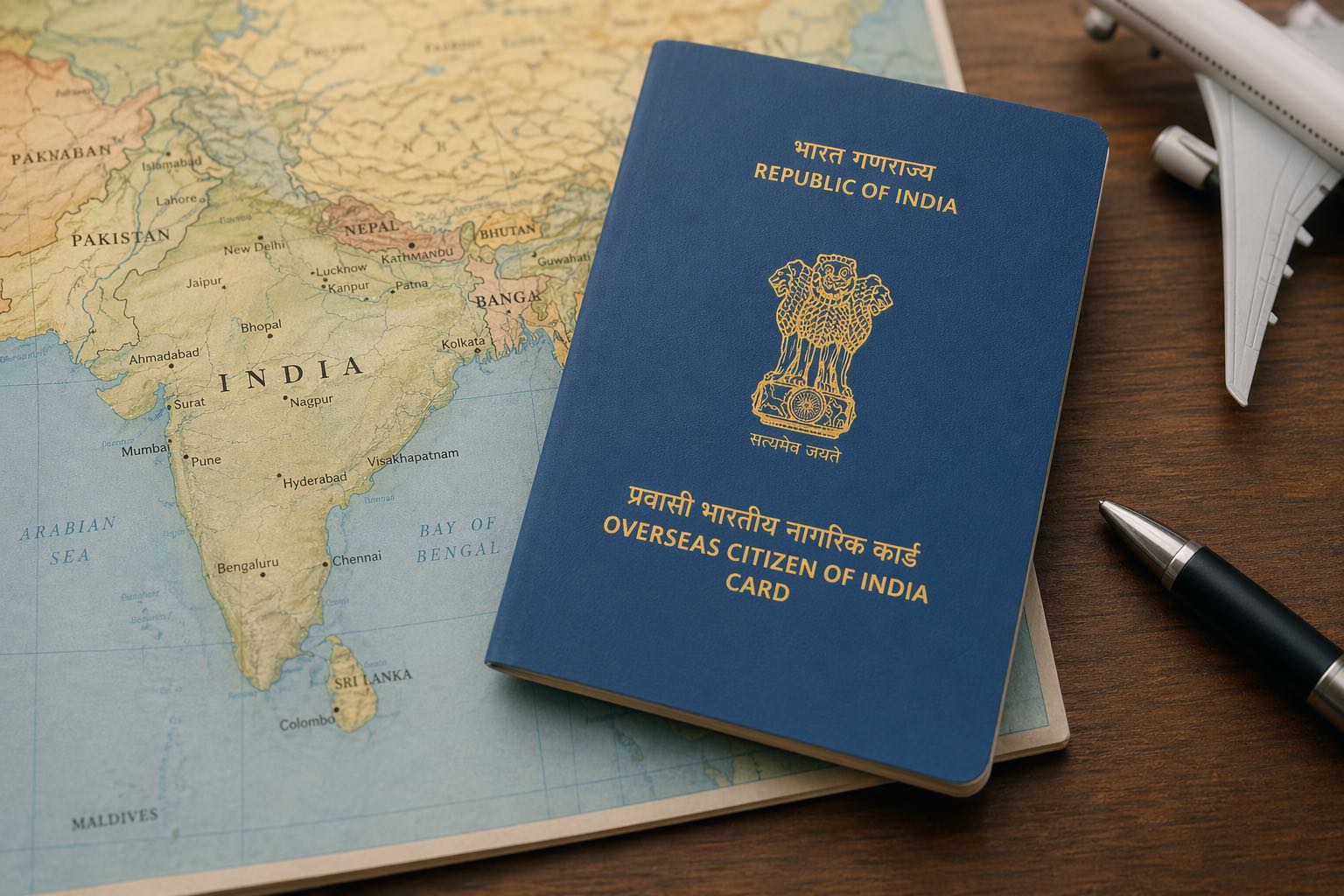
In a significant shift to its Overseas Citizenship of India (OCI) framework, the Government of India has removed the long-standing requirement for applicants to complete a minimum six months of continuous stay in India before applying for an OCI card.
The change, which took effect in April 2026, is part of a broader overhaul aimed at simplifying the application process and making it more accessible to the global Indian diaspora.
Under the previous rules, foreign spouses and dependants of Indian citizens or OCI cardholders had to remain in India for six uninterrupted months before becoming eligible to apply locally — a requirement widely seen as impractical for globally mobile families. That condition has now been scrapped, allowing eligible applicants to apply as long as they hold a valid visa and complete documentation.
According to official notices issued by the High Commission of India in Canberra, the changes also introduce stricter procedural requirements. OCI applications will no longer be accepted by post, and applicants must now appear in person at designated centres for submission and biometric verification.
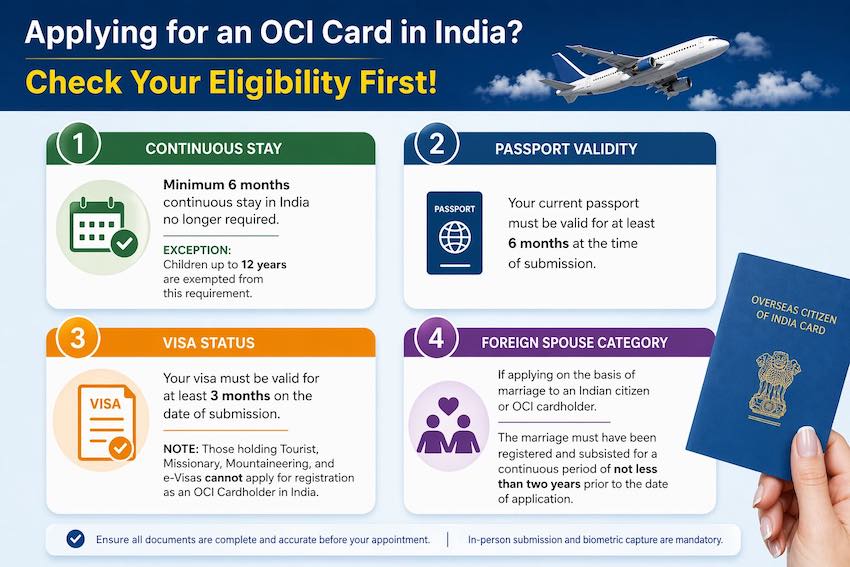
This shift to mandatory in-person processing is expected to streamline verification but may create new logistical challenges, particularly for applicants living far from major visa centres.
The overhaul also includes revisions to the OCI fee structure. While the standard fee for fresh OCI applications from overseas remains unchanged, costs for reissuance and duplicate cards have been rationalised, making updates such as name changes more affordable.
Another notable change is the transition to a fully digital arrival process. Travellers, including OCI cardholders, are now required to complete an online e-Arrival form before departure, replacing physical disembarkation cards. Airlines may deny boarding if travellers fail to present the required digital confirmation.
Experts say the reforms reflect a broader attempt by India to modernise its immigration processes and strengthen engagement with its diaspora, which is among the largest in the world.
However, the changes also come with trade-offs. While the removal of the six-month residency requirement significantly reduces waiting times, the requirement for in-person appointments and growing demand at visa centres could lead to delays, with early reports suggesting appointment slots filling weeks in advance in major global cities.
For diaspora families, the net impact is likely to be positive — enabling faster access to OCI status — but with a need for better planning around documentation and appointments.