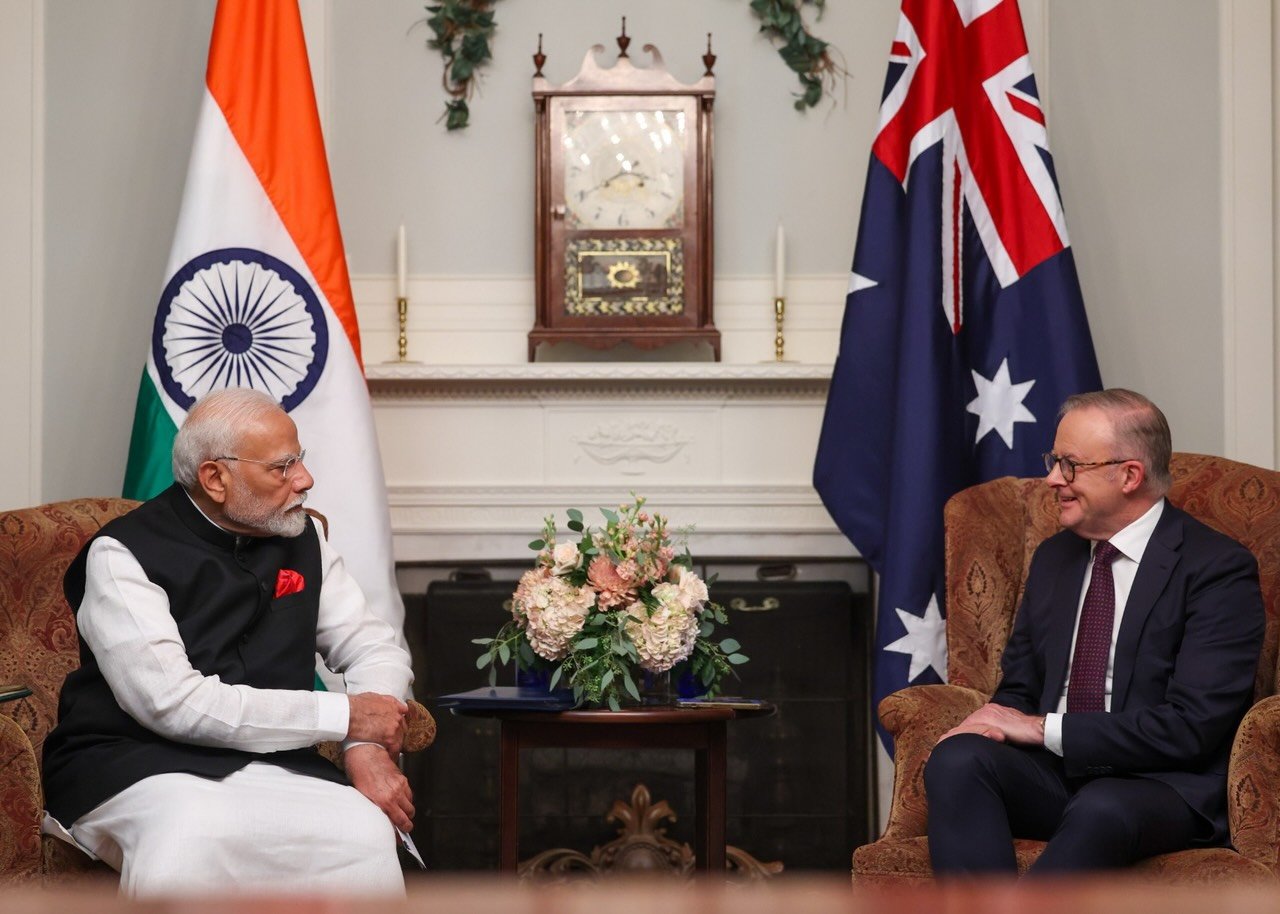
As Indian Prime Minister Narendra Modi arrived in Melbourne for the Australia–India Annual Leaders’ Summit, human rights organisations and sections of the Indian diaspora intensified calls on Prime Minister Anthony Albanese to place human rights at the centre of bilateral discussions rather than treating the visit solely as a celebration of expanding strategic and economic ties.
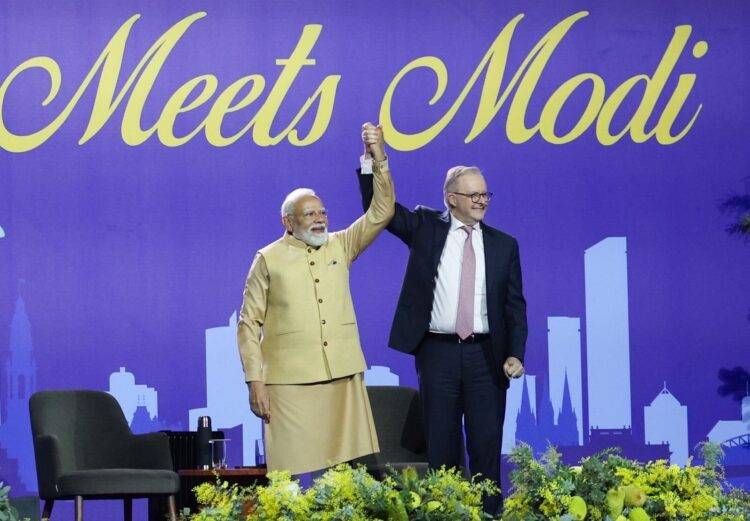
Modi’s three-day visit includes the annual leaders’ summit, meetings with business leaders and a major community reception at Melbourne’s Marvel Stadium, where tens of thousands of supporters are expected to attend. Australia and India are expected to deepen cooperation on trade, critical minerals, defence, clean energy and education as both governments continue to strengthen their Comprehensive Strategic Partnership.
But alongside the official programme, civil society groups argue that Australia’s engagement with India must also confront what they describe as a sustained deterioration in democratic freedoms and minority rights under Modi’s government.
Amnesty: strategic partnership should include human rights
Amnesty International Australia has urged the Albanese government to use the visit to reaffirm “mutual commitment to human rights, democratic freedoms and the rule of law.”
The organisation called on Australia to raise concerns over shrinking civic space in India and encourage the Indian government to uphold freedom of expression, protect journalists and human rights defenders, safeguard religious minorities, and address discrimination against marginalised communities.
Amnesty argued that a mature strategic partnership should include frank discussions on human rights rather than limiting dialogue to economic and security cooperation.
Hindus for Human Rights Australia calls for accountability
Hindus for Human Rights Australia also urged the Australian government and the broader Indian-Australian community to use Prime Minister Modi’s visit as an opportunity to engage honestly with concerns about democracy and human rights in India rather than treating the visit as purely celebratory.
The organisation said it was concerned about “democracy and human rights, custodial deaths, press freedoms, collapsing educational systems, the right to protest and civil liberties, environmental protections, women’s safety, and the persecution of minorities in India.”
It also called on Australia and India to ensure that closer bilateral ties remain grounded in democratic values.
“As Australia and India seek to strengthen trade relations, we recognise the long-standing relations and friendship between our nations and call upon all stakeholders to center human rights for all, dignity to life and freedom, and the upholding of the constitution above all.”
Calls to question Modi publicly
The Alliance Against Islamophobia has organised a protest outside Marvel Stadium under the slogan “Albanese: Question Modi.”
In a public statement, the organisation called on the Prime Minister to publicly question Modi over what it described as “India’s escalating human rights crisis”, citing concerns including anti-Muslim and anti-minority persecution, caste oppression, repression in Kashmir, attacks on press freedom, democratic backsliding and alleged transnational repression affecting diaspora communities.
The group said Australia “must not offer photo opportunities and stadium receptions while serious concerns remain” about the treatment of minorities and dissenting voices in India.
“Human rights must come before trade deals. Democracy must come before diplomatic theatre. Accountability must come before red carpets,” the statement said.
The demonstration is scheduled to coincide with the “Melbourne Meets Modi” community event at Marvel Stadium.
Supporters and critics
Modi’s visit has exposed sharp divisions within Australia’s Indian diaspora.
Many Indian Australians see the visit as recognition of India’s growing global influence and Australia’s deepening relationship with one of its most important Indo-Pacific partners. Tickets for the community event sold out rapidly, with organisers expecting attendance of between 25,000 and 30,000 people.
At the same time, critics argue that the celebrations risk overshadowing concerns about the condition of democracy in India.
Hindus for Human Rights Australia said many Indian Australians also face challenges within Australia itself, pointing to rising racism against people of Indian and South Asian origin, caste discrimination, Islamophobia, anti-Sikh sentiment and what it described as attempts by Hindutva organisations to speak on behalf of all Hindus and people of Indian origin. The organisation argued that these issues deserve greater discussion within Australia’s multicultural society.
According to reporting by the Australian Broadcasting Corporation and The Guardian, diaspora organisations representing Muslim, Sikh and other minority communities have used the visit to highlight allegations of institutional discrimination, restrictions on civil liberties and intimidation of critics.
Balancing values and interests
Foreign policy analysts say the visit reflects Australia’s growing strategic dependence on India as both countries seek closer cooperation amid changing regional security dynamics.
Writing in The Conversation, Teesta Prakash argued that the visit will largely showcase strategic pragmatism, with Canberra placing significant emphasis on defence, economic resilience and Indo-Pacific security cooperation despite ongoing human rights concerns.
That tension has become increasingly visible as Australia seeks to deepen ties with India while presenting itself internationally as a defender of democratic values and the rules-based international order.
For rights advocates, the challenge is whether Australia is prepared to raise difficult issues privately—or publicly—while pursuing closer strategic relations.
Hindus for Human Rights Australia also appealed for greater solidarity within the diaspora.
“We call for all Indian Australians to come together against hate, othering and the dehumanisation of any community based on faith or ethnicity.”
As Modi’s visit unfolds in Melbourne, those competing visions of the Australia–India relationship are playing out simultaneously: inside summit meeting rooms focused on trade and security, inside a packed stadium celebrating the bilateral partnership, and outside its gates where protesters are demanding that human rights occupy an equally prominent place on the agenda.