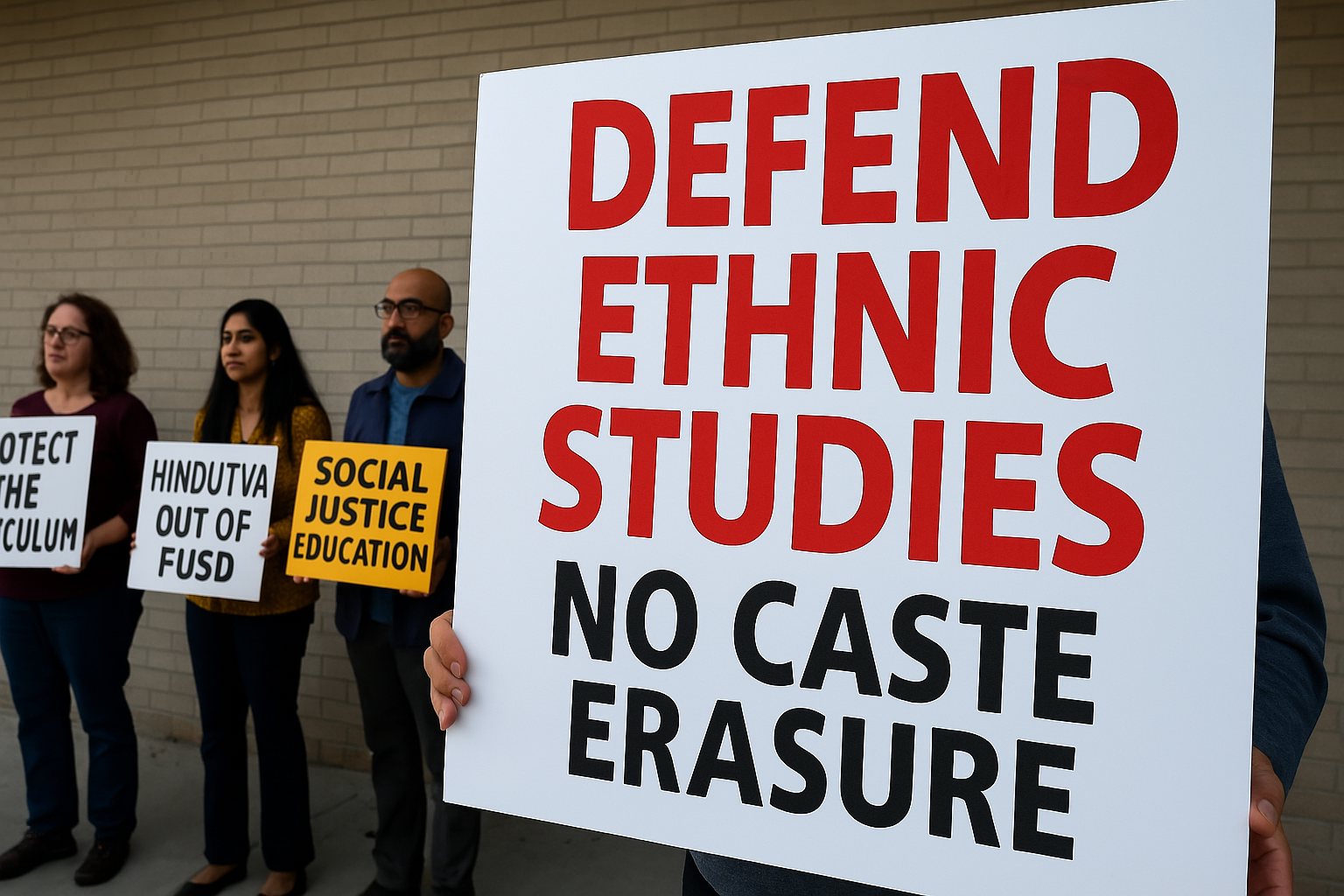
In a decisive victory for academic freedom and social justice, the Fremont Unified School District (FUSD) board has unanimously upheld its ethnic studies curriculum, rejecting demands from Hindutva-aligned groups to remove content on caste oppression. The decision follows a heated campaign by conservative Hindu organisations that sought to erase references to caste discrimination and India’s history of marginalisation from the syllabus.
Hindutva groups fail in campaign to alter curriculum
The controversy began when the Hindu American Foundation (HAF) and allied Hindutva groups pressured FUSD to revise the curriculum, claiming that discussions of caste discrimination were “anti-Hindu.” They objected to lessons on figures like Dr B.R. Ambedkar, the Dalit rights leader who led movements against caste apartheid, as well as contemporary protests such as India’s Farmers’ Protests.
In response, the Savera coalition, which includes Hindus for Human Rights (HfHR), the Ambedkar King Study Circle (AKSC), and other advocacy groups, mobilised to counter the misinformation spread by Hindutva organisations. The coalition emphasised that caste discrimination is a documented reality, both in South Asia and among the South Asian diaspora, and that removing such content would erase marginalised voices from the curriculum.
Hindutva groups reportedly submitted over 1,000 form letters to the FUSD board, claiming that caste-related discussions promoted “Hinduphobia.” However, their efforts were met with strong pushback from scholars, activists, and students who highlighted the lived realities of caste discrimination.
At a school board meeting on April 18, multiple speakers—including Dalit and progressive Hindu community members—testified about the persistence of caste-based oppression.
“This was an attempt to silence marginalised voices under the guise of ‘hurt sentiments’,” said Sunita Viswanath of Hindus for Human Rights. “But the truth is, caste oppression exists, and students deserve to learn about it.”
A broader pattern of historical revisionism
The battle over ethnic studies in Fremont mirrors similar struggles in California, where Hindutva groups have lobbied to remove caste from school curricula and anti-discrimination laws. Critics accuse these organisations of attempting to present a sanitised version of Hinduism that erases caste-based violence and social movements for justice.
“They want to pretend caste is a colonial myth, but Dalits know it’s very real,” said Thenmozhi Soundararajan of Equality Labs, a Dalit advocacy group. “This curriculum is about truth, not propaganda.”
What’s next?
With the FUSD board’s unanimous decision, the ethnic studies curriculum will remain unchanged, ensuring that students continue to learn about global social justice movements, including caste discrimination. However, activists warn that Hindutva groups may escalate their campaigns in other school districts.
“The fight isn’t over,” said a Savera Coalition spokesperson. “But tonight, truth won.”
Why this matters:
- The decision preserves teachings on caste, a topic rarely addressed in U.S. schools.
- Hindutva groups’ tactics—similar to far-right education censorship movements—are facing increasing opposition.
- Diaspora Dalit and progressive Hindu voices are shaping debates on South Asian history in the U.S.