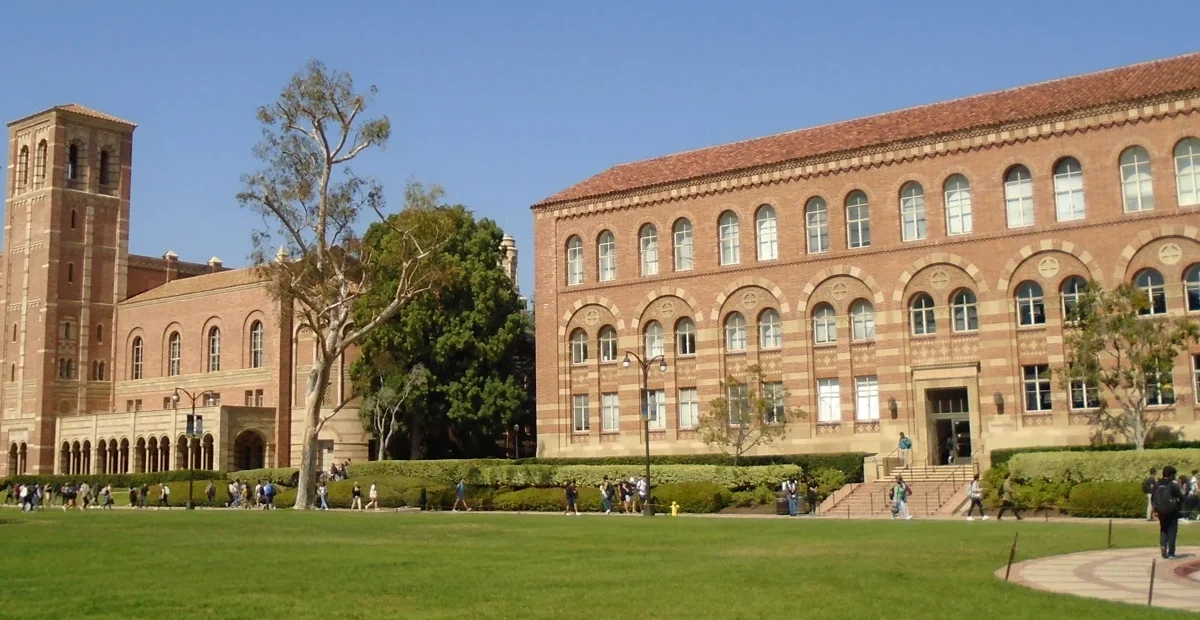
A Bollywood-fusion dance team is the centre of Best of the Best, the Netflix college comedy released on 18 September 2026. Its setting puts South Asian student performance into a familiar competition-film framework, with a team to rebuild, a contest to win and relationships tested along the way.
That premise gives the film two different audiences: viewers looking for a college comedy and people who know the dance circuit it draws on. The production’s account establishes what the filmmakers intended. It does not settle whether rehearsal, leadership, funding or competition feel accurate to current students and former dancers.
For Indian-origin viewers, the subject is more specific than a general celebration of Bollywood. The film concerns young people making a shared performance culture on an American campus. Its two childhood friends, Maya and Anjali, provide the friendship at the centre of that setting, while the team provides the wider social group.
What is Best of the Best about?
Best of the Best follows two childhood friends who join a struggling Bollywood-fusion team at UCLA. Maitreyi Ramakrishnan plays Maya and Priyanka Kedia plays Anjali. Lena Khan directs, with a screenplay by Hasan Minhaj and Prashanth Venkataramanujam.
The production’s official account describes competition, sisterhood and community as its central concerns. Those are the stated ingredients of the story. A viewer need not be familiar with a real competition circuit to recognise the dramatic structure of a group trying to turn itself into a winning team.
For dancers, the point of comparison is different. A fictional team can be assessed against the work that exists between performances: learning choreography, agreeing on a theme, making casting decisions and fitting rehearsal around university life. A film’s ability to introduce the setting and its accuracy as a portrait of that work are separate questions.
Does Bollywood-fusion mean one fixed dance style?
The term identifies the film’s campus-team setting, rather than one prescribed classical form. The relevant question is how the production represents the mix of choreography, music and team culture. The label alone cannot establish which traditions a particular real team performs or how its members describe their work.
Whose experience is behind the production?
Minhaj and Venkataramanujam describe their connection to South Asian college dance in the official production material. Their involvement helps explain why the film uses this setting, rather than treating the campus team as a background detail.
A creator’s experience is evidence of a point of view, however, rather than proof that every generation of dancers shares it. The people running teams now can face different practical conditions from those who took part years earlier. An assessment needs to identify the period and type of team being compared with the film.
It also needs to distinguish the director’s choices, the writers’ intentions, the actors’ preparation and the dancers’ work. A cast interview about playing a character can illuminate the performance process without establishing what is typical of a student competition. Likewise, a production still can show a costume or formation without showing how a routine was rehearsed.
| Question | What production material can establish | What needs firsthand assessment |
|---|---|---|
| Why this setting? | The filmmakers’ stated intentions and connections | How that perspective compares with dancers’ experience |
| Who is represented? | Characters, cast and the fictional team’s setting | Which experiences viewers recognise or find absent |
| How does the dance work? | Credited production roles and described preparation | Specific choreography and rehearsal scenes in the completed film |
| What is left out? | The scope stated by the production | Evidence from people who know the circuit and have watched the film |
Why does the distinction between comedy and documentary matter?
The film is presented as a comedy, so its fictional competition is not a documentary record of a particular team’s season. That gives a critic reason to assess dramatic choices as well as accuracy, without mistaking an invented character’s decision for a factual account of student life.
The distinction does not make questions of representation irrelevant. It makes them more precise. A scene can be effective comedy while simplifying a practical process; an accurate detail can still contribute little to a character’s story. Neither judgement can be reached merely by reading a plot synopsis.
For a dancer’s response to be useful, it should identify the scene or routine being discussed and the respondent’s own experience. A former team captain, a performer and a competition organiser can each describe different parts of the work. Their roles and dates help a reader understand the limits of the comparison.
What should viewers look for in the team story?
The useful questions concern who makes decisions, who is expected to do the work and how Maya and Anjali’s relationship affects the team. These provide a way to watch closely without assuming that the production’s promotional themes are the final verdict.
Consider whether disagreements arise from a specific task or simply from the need to create an obstacle before the competition. Look at whether the team members have identifiable relationships beyond the final performance. Then distinguish an observation about the characters on screen from a claim about South Asian students as a whole.
A response to the film can also ask what the camera treats as important: the finished routine, the rehearsal room or the audience watching it. That is a question about the completed film’s emphasis. It should be answered with scenes, rather than with an unsupported assertion that the production captures an entire culture.
Where can viewers find the film and its production information?
The official Netflix film page lists the comedy and its principal cast, while the production page supplies the release date and filmmakers. Availability and classification should be checked in the viewer’s own Netflix region.
For wider context, related culture and literature coverage and student coverage provide routes into diaspora storytelling and campus life. The next useful conversation about this film should begin with a named viewer’s assessment of specific scenes, followed by dancers’ responses grounded in their own experience.