
Contents
One in every 60 adults in Fiji is now living with HIV, a fivefold jump from one in 167 just five years ago, as the Pacific nation’s government this week placed the Fiji HIV outbreak under emergency powers.
Health Minister Atonio Lalabalavu confirmed the reclassification at a press conference on 15 September, five days after Cabinet had already placed the outbreak under emergency powers as a national crisis. “An outbreak level response is no longer sufficient,” Lalabalavu said. “The Ministry of Health cannot meet this challenge alone.”
The declaration follows a year in which Fiji HIV cases 2025 climbed to a record 2,016 new diagnoses, up from 1,583 in 2024. As recently as 2019, the country logged just 126 new cases a year. Two thirds of last year’s newly diagnosed patients were aged between 20 and 34, and the Ministry has linked a large share of transmissions to shared needles among people who inject drugs, alongside sexual transmission.
Cabinet had endorsed the emergency footing on 10 September. “Cabinet has endorsed declaring the Fiji HIV outbreak a national crisis. So, we are declaring it a national crisis under emergency powers,” Information Minister Lynda Tabuya said, speaking on behalf of Prime Minister Sitiveni Rabuka.
Among the hardest hit are children. Sixty seven children were newly diagnosed with HIV in 2025, and 59 of them contracted the virus from their mothers during pregnancy or birth. Eighteen of those infants died before their first birthday, according to figures presented to Cabinet. Overall, 117 people with HIV died in Fiji last year, including 17 children under 15.
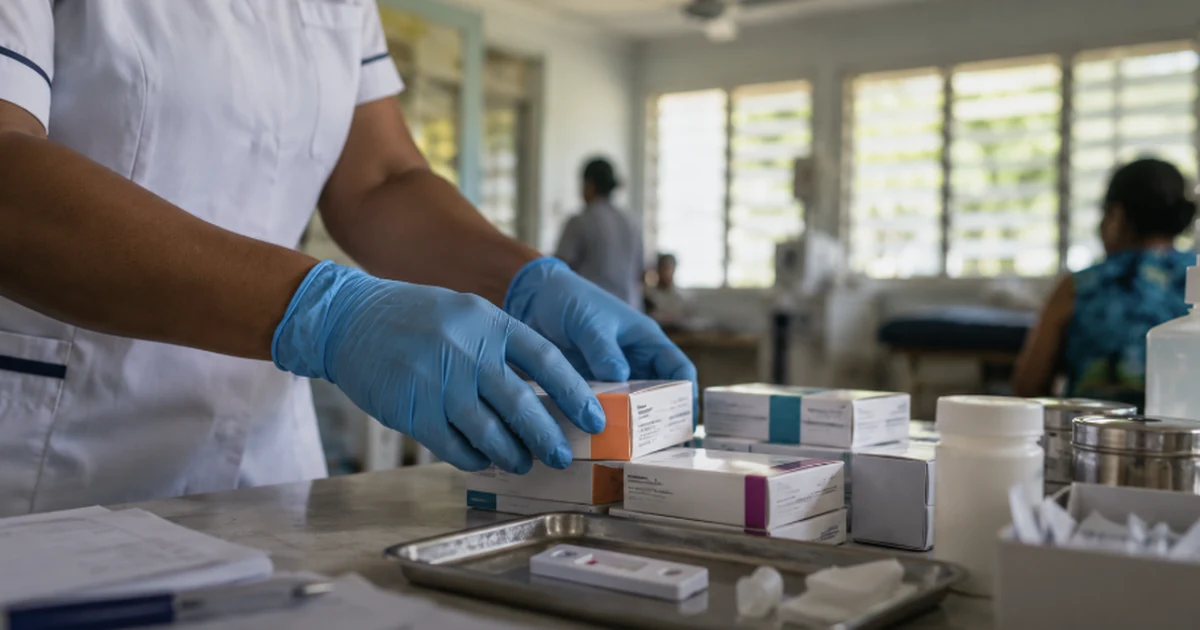
A five member Cabinet Sub Committee has now been set up to clear barriers that have slowed the national response, the government said. Plans already announced include a needle and syringe programme, expanded access to pre exposure prophylaxis, or PrEP, and a push to more than double the number of private doctors involved in HIV testing and treatment, from roughly 50 to at least 100, through a public private partnership.
The scale of the response has drawn criticism from within Fiji’s own medical establishment. Dr Ronal Kumar, president of the Fiji Medical Association, said on 12 September that the pace of action had lagged the scale of the Fiji HIV outbreak. “We are taking too long discussing HIV in meetings in hotels,” Kumar said, adding that “the action from declaring the outbreak has to be actioned rapidly.” Acting Prime Minister Manoa Kamikamica acknowledged the ministry’s strategies were sound but said they needed more support to be carried out.
International partners have played a growing role in funding the Fiji HIV national emergency response, though not all support is as current as it may appear. Australia’s Foreign Minister, Senator Penny Wong, announced a further FJD 23.5 million in HIV funding for Fiji on 6 August, on top of an earlier AUD 12 million commitment, taking Canberra’s cumulative support for the response above FJD 40 million.
“Fiji is experiencing the fastest growing HIV outbreak in the world,” Wong said at a press conference in Suva. “No single leader, no single program will deal with this challenge. The whole of the community have to be engaged on this.” The funding is going toward prevention, training, workplace support, community outreach and essential health supplies.
India’s most recent direct contribution to the Fiji HIV outbreak response came considerably earlier. In November last year, India’s High Commissioner to Fiji, Suneet Mehta, handed over a three tonne shipment of antiretroviral drugs, valued at roughly 2.5 million US dollars, to Lalabalavu at the Fiji Pharmaceutical and Biomedical Services Centre in Suva. It was described at the time as the largest such shipment India has sent to Fiji, and followed talks between the two countries’ prime ministers in August 2024.
“This handover is more than just a delivery of medicine,” Mehta said at the time. “It’s a reaffirmation of our shared commitment to saving lives and strengthening health cooperation.” New Delhi has not issued any fresh statement tied specifically to this month’s Fiji HIV national emergency declaration, even as the wider Fiji HIV outbreak continues to draw international attention.
Why isn’t this being reported as an Indo-Fijian story?
Fiji’s population is split roughly along ethnic lines, with iTaukei, the indigenous Fijian population, making up the majority, and Indo-Fijians, descendants of Indian indentured labourers brought to Fiji from 1879 onward, accounting for around a third of residents according to the country’s 2017 census. Government figures show close to 90 per cent of new HIV diagnoses are among iTaukei Fijians, not the Indo-Fijian community. That is why this article does not frame the outbreak itself as a diaspora health crisis, even as India remains one of Fiji’s longstanding health partners.
Amid the Fiji HIV outbreak, the Fiji government has repeatedly stressed that HIV testing remains voluntary and confidential, and that discrimination against people living with HIV is unlawful, as it tries to encourage more people to come forward. Officials have also flagged gaps in reaching young people, injecting drug users and rural communities as among the hardest parts of the response to fix.
What happens next for the Fiji HIV national emergency will depend largely on how quickly the new Cabinet Sub Committee can act on the barriers it has been asked to identify. The needle and syringe programme and the expanded PrEP rollout are expected to be priorities in the coming months, alongside the push to bring more private clinics into testing and treatment. Fiji has previously set a goal, in coordination with international partners, of eliminating AIDS as a public health threat by 2030, a target that now looks considerably harder to reach without a sustained acceleration in the response.
Fiji HIV National Emergency: What Travellers and the Diaspora Are Asking
Is it safe to travel to Fiji right now?
Yes. HIV is not transmitted through casual contact, shared spaces, food or tourism activities. It spreads through unprotected sex, shared needles and, in the case of infants, from mother to child during pregnancy or birth. Fiji’s health authorities have not issued any travel safety in the Pacific restriction linked to the Fiji HIV outbreak.
Is Fiji’s Indo-Fijian community affected by the Fiji HIV outbreak?
Not disproportionately. Government data shows close to 90 per cent of new diagnoses are among iTaukei Fijians. There is no evidence in current figures that the Indo-Fijian community is being affected by the Fiji HIV outbreak at a higher rate.
What has international support for Fiji actually looked like?
Australia has committed the largest and most recent tranche of Fiji HIV national emergency funding, FJD 23.5 million in August, on top of an earlier AUD 12 million commitment. India’s most substantial recent contribution, a three tonne consignment of antiretroviral drugs, was delivered in November last year. New Zealand, the Global Fund and United Nations agencies are also cited by Fiji’s government as ongoing partners, though without the same level of public detail on amounts or dates.
What changes now that the Fiji HIV national emergency has been declared?
The Fiji HIV national emergency declaration puts the response under emergency powers, which the government says allows faster decision making through the new Cabinet Sub Committee. It does not, on its own, guarantee additional funding or staffing, which is why medical professionals in Fiji have pushed for the declaration to be followed quickly by visible action.
What should people who have family or friends in Fiji know?
Testing, treatment and prevention services including PrEP are free and confidential under current government policy, and discrimination against people living with HIV is unlawful in Fiji. Anyone concerned about exposure to the Fiji HIV outbreak is encouraged to seek testing through Fiji’s public health system.