
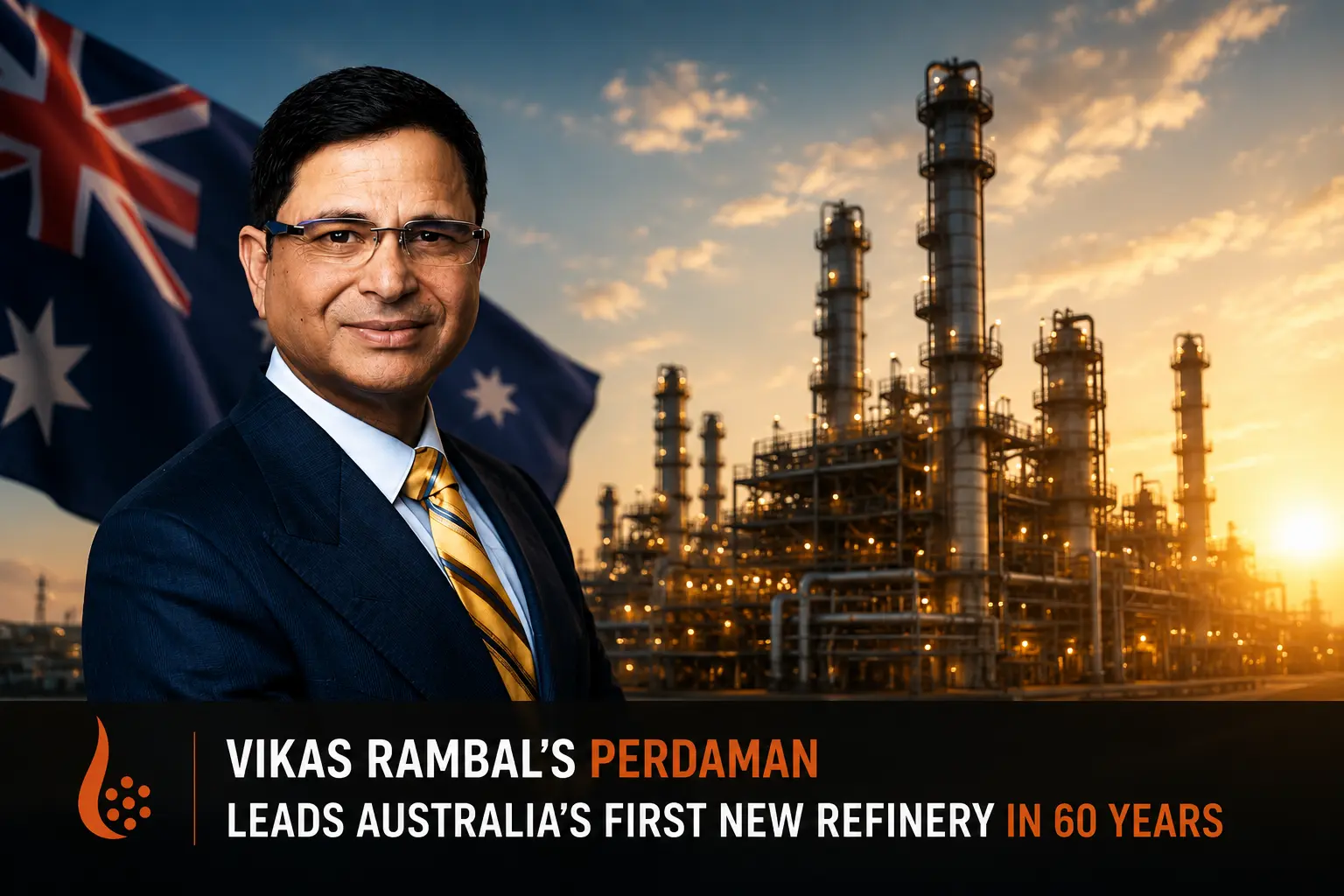
Australia has not built a new large-scale fuel refinery since the 1960s. Vikas Rambal, an Indian-born chemical engineer who arrived in Western Australia in 2000 with plans to build ammonia plants, is now the man leading the effort to change that.
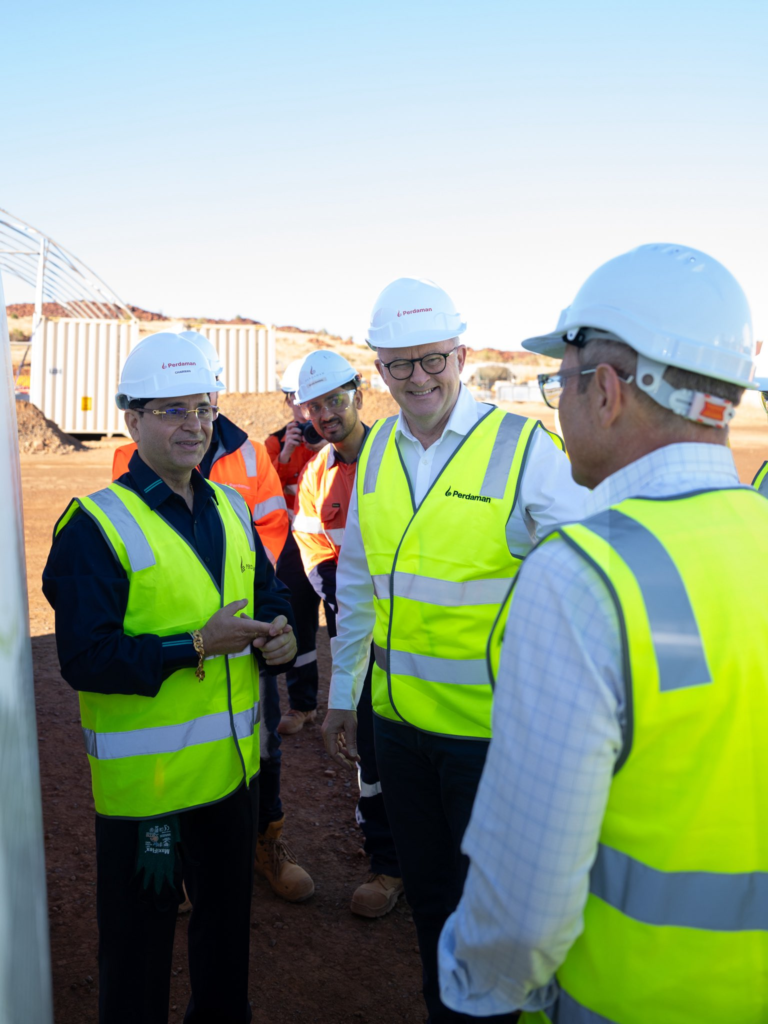
Perdaman, the company Rambal founded and chairs, announced on 28 July 2026 that it will undertake a combined Pre-Feasibility and Pre-FEED program to determine the optimal configuration for a new Made in WA Fuel Refinery, along with supporting port infrastructure and logistics solutions, as the project advances toward a final investable development decision. Prime Minister Anthony Albanese and Western Australian Premier Roger Cook attended the announcement, alongside Perdaman Chairman Vikas Rambal, Perdaman Director Maegha Rambal, Federal Resources Minister Madeleine King, WA Minister for Energy and Decarbonisation Amber-Jade Sanderson, and Member for Pilbara Kevin Michel.
“The project reflects the company’s long-term vision of building critical industrial infrastructure that delivers enduring benefits for Australia,” Rambal said.
Why this refinery is such a big deal
Australia currently operates only two oil refineries, in Brisbane and Geelong, after four refineries closed under the previous Coalition government. If built, the Perdaman refinery would be the country’s first new large-scale petroleum refinery in more than six decades, forming part of both the Federal Government’s Future Made in Australia agenda and the Western Australian Government’s Made in WA strategy.
The scale of that gap is significant. Australia has spent years relying increasingly on imported refined fuel as domestic refining capacity has shrunk, a dependency that has drawn growing concern from both major political parties over the country’s fuel security. A new domestic refinery, backed by an Indian-origin entrepreneur who has already delivered two of Western Australia’s largest industrial projects, represents a direct policy answer to that concern.
Who is Vikas Rambal
Rambal was born in Delhi and qualified as a chemical engineer specialising in petrochemicals, spending his formative years at Bharat Petroleum, then known as Shell. In 2000, he moved to Western Australia with plans to use the state’s natural gas for downstream industry, including ammonia manufacturing for the international fertiliser market.
He was the driving force behind the Burrup Fertiliser project, now known as Yara Fertiliser, serving as Managing Director and a former shareholder from the project’s inception through to completion. After Burrup’s successful commissioning, Rambal established Perdaman Chemicals and Fertilisers, formerly Northwest Chemical and Fertilisers, with the intention of developing Western Australia’s second world-scale fertiliser plant.
That ambition became Project Ceres, Perdaman’s urea and ammonia plant near Karratha. Rambal obtained Major Project status from the Federal Government and Project of State Significance from the Western Australian Government for Ceres in 2017. Construction began in 2023 on what Perdaman describes as Australia’s largest-ever downstream manufacturing project, an AUD 6.45 billion investment that will become the country’s largest domestic urea production facility.
What is Project Ceres?
What is Project Ceres?
Project Ceres is Perdaman’s AUD 6.45 billion urea and ammonia plant under construction 20 kilometres north-west of Karratha in Western Australia’s Pilbara region. It will convert natural gas from Woodside’s Scarborough Gas Project into an estimated 2.3 million tonnes of urea annually, under a 20-year gas supply agreement with Woodside and a 20-year offtake agreement with Incitec Pivot.Australia currently imports around 2.4 million tonnes of urea a year, meaning Ceres is designed to make the country broadly self-sufficient in the fertiliser. Rambal owns 55% of the project. It is scheduled to open in mid-2027 and is designed for net carbon zero operation by 2050.
According to Forbes Australia, global urea prices have surged since the blockade of the Strait of Hormuz disrupted a trade route that carries around 30% of the world’s nitrogen fertiliser. If prices remain near their current level of roughly USD 1,000 landed in Australia, Ceres would generate approximately USD 2.5 billion in annual revenue once operational.
How Rambal built the case for Ceres
Forbes Australia’s account of the project describes how Rambal secured Woodside as his gas supplier. The Scarborough gas field, due to come online in 2026, was required to sell at least 15% of its output domestically. Rambal had already completed engineering and planning work for a similar plant, giving him what he described as a year’s head start on any competing proposal by the time he approached Woodside.
“I was at least 12 months ahead of schedule. They saw that it was a real project,” Rambal told Forbes Australia. “Woodside had many opportunities to sell the dom [domestic] gas, but they selected Perdaman based on their due diligence. I thank the Woodside board every day that they trusted my dream. And now it’s paying off for everyone.”
He described the underlying discipline required to see the project through: “It comes down to discipline. You don’t give up. You just keep going. Opportunity will come one day, and when it does, you should be smart enough to open the door.”
In 2019, Rambal convinced his former boss, Pradeep Kumar, to take a pay cut to join Perdaman, a decision that has since paid off as the company has grown into one of Western Australia’s most significant industrial developers.
What Perdaman brings to the refinery project
Perdaman’s construction of Project Ceres has already involved sourcing prefabricated plant modules manufactured overseas and shipped to Australia on vessels described by Forbes Australia as looking like seaborne oil refineries in their own right, crossing the Indian Ocean over the past year to be assembled on the Burrup Peninsula.
That same delivery and construction model, along with Perdaman’s established relationships with engineering, procurement and construction partners, positions the company to move relatively quickly into the feasibility phase of the new fuel refinery project, though Perdaman has been clear that the current announcement covers only the Pre-Feasibility and Pre-FEED study stage, not a final investment decision.
Why this matters for the Indian-Australian community
Rambal’s rise from an Indian-born chemical engineer who arrived in Western Australia in 2000 to the founder and chairman of the company now positioned to build Australia’s first new oil refinery in six decades is one of the most significant individual business achievements by an Indian-origin entrepreneur in Australia’s history.
For the Indian-Australian community, Rambal’s trajectory, from Burrup Fertiliser to Project Ceres to the new refinery announcement, sits alongside a broader pattern this year of Indian-origin figures reaching prominent positions across Australian public life, business and technology, at the same time as the Modi-Albanese summit and the PACTS technology framework have deepened formal India-Australia economic ties.
What Western Australians and industry watchers are asking
Has a final decision been made to build the refinery?
No. Perdaman’s 28 July announcement covers a Pre-Feasibility and Pre-FEED program to determine the optimal refinery configuration, supporting port infrastructure and logistics solutions. The project is being advanced toward an investable development opportunity, not yet a confirmed final investment decision.
How does this connect to Perdaman’s existing Project Ceres plant?
Project Ceres, Perdaman’s AUD 6.45 billion urea and ammonia plant near Karratha, is a separate project from the new fuel refinery, though both are led by Rambal and Perdaman. Ceres is under construction and scheduled to open in mid-2027. The fuel refinery is at a much earlier planning stage.
Why has Australia not built a new refinery in six decades?
Australia’s refining capacity has declined over decades as global refining economics shifted toward larger facilities in Asia, and four Australian refineries closed under the previous Coalition government, leaving only the Brisbane and Geelong refineries operating domestically. Rising concern over fuel security and import dependency has driven renewed federal and state interest in rebuilding domestic refining capacity.
Who is Vikas Rambal and what is his background?
Rambal is an Indian-born chemical engineer who trained at Bharat Petroleum before moving to Western Australia in 2000. He led the Burrup Fertiliser project, now Yara Fertiliser, before founding Perdaman and developing Project Ceres, Australia’s largest domestic urea production facility, currently under construction near Karratha.
What government support is behind this project?
The refinery forms part of both the Federal Government’s Future Made in Australia agenda and the Western Australian Government’s Made in WA strategy. Prime Minister Anthony Albanese and WA Premier Roger Cook attended the 28 July announcement alongside federal and state ministers.