

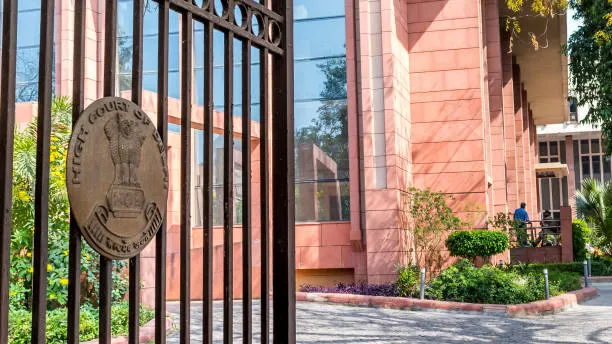
The Delhi High Court on 15 July 2026 set aside the Ministry of External Affairs’ tender process for outsourcing Consular, Passport and Visa services at Indian missions in Abu Dhabi, Kuwait, Singapore and Canberra, and nullified the contracts awarded to the successful bidders.
A division bench of Justice Anil Kshetrapal and Justice Shail Jain held that the MEA’s technical evaluation of competing bids was “vitiated by arbitrariness, irrationality and lack of transparency,” violating Article 14 of the Indian Constitution’s guarantee of equality before the law.
The court directed the MEA and the four concerned Indian missions to issue fresh Requests for Proposal within one month and make sincere efforts to complete the new tender process at the earliest opportunity. Critically, it permitted existing service providers to continue operating until the fresh tender process is completed, preventing disruption to applicants across all four countries.
The judgment was reserved on 2 July 2026 and delivered on 15 July.
What this means for Indian-Australians right now
The ruling directly resolves the legal dispute that caused the complete suspension of Indian consular, passport and OCI services in Australia from 1 July 2026.
VFS Global, the existing CPV service provider in Australia, suspended all services in Canberra and across its Australian network because the old contract had expired on 30 June and the new contract had been placed under a court injunction. That injunction was part of the same legal proceedings concluded by Wednesday’s judgment.
The court’s order allowing existing service providers to continue operating until the fresh tender is awarded means VFS Global can resume Indian consular services in Australia, subject to interim arrangements with the High Commission of India. The High Commission of India in Canberra and the consulates in Sydney, Melbourne and other cities should confirm resumption timelines directly. Indian-Australians who deferred passport renewals, OCI applications and visa lodgements during the 1 to 15 July suspension period should monitor the High Commission of India in Canberra’s official website and VFS Global’s Australia portal for the confirmed resumption date.
What the court found wrong with the tender process
The petitions were filed by E Trav Tech Limited and Verasys Limited, two companies that were disqualified at the technical bid evaluation stage in tenders floated by the MEA for CPV services at the four missions.
The Delhi High Court found several specific failures in the MEA’s evaluation process.
The MEA awarded significantly different scores to identical documentary material submitted by the same bidders across different missions, without providing any explanation for the variance. A company could submit the same proposal to the Abu Dhabi mission and the Canberra mission and receive materially different scores under identical criteria.
Bidders received zero marks in categories despite proposing appointment windows and turnaround times that met the standards prescribed in the Request for Proposal. No explanation was given for why compliant proposals received no credit.
The MEA failed to disclose the comparative benchmarks it used to award marks. Even after the Supreme Court directed the MEA to furnish parameter-wise breakdowns of scores, the reasons for those scores and the comparative standards applied were not disclosed. The petitioners were left with no means to understand why their proposals were treated as inferior.
What is a CPV outsourcing contract?
What is a CPV outsourcing contract?
The Ministry of External Affairs outsources Consular, Passport and Visa services at Indian missions abroad to private service providers through a competitive tender process. The contracted company operates Indian visa and passport application centres, manages document submissions, processes applications and provides customer-facing services. In Australia, VFS Global has held this contract.In some other markets, competitors including E Trav Tech and Alhind Tours and Travels have also competed for and in some cases won tenders. The contract runs for a fixed term and must be renewed through a Request for Proposal process. The current legal dispute arose when the MEA’s technical evaluation of competing bids was found by the Delhi High Court to be arbitrary and unconstitutional.
The bench held that while courts ordinarily do not interfere with technical assessments made by expert bodies, judicial review is warranted where the decision-making process is arbitrary, opaque and fails the constitutional requirements of fairness, transparency and equality. “The parameter-wise marks awarded to the Petitioners are vitiated by arbitrariness, irrationality and lack of transparency, rendering the impugned technical evaluations unsustainable under Article 14 of the Constitution,” the bench stated.
The court also noted that excluding a lower bidder through an arbitrary process could adversely affect the public interest and the public exchequer, a point relevant to whether the MEA obtained value for money in the tender process.
Who held the contracts that were nullified?
VFS Global held the Canberra contract that was nullified by Wednesday’s ruling. Gulf Today confirmed that Alhind Tours and Travels, a Kerala-based travel and services company, held contracts at one or more of the other three missions that were nullified alongside it.
Both VFS Global and Alhind held contracts that the MEA’s tender evaluation had awarded after the evaluation process found to be unconstitutional. Those awards are now void. However, both companies, as existing service providers, are permitted by the court order to continue operating until the fresh tender is completed and new contracts take effect.
What happens next
The MEA and the four Indian missions have one month from 15 July to issue fresh Requests for Proposal. The court directed them to make “sincere efforts to complete the tender process expeditiously.”
The fresh tender process will be conducted from scratch. New technical evaluations must be conducted with full transparency, disclosed benchmarks, explained scores and consistent application of criteria across missions. Any company disqualified in the fresh process will have grounds to challenge that disqualification if the same opacity is repeated.
The timeline for the fresh tenders to be evaluated, new contracts to be awarded and new providers to begin operating is not fixed by the court order. The direction is to issue the RFPs within one month. The evaluation and award process will take additional time. Until a new contract is awarded at each mission, the existing provider continues.
For Indian-Australians, the practical implication is that VFS Global continues to provide CPV services under its existing operational framework, with the legal status of its contract now clarified by the court order permitting continued operation. The question of whether and how quickly services disrupted during the 1 to 15 July suspension can be restored will depend on the High Commission of India in Canberra’s operational decisions.
The connection to the VFS Australia suspension
This judgment is the resolution of the legal dispute that caused the complete suspension of Indian consular services in Australia from 1 July 2026. At that time, VFS Global’s contract had expired on 30 June and the new contract awarded by the MEA was subject to a court injunction obtained by the competing bidders, E Trav Tech and Verasys. With no valid contract and the new one frozen, VFS Global had no legal basis to continue operating and suspended all services.
The Delhi High Court’s 2 July reserved judgment, now delivered on 15 July, resolves that injunction by nullifying the entire tender process and ordering a fresh one, while allowing VFS Global to continue as the existing provider in the interim.
The July school holiday disruption affecting Indian-Australians who needed passports, visas or OCI services during the suspension period cannot be undone. What the ruling does is restore the legal framework under which those services can now resume.
What Indian-Australians affected by the suspension need to know
Can I now apply for a passport renewal, visa or OCI service through VFS Global in Australia?
The Delhi HC order permits existing service providers, including VFS Global, to continue operating. Whether services have formally resumed depends on operational decisions by the High Commission of India in Canberra and VFS Global. Check the VFS Global Australia portal and the High Commission of India in Canberra’s official website before attending any centre.
My application was lodged before 1 July and has been sitting in the system during the suspension. What happens to it?
Pending applications lodged before 1 July should be processed under the restored operational framework. Contact VFS Global’s dedicated customer support line at 03 9956 3830 or info.ind_aus@vfshelpline.com to confirm the status of your specific application before taking any further action.
Does the fresh tender process mean VFS Global could lose the Australia contract?
Yes. The fresh Request for Proposal is an open competitive process. VFS Global will need to bid again. Any company meeting the eligibility criteria can participate. The MEA must conduct the evaluation transparently and with disclosed benchmarks this time. Until a new contract is formally awarded, VFS Global continues to operate.
What was the legal basis for the court to intervene in a government tender?
The Delhi HC held that courts can review technical evaluations by government bodies where the decision-making process is arbitrary, opaque and violates Article 14 of the Constitution, which guarantees equality before the law. The court found that the MEA’s scoring of the same documentary material at different marks across different missions, without explanation, and its failure to disclose evaluation benchmarks even after being directed to do so by the Supreme Court, met that threshold.
Is the ruling final or can it be appealed?
The judgment can be challenged in the Supreme Court of India. Neither the MEA nor the successful bidders whose contracts were nullified have indicated publicly whether they will appeal. Until any stay is granted by a higher court, the Delhi HC order stands and the fresh tender process must proceed.