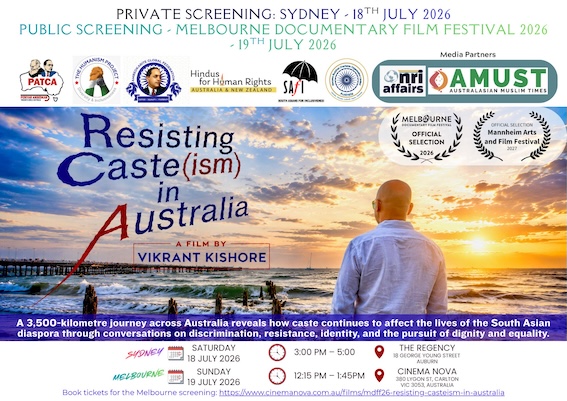

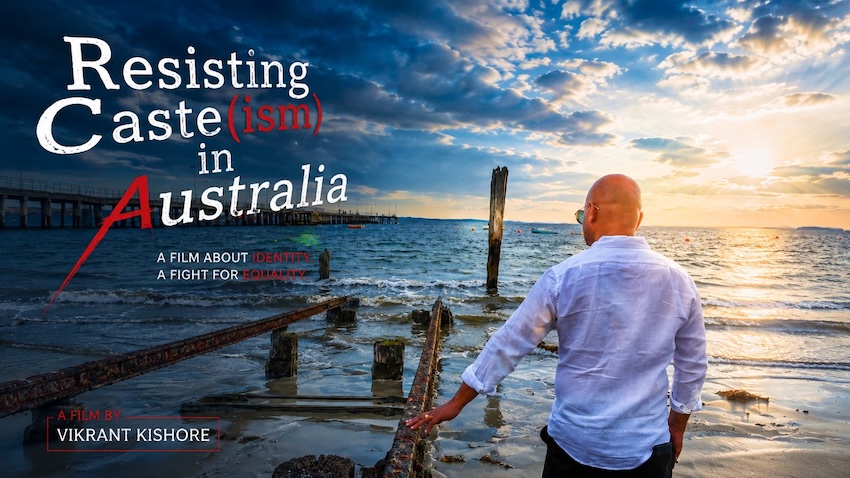
Resisting Casteism in Australia, directed by filmmaker, journalist and academic Dr Vikrant Kishore, screens at the Melbourne Documentary Film Festival on Sunday, 19 July 2026, at 12:15 pm at Cinema Nova, Melbourne. The 61-minute personal reflective documentary follows Dr Kishore as he engages in conversations with academics, community leaders, medical practitioners and members of the Indian-Australian community about caste, migration, identity and belonging in Australia.
The film gives attention to the people who speak in it. Their reflections move from school memories and social interactions to community advocacy, family life, public discussion and the quiet decisions people make when caste is named in everyday spaces. Through these accounts, the documentary asks audiences to listen to experiences that are often dismissed, softened or left unspoken.
For Dr Kishore, the contributors are not case studies. They are people who speak from their own lives, and the documentary is built around the dignity of that choice.
“I did not want to reduce anyone’s experience to evidence,” says Dr Vikrant Kishore. “The film is about listening carefully to people who have chosen to speak. Each contributor brings a different life, profession and memory to the documentary. What matters is not only what they say, but that they are heard on their own terms.”
The film’s public force lies not in one incident but in the recurrence of ordinary moments: a surname question, a plate kept apart, a friendship that changed, public identification in school, or the discomfort that follows when caste is named. These experiences are not presented as identical. They are treated as separate lives speaking to a social reality that many people have been encouraged to ignore.
Dr Rupali S. Bhamare, academic and researcher, describes caste as a structure into which people are born and from which many are expected never to move. Her reflection links caste identity to everyday judgement in migrant life, including the ways surnames, family histories and occupational assumptions may still be used to identify people.
“The caste system is like a building without stairs; you’re born on a floor and meant to die there. Even in Australia, people try to judge you by your surname or your parents’ work back in India. These everyday microaggressions remind us that caste follows us, quietly but persistently.”
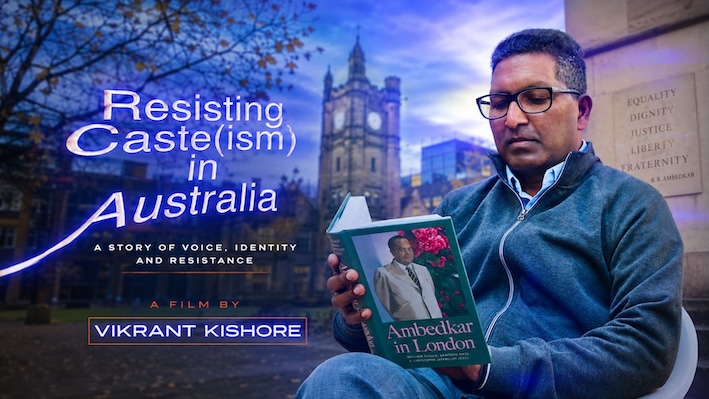
Her words place caste within the ordinary social questions that often pass without scrutiny. The documentary asks audiences to consider why some questions remain casual for one person but carry a much heavier memory for another.
Neeraj Ramteke reflects on caste as a public mark placed on children early in life. His account moves from school experience to adult friendship, demonstrating how exclusion can remain present even when it is not openly declared.
“In school, we were made to raise our hands if we belonged to certain castes. It set us apart publicly. Even in close friend circles, you could feel the invisible boundary; some things were always kept from us. Caste-based exclusion is not always loud, but it decides who belongs.”
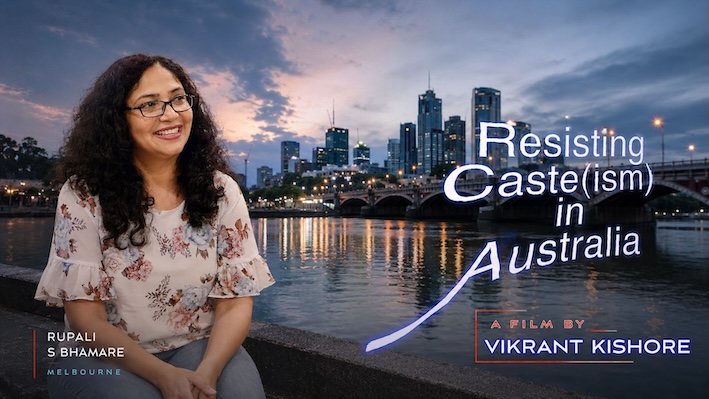
His reflection helps the film move beyond the idea that discrimination must always be dramatic to matter. It can also appear through absence, distance, hesitation and the sense that some spaces are available only on restricted terms.
Dr Haroon Kasim, community advocate and Vice President of the Periyar Ambedkar Thoughts Circle of Australia, places this discussion in the field of public action. His contribution connects lived experience to policy, community testimony and the need for those affected by caste-based harm to be heard by institutions.
“Caste discrimination is present in Australian communities, even when it is denied by those in positions of comfort. Change will not come from silence or dismissal. It requires listening to those who face caste-based harm, taking their experiences seriously, and turning community testimony into policy action. Real progress means allowing affected voices to lead the conversation, not erasing them.”
For Dr Kasim, confronting caste is not about dividing communities. It is about refusing to allow discomfort, denial or respectability politics to become reasons for silence. The documentary treats that refusal as a democratic act, especially in a society where equality depends on whether people are prepared to hear experiences that challenge familiar assumptions.
Dr Prashant Khobargade, a medical practitioner based in Coffs Harbour, recalls an incident that appeared to be about food but carried the memory of segregation. His contribution is one of the documentary’s most direct reminders that caste can appear in everyday habits, even when it is presented through other language.
“I was asked to use a separate plate because I eat meat. It was framed as vegetarianism, but it reminded me of marked utensils used to segregate caste groups. Even in another country, caste finds ways to express itself in everyday habits.”
The strength of this moment lies in how ordinary it first appears. The documentary does not ask audiences to treat every food practice as caste discrimination. It asks them to listen when someone explains why a practice carries a different meaning for them because of caste history and lived experience.
Dr Sangeeta Khobargade, also a medical practitioner based in Coffs Harbour, reflects on what happens after caste is named. Her words consider the social cost of speaking, especially when people respond not through open disagreement but through withdrawal.
“When I spoke about religion and caste violence, people quietly distanced themselves. The change in behaviour was subtle, but unmistakable. This discomfort is how caste continues: not with confrontation, but with silence and quiet withdrawal.”
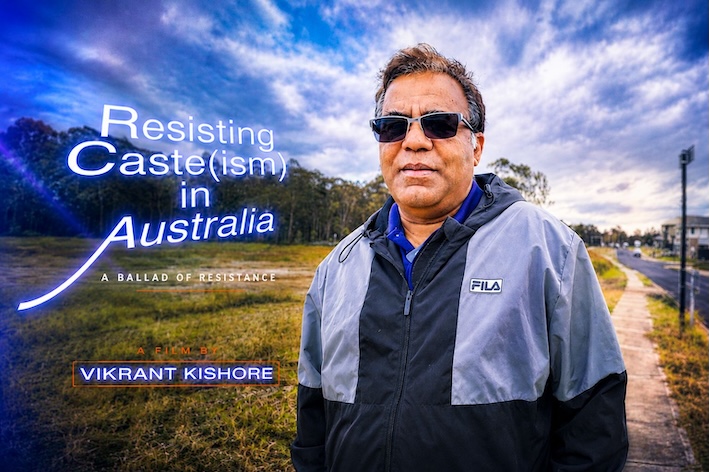
Her reflection gives the documentary one of its clearest observations: silence can also be a social response. It can decide who remains included, who becomes difficult, and whose experience is treated as an inconvenience.
These five reflections form part of a wider discussion in the documentary, which also includes Professor Hari Bapuji, Asmita Mahire Singh, Aparna Ramteke, Dr Parag Moon and Dr Ratan Lal. The film team gratefully acknowledges the support of Jane Athota, Minakshi Salave, Dr Sunita Bapuji, Sarwat Zahra, Tanvi Mor, Radhika, Deepak Joshi, Devibala Palanivel, Madhu Mita, Abbas Zaheer and Rakesh Mehmi.
Resisting Casteism in Australia was filmed, edited and produced by Dr Vikrant Kishore, produced by Kirti Sehrawat, with crew contributions from Martin Potter, Sam Sungmin Lee, Olia Kobzar, Ishani Sauvik, Amar Chandra and Abbas Zaheer.
The documentary does not ask audiences to leave the cinema with a fixed conclusion. It asks them to listen to people whose experiences have too often remained private, and to continue the discussion after the screening.
Following the Melbourne Documentary Film Festival screening, audiences will have an opportunity to continue the discussion during a Q&A with Dr Vikrant Kishore and contributors featured in the documentary.
Screening Details
Film: Resisting Casteism in Australia
Director: Dr Vikrant Kishore
Festival: Melbourne Documentary Film Festival 2026
Date: Sunday, 19 July 2026
Time: 12:15 pm
Venue: Cinema Nova, Melbourne
Running Time: 61 minutes
Language: English
Classification: E15+
Post-screening: Q&A with Dr Vikrant Kishore and contributors featured in the documentary
Film page: www.vikrantkishore.com/resistingcasteism
Ticket link: https://www.cinemanova.com.au/films/mdff26-resisting-casteism-in-australia
About the Film
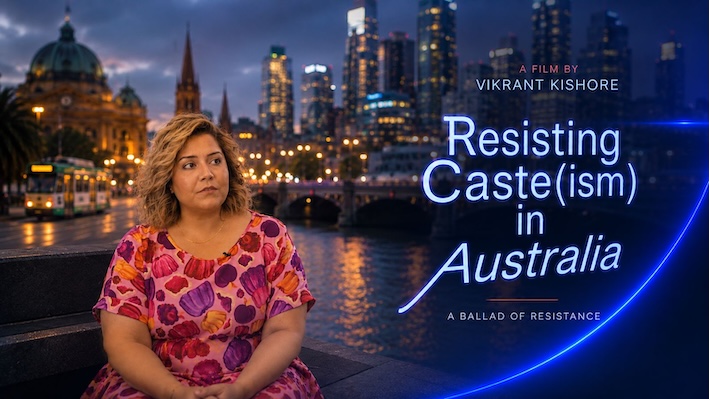
Resisting Caste(ism) in Australia is structured as a personal ballad of resistance. The documentary follows filmmaker Dr Vikrant Kishore on a 3,500-kilometre road journey from Melbourne to Sydney, Newcastle, Coffs Harbour, and back, bringing together conversations with academics, community leaders, activists, allies, and members of the Indian-Australian community. Through personal reflection and testimony, the film examines how caste continues to affect identity, migration, belonging, and everyday social experience in contemporary Australia. It asks how incidents often dismissed as isolated or personal may point to a wider problem that remains difficult to name. The film places Dalit voices, community experiences, and acts of resistance at the centre of this discussion.
About the Director
Dr Vikrant Kishore is an Australian filmmaker, journalist and academic. He is Associate Professor at the University of Nottingham Ningbo China. His documentary practice examines migration, identity, cultural heritage and social justice through personal reflection, interviews and community testimony. His films include Resisting Casteism in Australia, Chhau Dance and the Mask Makers and Pariza’s Lockdown Diary. He is a regular contributor to NRI Affairs.