
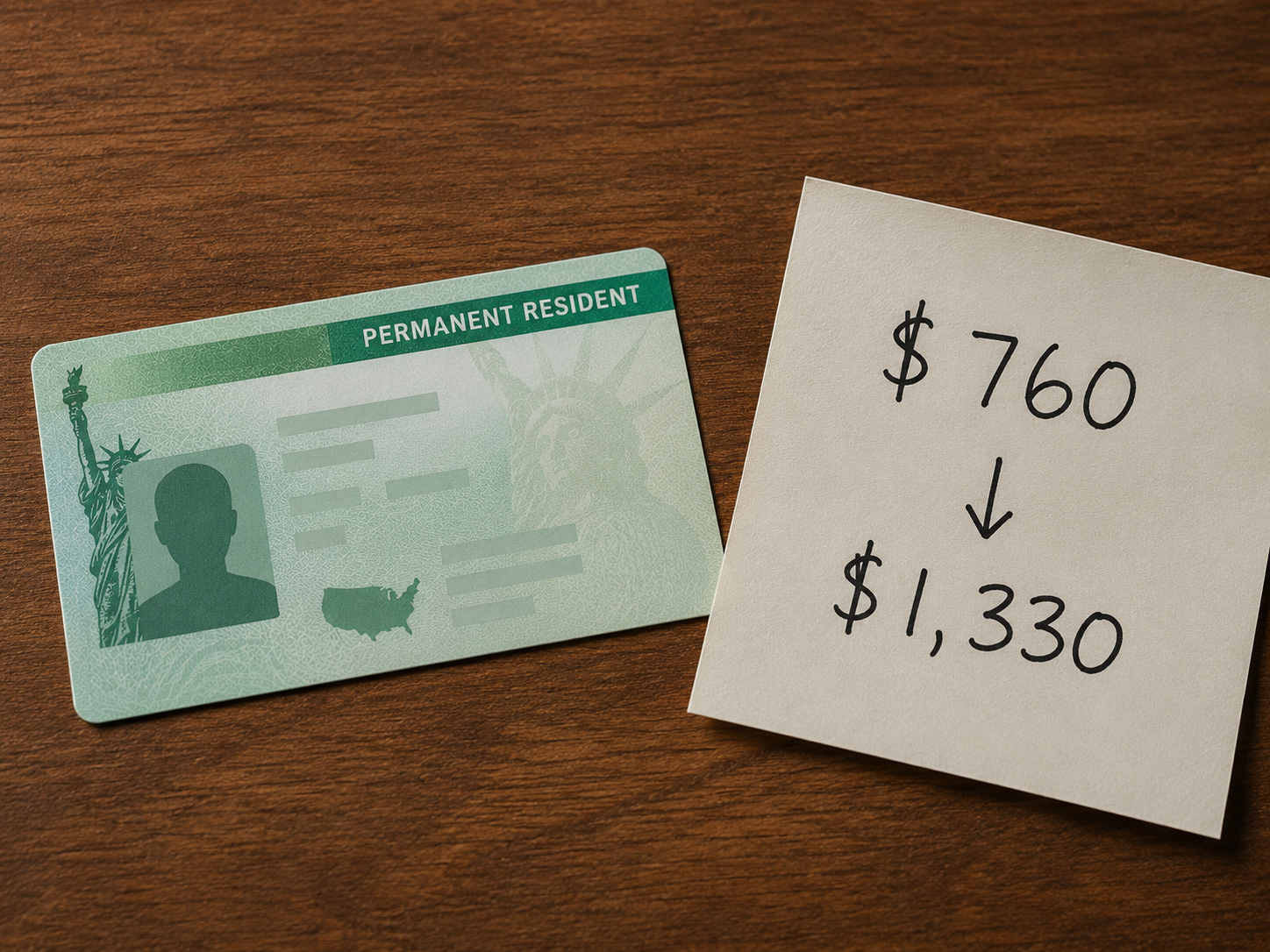
The United States Department of Homeland Security has proposed raising the cost of applying for citizenship by up to 80%, a change that would fall heavily on Indians who form one of the largest groups of green card holders waiting to naturalise.
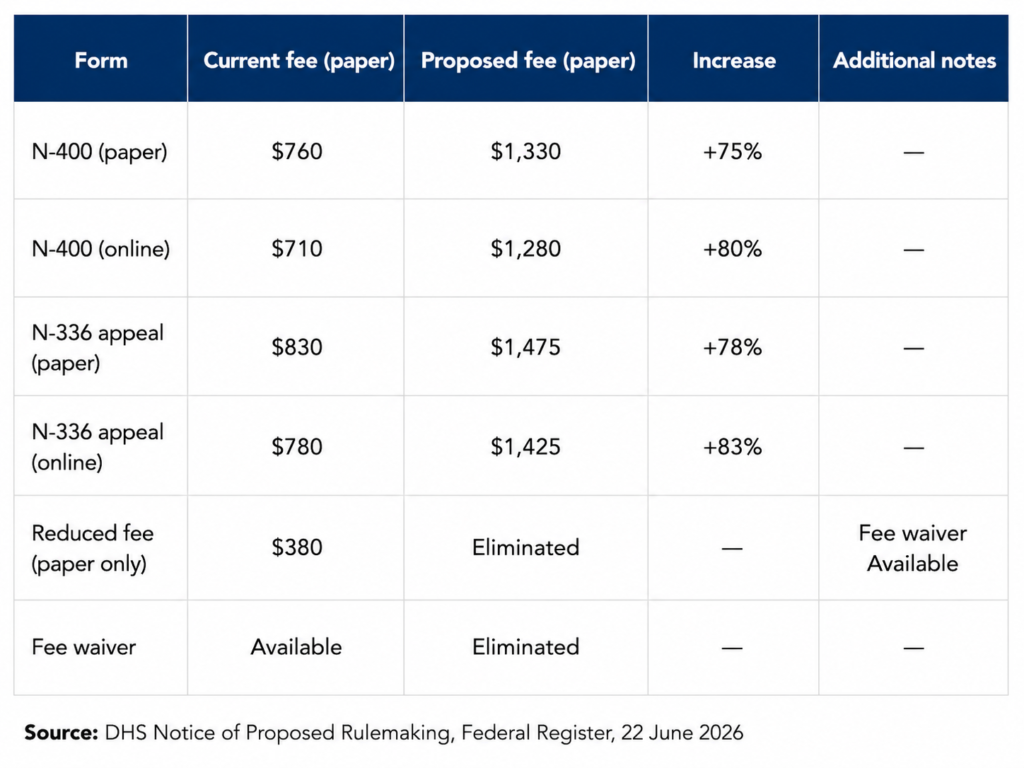
Under the proposal, the filing fee for Form N-400, the application used by lawful permanent residents to apply for naturalisation, would rise from $760 to $1,330 for paper filings and from $710 to $1,280 for online submissions. The proposal was published in the Federal Register on 22 June 2026 as a Notice of Proposed Rulemaking. A 60-day public comment period is now open, with comments accepted until 24 August 2026.
The rule has not taken effect. Current fees remain in place throughout the comment process.
What the fee proposal changes
The increases extend beyond the basic application cost. The fee for Form N-336, used by applicants who wish to appeal a denial of their naturalisation application, would rise from $830 to $1,475 on paper and from $780 to $1,425 online.
More significantly for lower-income applicants, the proposal eliminates both the reduced-fee option and all income-based fee waivers. Currently, applicants earning up to 400% of the federal poverty guidelines can file at a reduced rate of $380. Those facing financial hardship or receiving public benefits can apply for a full fee waiver. Both options would disappear under the new rule.
The only exemption that survives: current and former US military service members, who are exempt from naturalisation fees by law.
DHS describes the change as a shift to a “full-cost, beneficiary-pays” model, meaning applicants would cover the complete processing cost of their citizenship applications, including expanded background checks, interviews, vetting, and investigations now required under recent executive orders. The government argues that past administrations kept naturalisation fees artificially low to promote citizenship and integration, and that the Trump administration is reversing that approach.
What it means for Indians in the US
Who is affected
Indian nationals represent one of the largest groups waiting for employment-based green cards in the United States. According to data from India’s Ministry of External Affairs, there were approximately 6.7 million Indians in the US as of January 2026, of whom around 2.3 million are Non-Resident Indians and close to 3.8 million are Persons of Indian Origin. Many have spent years, in some cases decades, working their way through H-1B visas, employment-based green card sponsorship, and lengthy backlogs before reaching the point of eligibility to naturalise. For these individuals, citizenship is the final step in an already expensive immigration journey.
A 75% fee increase at that final stage is a material financial barrier, particularly for Indian immigrants who may still be managing the costs of earlier stages of their immigration process.
The fee waiver cut matters
The elimination of fee waivers is the sharper edge of this proposal. Indian immigrants in the US span a wide income range. Those in lower-income brackets who currently rely on the $380 reduced fee or a full waiver would face the full $1,330 under the new rule, with no alternative pathway.
Immigration advocacy group CLINIC has previously warned that fee increases and restrictions on waivers can discourage eligible applicants from pursuing citizenship, particularly those who are lower-income but fully qualified.
What critics and experts are saying
The proposal has drawn pushback from immigration lawyers and former officials.
Adam Klein, a former DHS official, told Newsweek: “The proposal represents a significant shift in the cost of becoming a US citizen. Substantially increasing naturalisation fees risks turning citizenship into a benefit that is less accessible to those of modest means. Naturalisation has historically been encouraged as a matter of public policy because citizens tend to experience greater economic mobility, civic participation, and long-term integration. Higher fees could undermine those goals.”
Immigration law firm Fragomen, which advises multinational employers on US immigration, confirmed the proposal would eliminate both the reduced fee and the availability of fee waivers for Form N-400 and said the rule does not have an immediate impact on filing fees while the comment period runs.
DHS, for its part, states that current revenue from N-400 fees falls short of what it costs to process applications, and that the increase is necessary to sustain adjudication capacity.
Should you file now?
The current fees remain valid until a final rule is issued. Filing Form N-400 at today’s rate of $760 (paper) or $710 (online) locks in the lower cost, provided USCIS receives the application before any final rule takes effect.
Eligibility requirements still apply. Filing before you meet the residency or other requirements can complicate your case. You generally need five years as a permanent resident, or three years if married to a US citizen, along with continuous residence and a record of good moral character. Consult an immigration attorney before filing to confirm your eligibility and timing.
What is Form N-400?
Form N-400 is the Application for Naturalisation filed by lawful permanent residents, or green card holders, to apply for US citizenship. It is the primary pathway to naturalisation for most immigrants in the United States. The form requires documentation of continuous residence, physical presence, language ability, and good moral character, and is followed by a biometrics appointment, an interview, and a citizenship test.
Frequently asked questions
When would the fee increase take effect? The proposed rule is not yet final. A 60-day public comment period runs from 22 June to 24 August 2026. DHS will review feedback and may revise the rule before issuing a final version. There is no confirmed effective date. Current fees stay in place throughout this process.
Can I still get a fee waiver for my N-400 application? Yes, under current rules. The existing fee waiver and reduced-fee options remain available until a final rule is published and takes effect. The proposal would eliminate both, but it has not passed yet.
How do I submit a comment on the proposed rule? Comments can be submitted through the Federal eRulemaking Portal at regulations.gov, using DHS Docket No. USCIS-2026-0265, before midnight ET on 24 August 2026.
How does this affect Indians on H-1B visas who do not yet have green cards? This proposal specifically affects naturalisation, the step after permanent residency. Indians still on H-1B visas or in the green card queue are not directly affected yet, but the broader direction of travel on immigration costs is worth watching.