
A new report has recorded a further escalation in hate speech targeting religious minorities in India, documenting 1,318 in-person hate speech events in 2025—an average of nearly four incidents every day—despite the absence of a nationwide general election.
According to Report 2025: Hate Speech Events in India, published by India Hate Lab, the figure represents a 13 per cent increase from 2024 and a 97 per cent rise compared with 2023, underscoring what researchers describe as the growing normalisation of sectarian rhetoric in public life.
Muslims and Christians overwhelmingly targeted
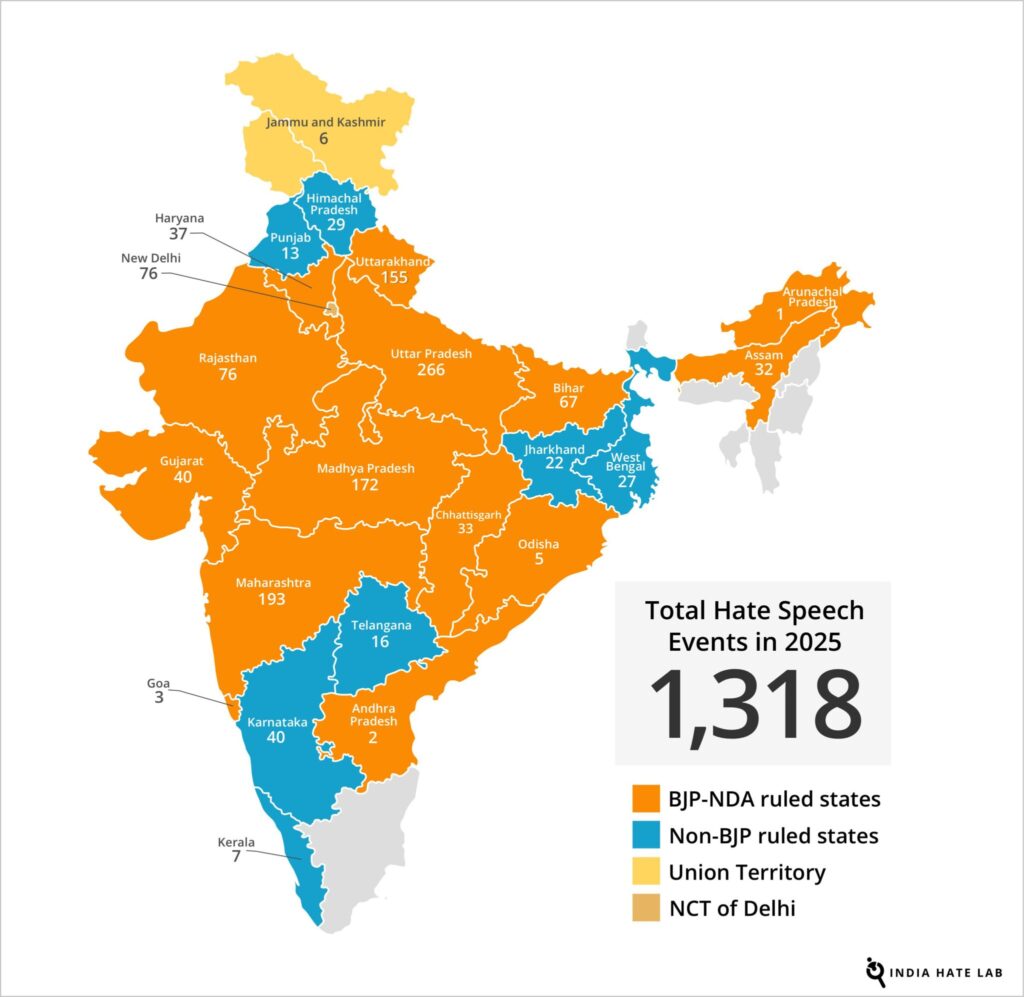
The report finds that Muslims were the primary targets, with 1,289 speeches—98 per cent of all incidents—directed at Muslims, either explicitly or alongside Christians. Hate speech targeting Christians appeared in 162 incidents, marking a 41 per cent increase from the previous year.
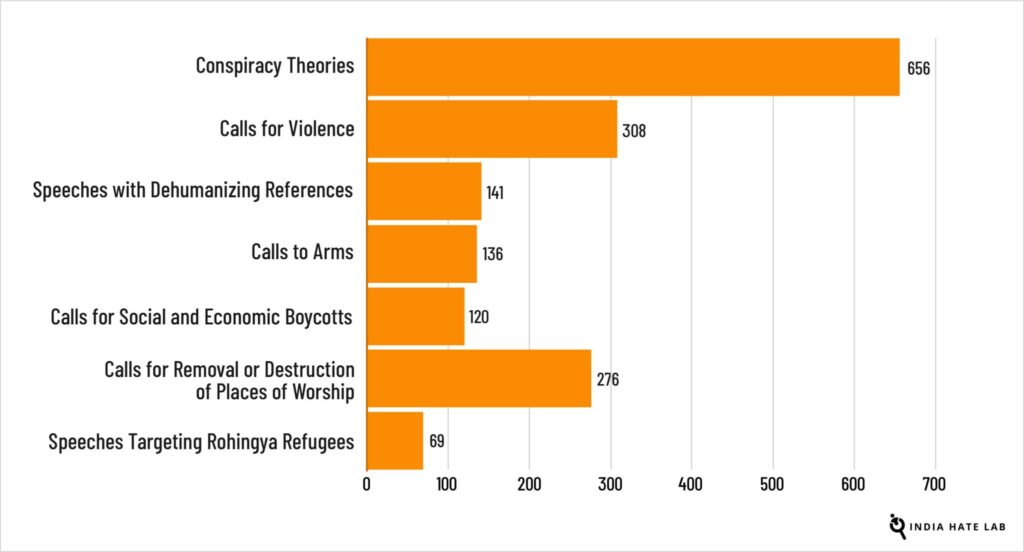
Researchers note that conspiracy theories such as “love jihad,” “population jihad,” “land jihad,” and “vote jihad” featured in nearly half of all recorded speeches, reinforcing narratives that portray minorities as demographic or cultural threats.
Concentration in BJP-ruled states
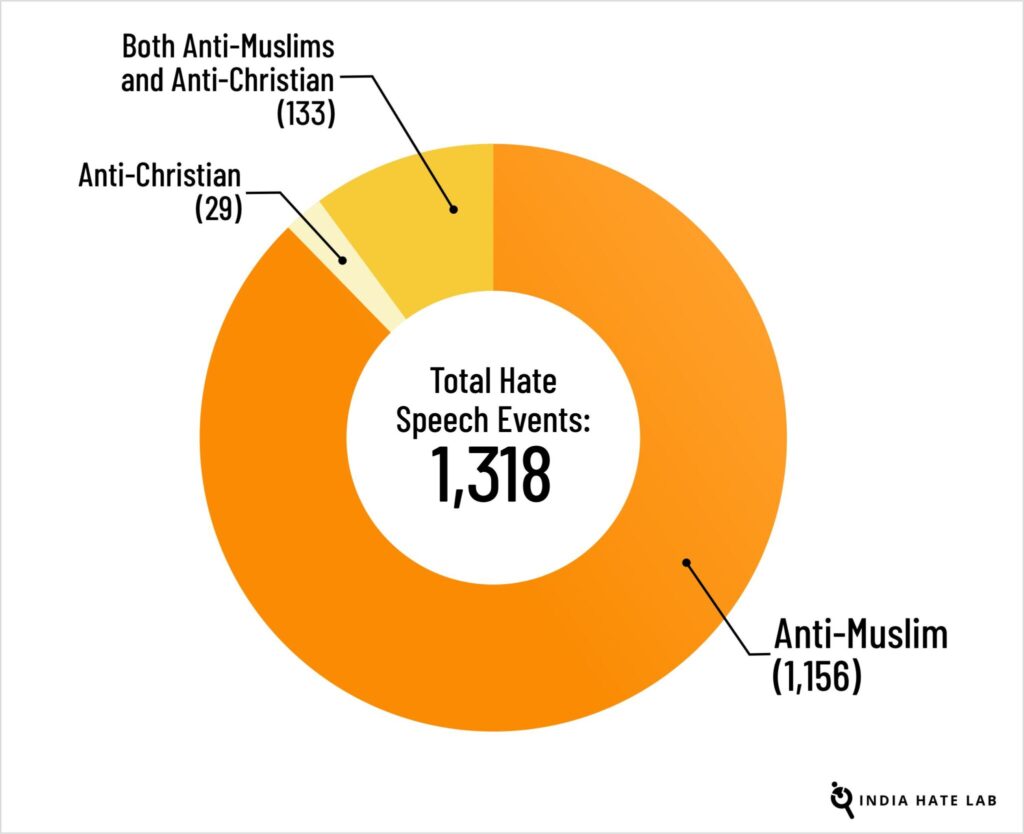
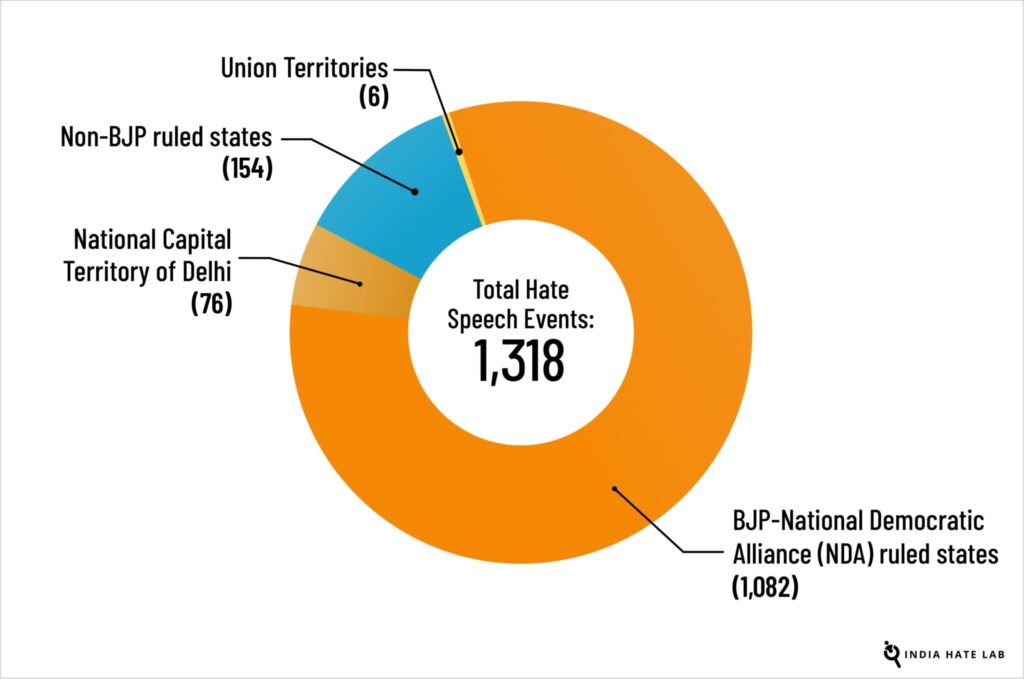
Geographically, hate speech was heavily concentrated in states governed by the Bharatiya Janata Party (BJP) or its coalition partners. The report records 1,164 incidents—88 per cent of the total—in BJP-ruled states and Union Territories, a 25 per cent increase from 2024.
The highest numbers were reported in Uttar Pradesh (266 incidents), followed by Maharashtra (193), Madhya Pradesh (172), Uttarakhand (155) and Delhi (76). By contrast, opposition-ruled states collectively recorded 154 incidents, a 34 per cent decline from the previous year.
Spikes linked to elections, festivals and security incidents
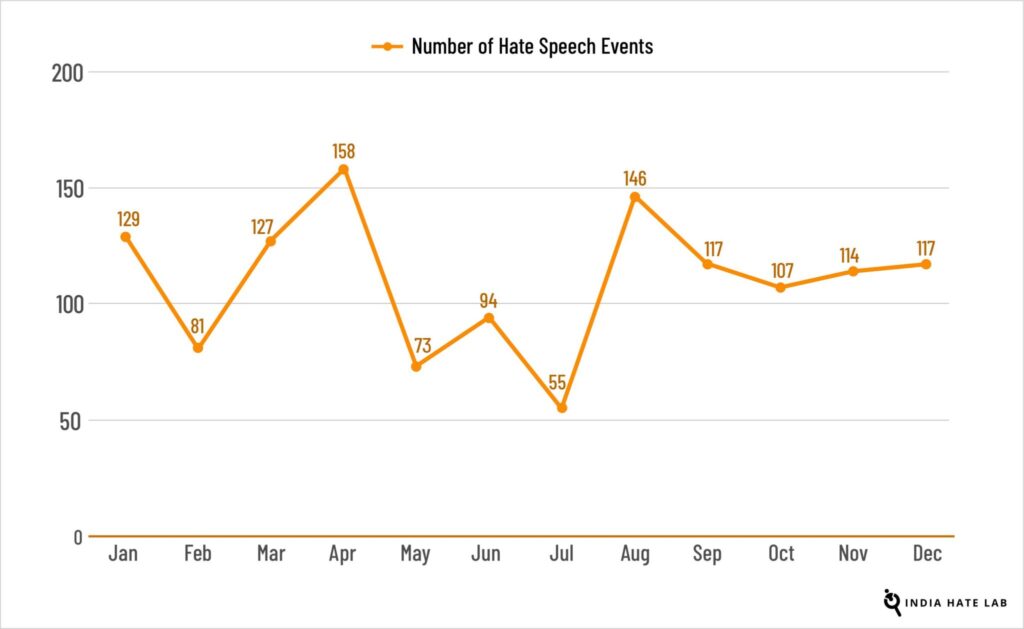
April emerged as the most volatile month, with 158 hate speech events, coinciding with Ram Navami processions and rallies following the Pahalgam terror attack. In the 16 days after the attack, researchers documented 98 in-person hate speech events, pointing to what the report describes as rapid, nationwide mobilisation of anti-Muslim rhetoric.
Other spikes were linked to state elections in Delhi and Bihar, as well as coordinated campaigns by Hindu nationalist organisations during religious processions and commemorative events.
Calls for violence and dehumanisation
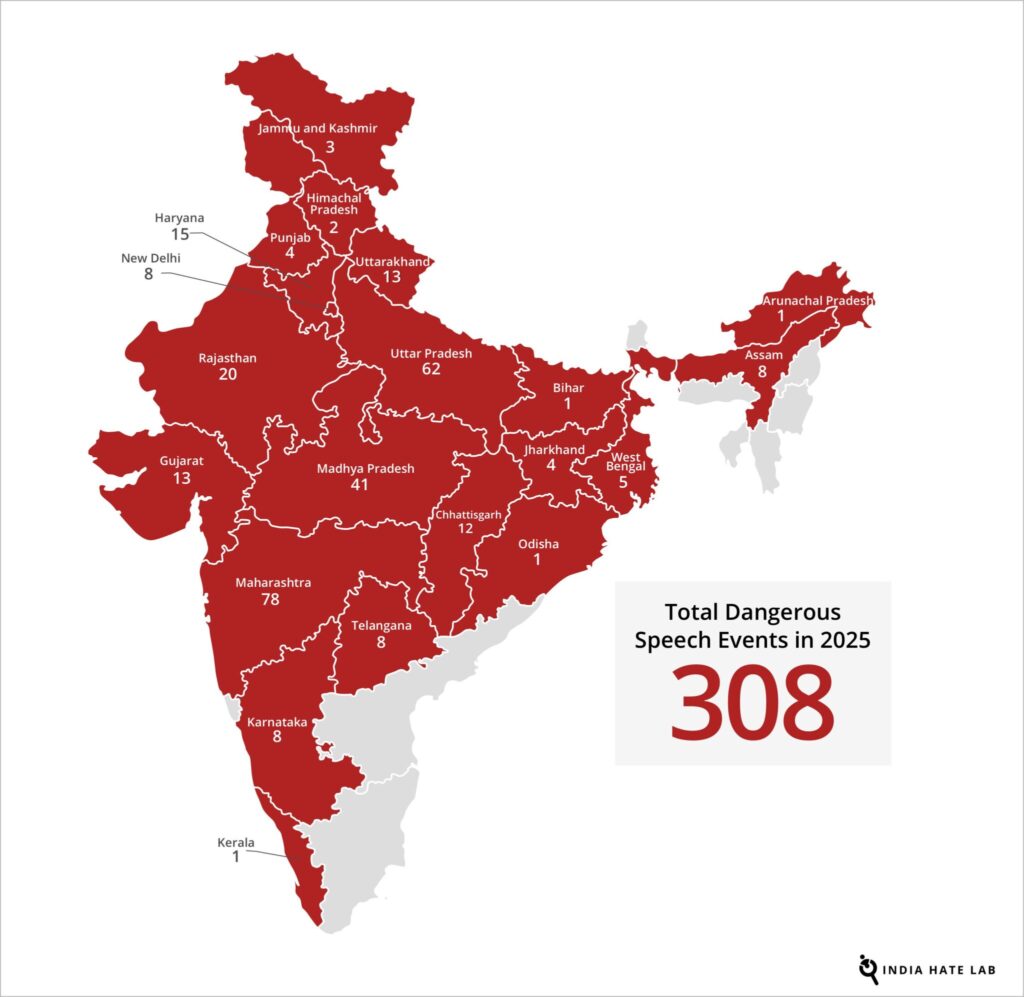
The report raises particular alarm about the intensification of dangerous speech. It documents 308 speeches containing explicit calls for violence, including 136 direct calls to arms. Maharashtra recorded the highest number of such dangerous speeches, with nearly 40 per cent of incidents in the state involving overt calls for violence.
Researchers also recorded 276 speeches calling for the removal or destruction of places of worship, most frequently targeting the Gyanvapi Mosque and Shahi Idgah Mosque in Uttar Pradesh. Dehumanising language—describing minorities as “termites,” “parasites,” or “insects”—appeared in 141 speeches.
Role of organised groups and social media
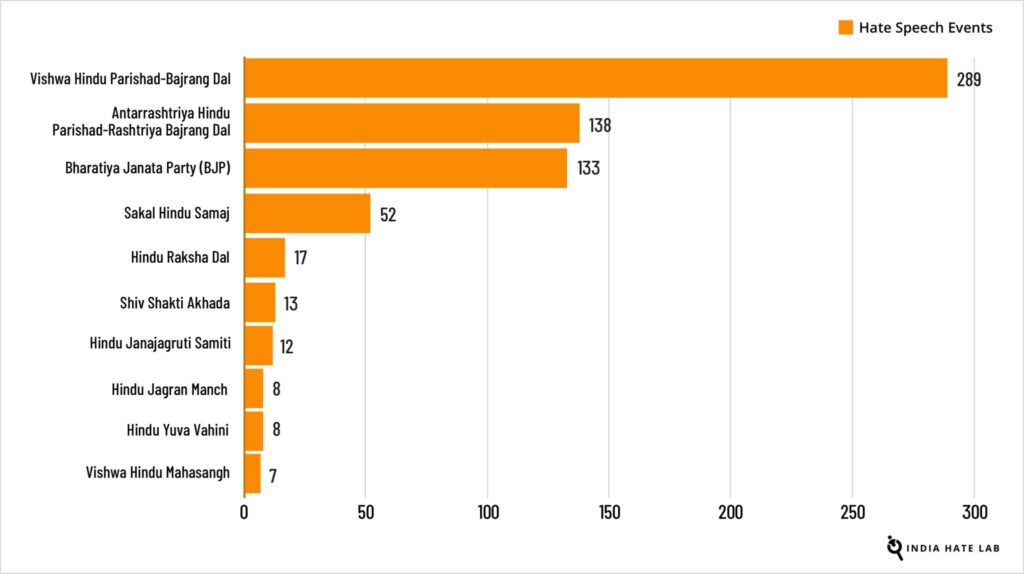
The Vishwa Hindu Parishad (VHP) and Bajrang Dal were identified as the most frequent organisers, linked to 289 events, followed by the Antarrashtriya Hindu Parishad. More than 160 organisations and informal groups were involved overall.
Crucially, the report highlights the role of digital platforms in amplifying offline hate. Videos from 1,278 events were first shared or live-streamed on social media, predominantly on Facebook and YouTube, enabling local rallies to reach national audiences within minutes.
“A new baseline of permissiveness”
India Hate Lab concludes that hate speech in 2025 has moved beyond election-specific mobilisation to become a “round-the-clock instrument” of political and social organising. The sustained rise, the report warns, has deepened vulnerability for Muslim and Christian communities and blurred the boundary between political rhetoric and incitement.
“The patterns identified signify a new and perilous era,” the authors note, arguing that the continued escalation reflects the institutional normalisation of hate speech rather than isolated or spontaneous expressions of anger.