• About
  • Advertise
  • Contact
  • Login
Newsletter
NRI Affairs
Youtube Channel
  • News
  • Video
  • Opinion
  • Culture
  • Visa
  • Student Hub
  • Business
  • Travel
  • Events
  • Other
No Result
View All Result
  • News
  • Video
  • Opinion
  • Culture
  • Visa
  • Student Hub
  • Business
  • Travel
  • Events
  • Other
No Result
View All Result
NRI Affairs
No Result
View All Result
Home Opinion

Why India’s monsoon is becoming more extreme – even though overall rainfall has hardly increased

Wilder, not wetter: climate change means extreme downpours are becoming far more common.

Guest Author by Guest Author
October 16, 2025
in Opinion
Reading Time: 5 mins read
A A
0
Why India’s monsoon is becoming more extreme – even though overall rainfall has hardly increased

Anil Shakya / Alamy

Share on FacebookShare on Twitter

Ligin Joseph, University of Southampton

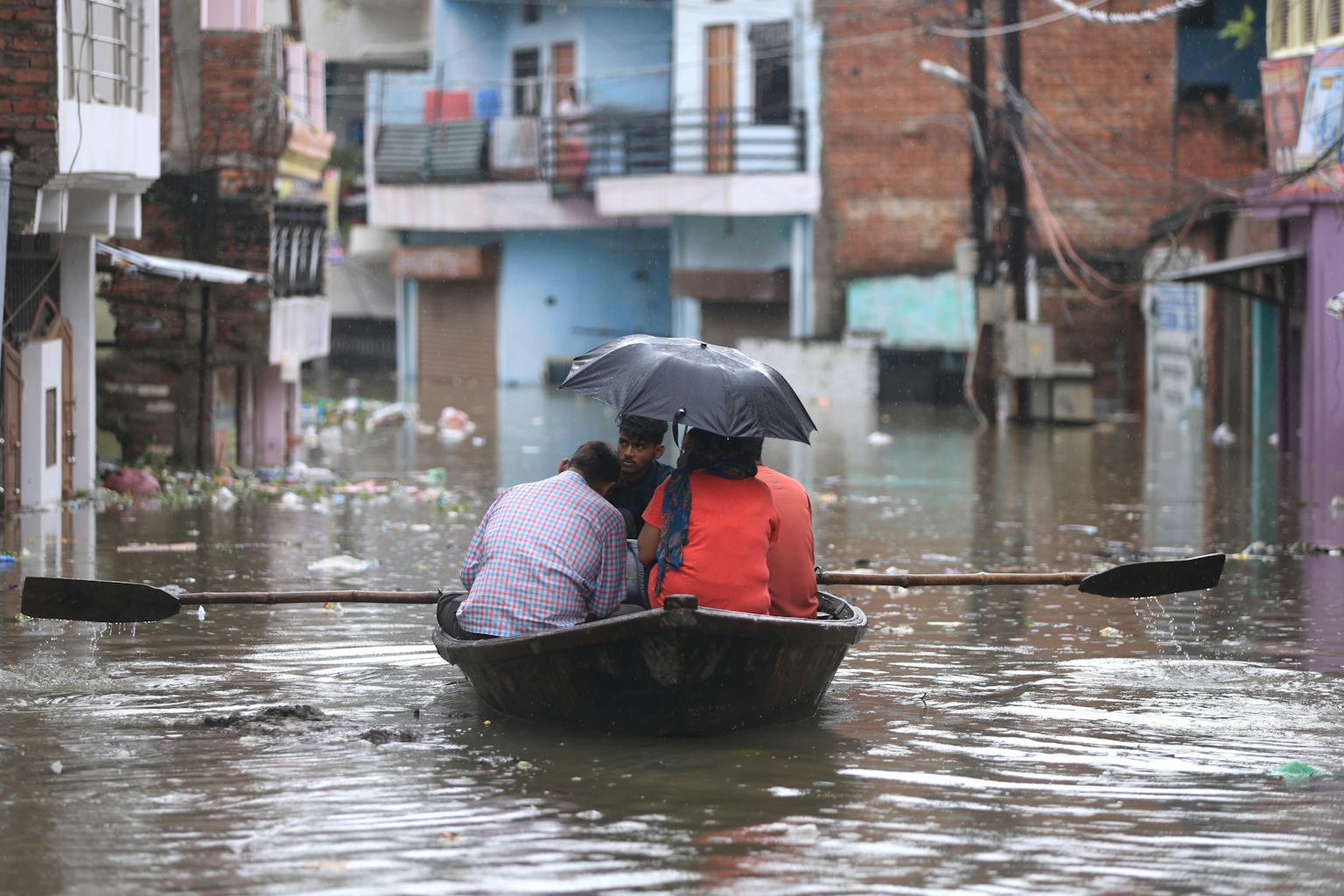
Across India, torrential rains over the past few months have swallowed an entire village in the Himalayas, flooded Punjab’s farmlands and brought Kolkata to a standstill. This all happened in a monsoon season in which total rainfall was technically only 8% above normal.

Climate change is not simply making India’s monsoon wetter. It’s making it wilder – with longer dry spells and more extreme downpours.

The Indian summer monsoon, which delivers about 80% of the country’s annual rainfall, usually sweeps in from the Arabian Sea in early June and retreats at the end of September. Growing up in India, I remember the joy of watching the rains arrive each year, the scent of wet earth and the relief they brought after a scorching April and May. Those memories still live in me. But today, the same monsoon that once filled our rivers and hearts with hope now brings fear and uncertainty.

This year, the monsoon arrived a week early, the fastest onset in 16 years. However, an early start does not necessarily translate to higher rainfall totals for the season. The modest 8% above average hides the real story: many regions experienced unusually intense and frequent downpours.

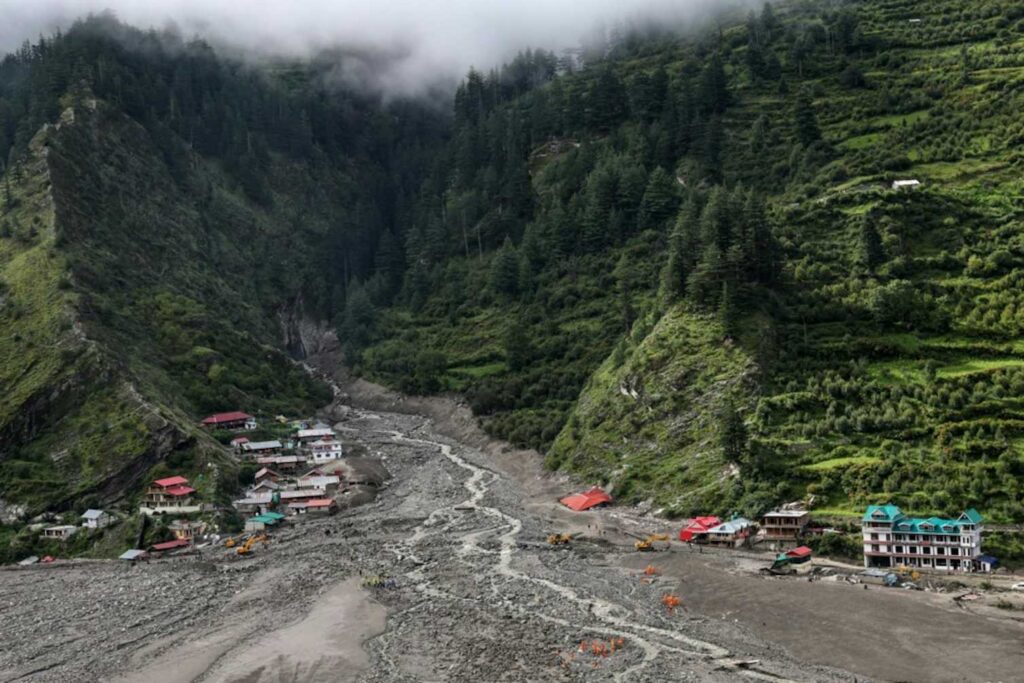
In the Himalayan village of Dharali, for instance, a cloudburst in early August triggered flash floods that left the local market buried under sediment as high as a four-storey building. Most parts of the village were completely washed away. Scientists suspect melting glaciers and cloudbursts – both linked to a warmer climate – were to blame.
IMG 1051
The village of Dharali was almost completely swept away in the floods. Rajat Gupta / EPA

In Punjab, a state of 30 million people often called India’s “food bowl”, heavy rains drowned crops across an area roughly the size of Greater Manchester. All 23 districts of the state were affected.

Scientists say the deluge was driven by an unusual interaction between regular monsoon weather systems and “western disturbances” – storm systems that originate in the Mediterranean and typically influence India’s weather in the winter. Their overlap this year amplified rainfall across northern India.

On the other side of the country, the huge city of Kolkata was not spared either. Some areas received 332mm of rain in just a few hours, more than half of what London gets in a whole year. The rains fell just before the major Hindu festival of Durga Puja, paralysing the city. The culprit was another low-pressure system that formed over the Bay of Bengal and carried vast amounts of moisture inland.
IMG 1052
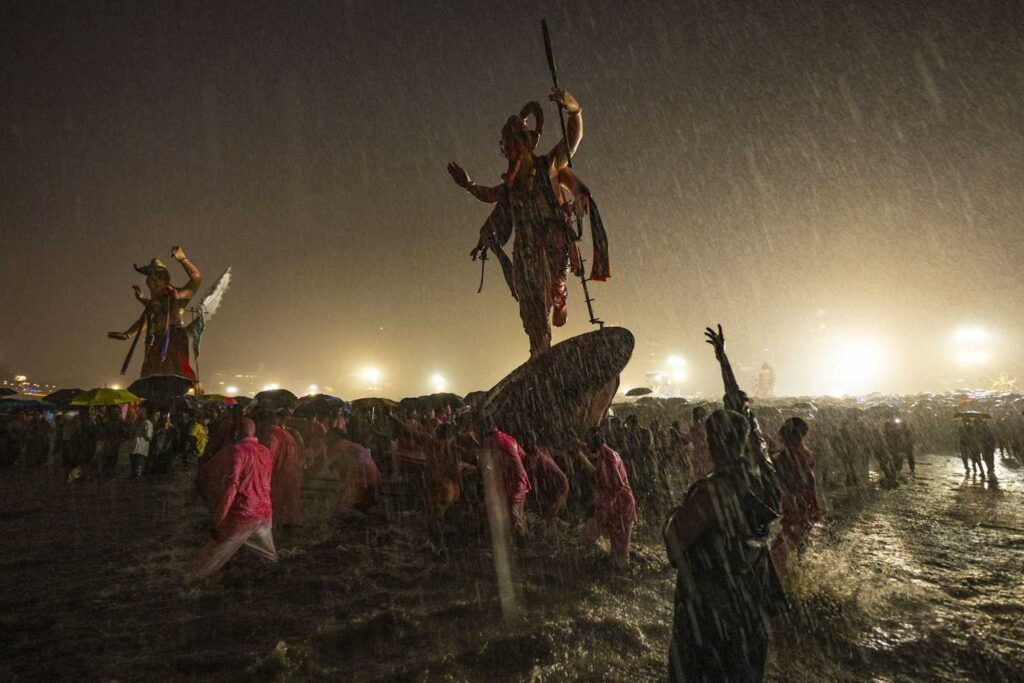
Torrential rain in Mumbai, September 2025. Amazing Aerial / Alamy

While the south escaped the worst flooding, cities such as Mumbai and Vijayawada also saw intense cloudbursts, demonstrating the spread of extreme rainfall.

Why the monsoon is becoming more extreme

Each disaster was driven by the same underlying trend: a warmer atmosphere that can hold more moisture. For every degree of warming, the air can store about 7% more water vapour – and when that moisture is released, it falls in heavier downpours over shorter periods. This trend is now clearly visible in India’s monsoon data.

Map of India
How the number of extreme rainfall days during the summer monsoon has changed since 1951. Green areas are having more extremes; brown areas less. Extremes are increasing across southern and western India, and decreasing in parts of central and northeastern India. (Boundaries and names shown on the map do not imply official endorsement or acceptance). Ligin Joseph (data: Indian Meteorological Department)

The number of extreme rainfall days, when daily totals exceed the top 10% of the long-term average, has risen sharply across southern and western India since the 1950s. Some regions, meanwhile, are receiving less overall rain but in stronger and more erratic bursts, meaning both droughts and floods can be a threat in the same season.

Scientists have also noticed shifts in the monsoon’s circulation and in the low-pressure systems that drive it. Climate change is pushing the whole monsoon system westward, increasing rainfall over typically arid northwestern India, while decreasing rainfall over the traditionally wetter northeast.

All this extreme rainfall is turning the monsoon from a friend into a foe. Unless we act responsibly to limit greenhouse gas emissions and become more resilient to the consequences of a changing climate, the season that sustains life across India may increasingly threaten it.


Don’t have time to read about climate change as much as you’d like?
Get a weekly roundup in your inbox instead. Every Wednesday, The Conversation’s environment editor writes Imagine, a short email that goes a little deeper into just one climate issue. Join the 45,000+ readers who’ve subscribed so far.


Ligin Joseph, PhD Candidate, Oceanography, University of Southampton

This article is republished from The Conversation under a Creative Commons license. Read the original article.


?s=32&d=mystery&r=g&forcedefault=1
Guest Author

Guest Author

Guest Author

Related Posts

Cash cows, scapegoats — and now global talent: Asian international students want to be seen for who they are
Opinion

Cash cows, scapegoats — and now global talent: Asian international students want to be seen for who they are

April 23, 2026
Women are reshaping the workforce – but power hasn’t followed
Opinion

Women are reshaping the workforce – but power hasn’t followed

April 21, 2026
Bait sheds light on British‑Pakistani mental health struggles rarely seen on screen
Opinion

Bait sheds light on British‑Pakistani mental health struggles rarely seen on screen

April 20, 2026
Next Post
California Governor vetoes bill on foreign repression, deepening rift between Sikh and Hindu Americans

California Governor vetoes bill on foreign repression, deepening rift between Sikh and Hindu Americans

The genocide will not end until the Palestinian political leaders are free

The genocide will not end until the Palestinian political leaders are free

OPINION: Wisdom—The Most Significant Virtue of Life

OPINION: Wisdom—The Most Significant Virtue of Life

Leave a Reply Cancel reply

Your email address will not be published. Required fields are marked *

Recommended

World Chess Championship: Gukesh’s historic victory applauded by legends and celebrities

World Chess Championship: Gukesh’s historic victory applauded by legends and celebrities

1 year ago
UNICEF Global Internship: A Unique Opportunity for Indian Students to Gain Practical Experience

UNICEF Global Internship: A Unique Opportunity for Indian Students to Gain Practical Experience

1 year ago
fake doctor auckland

Yuvaraj Krishnan, a fake doctor exposed by a colleague at Middlemore hospital, Auckland

4 years ago
Australia to Introduce Nationwide Ban on Swastika and Nazi Symbols

Australia to Introduce Nationwide Ban on Swastika and Nazi Symbols

3 years ago

Categories

  • Business
  • Events
  • Literature
  • Multimedia
  • News
  • nriaffairs
  • Opinion
  • Other
  • People
  • Student Hub
  • Top Stories
  • Travel
  • Uncategorized
  • Visa

Topics

Air India Australia california Canada caste china cricket Europe Gaza Hindu Hindutva Human Rights immigration India Indian Indian-origin indian diaspora indian student Indian Students Israel Khalistan Migration Modi Muslim Narendra Modi New Zealand NRI Pakistan Palestine politics Racism Singapore student students tariff trade travel trump UAE uk US USA Victoria visa Zohran Mamdani
NRI Affairs

© 2025 NRI Affairs.

Navigate Site

  • About
  • Advertise
  • Contact

Follow Us

No Result
View All Result
  • News
  • Video
  • Opinion
  • Culture
  • Visa
  • Student Hub
  • Business
  • Travel
  • Events
  • Other

© 2025 NRI Affairs.

Welcome Back!

Login to your account below

Forgotten Password?

Retrieve your password

Please enter your username or email address to reset your password.

Log In
WP Twitter Auto Publish Powered By : XYZScripts.com