
Pankhuri Agarwal, University of Bath; King’s College London
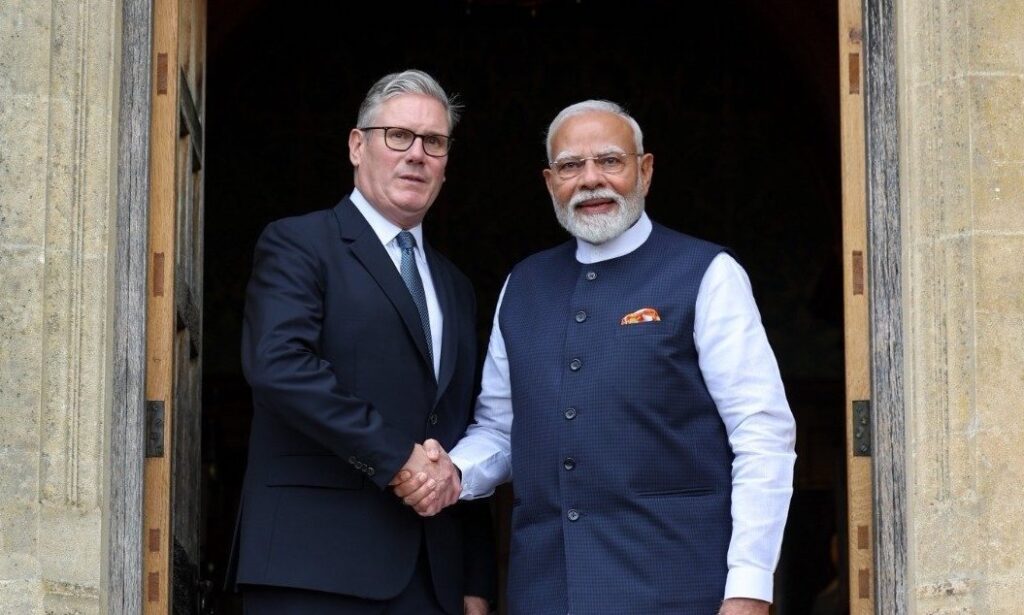
A new trade agreement between India and the UK is due to come into force this year. The deal is expected to completely remove tariffs from nearly 99% of Indian goods, including clothing and footwear, that are headed for the UK.
In both countries, this has been widely celebrated as a win for economic growth and competitiveness. And for Indian garment workers in particular, the trade agreement carries real promise.
This is because in recent years, clothing exports from India have declined sharply as well-known fashion brands moved production to places like Morocco and Turkey, which were cheaper.
India’s internal migrant workers (those who move from one region of the country to another looking for work) have been hit hardest, often waiting outside factories for days for the chance of a single shift of insecure work.
Against this backdrop, more opportunities for steadier employment and a more competitive sector under the new trade agreement looks like a positive outcome. But free trade agreements are not merely economic instruments – they shape labour markets and working conditions along global supply chains.
So, the critical question about this trade deal is not whether it will generate employment in India – it almost certainly will – but what kind of employment it will create.
Few sectors illustrate this tension more clearly than the manufacture of clothing. As one of India’s biggest exports, its garments sector is expected to be one of the primary beneficiaries of the trade deal.
But it is also among the country’s most labour-intensive and exploitative industries. From denim mills in Karnataka to knitwear and spinning hubs in Tamil Nadu, millions of Indian workers receive low wages and limited job security.
Research also shows that gender and caste-based exploitation is widespread.
So, if the trade deal goes ahead without addressing these issues, it risks perpetuating a familiar cycle where we see more orders and more jobs, but the same patterns of unfair wages, insecurity and – in some cases – forced labour.
Marginalised
For women workers, who form the backbone of garment production in India, these vulnerabilities are even sharper.
Gender-based violence, harassment and unsafe working conditions have been documented repeatedly across India’s export-oriented factories. Regimes which bound young women to factories under the promise of future benefits that often never materialised show how caste- and gender-based discrimination have long been embedded within the sector.
Even in factories that formally comply with labour laws, wages that meet basic living costs remain rare. Many workers earn wages which are not enough to pay for housing, food, healthcare and education, pushing families into debt as suppliers absorb price pressures imposed by global brands.
On the plus side, the India-UK agreement does not entirely sidestep these issues. There is a chapter which outlines commitments to the elimination of forced labour and discrimination.
But these provisions are mostly framed as guidance rather than enforceable obligation. They rely on cooperation and voluntary commitments, instead of binding standards.
While this approach is common in trade agreements, it limits this deal’s capacity to drive meaningful change. But perhaps even more striking is what has been left out.
Despite the role India’s social stratification system, known as caste, plays in shaping labour markets in India, it is entirely absent from the text of the agreement.
Yet caste determines who enters garment work and who performs the most hazardous and lowest-paid tasks. A significant proportion of India’s garment workforce comes from marginalised caste communities with limited bargaining power and few alternatives.
By addressing labour standards without acknowledging caste, the free trade agreement falls short. It could have required the monitoring of issues concerning caste and gender, and demanded grievance mechanisms and transparency measures that account for social hierarchies.
Instead, a familiar gap remains between commitments to “decent work” on paper and the reality which exists on factory floors.
Missed opportunity
If the India-UK deal is to be more than a tariff-cutting exercise, protections around caste and gender must be central to its implementation.
The deal is rightly being celebrated in both countries as an economic milestone. For the UK, it promises more resilient supply chains and cheaper imports. For India, it offers renewed export growth and the prospect of some more stable employment.
But the agreement’s long-term legitimacy will rest on whether it also delivers social justice.
India can use the deal to strengthen labour protections and ensure growth does not come at the cost of dignity and safety. The UK, as a major consumer market, can use its leverage to insist on enforceable standards for fair wages and decent work.
For trade deals do not simply move goods across borders – they shape the conditions under which those goods are produced.
Pankhuri Agarwal, Leverhulme Early Career Research Fellow, University of Bath; King’s College London
This article is republished from The Conversation under a Creative Commons license. Read the original article.