
Ali Mamouri, Deakin University and Fethi Mansouri, Deakin University
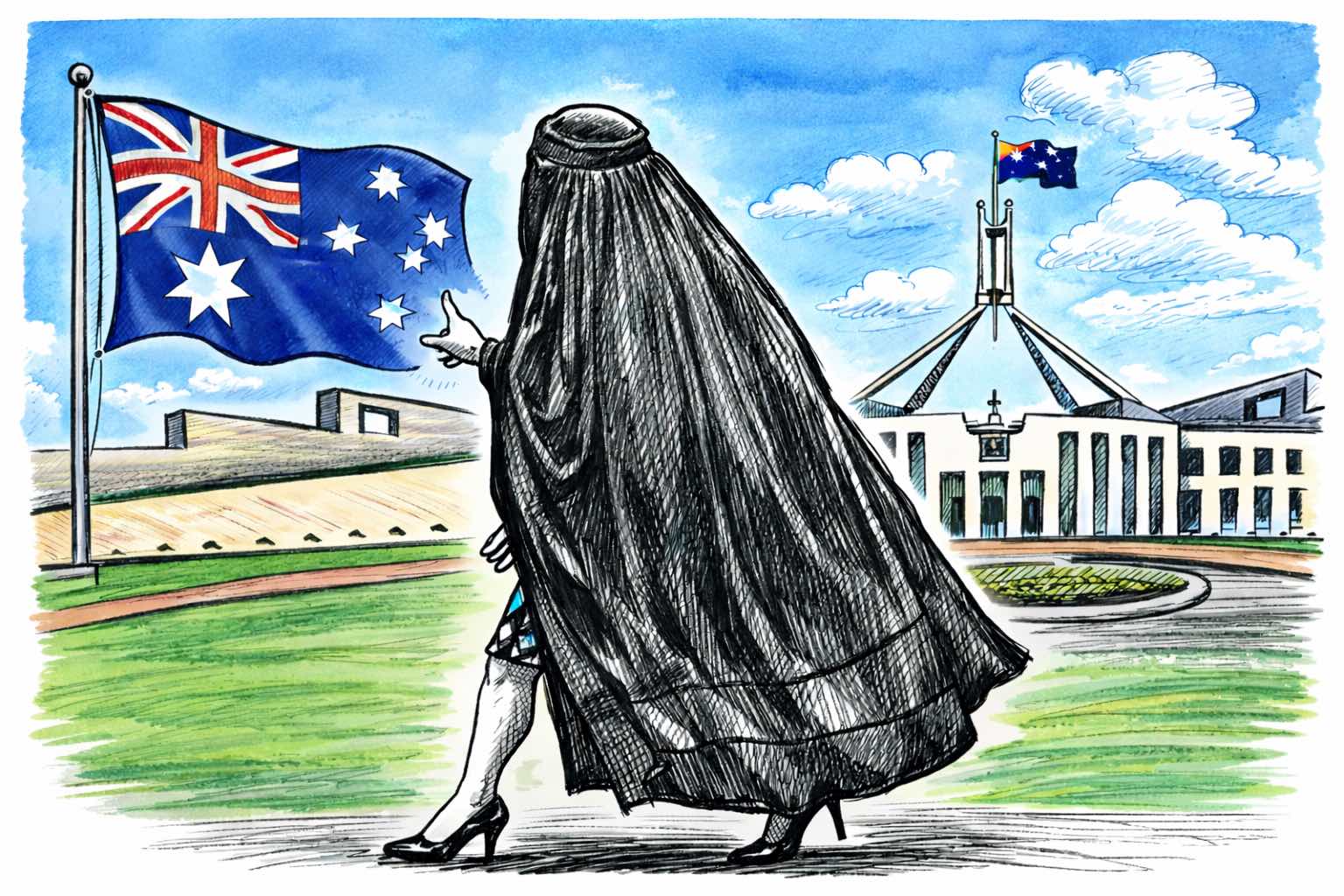
One Nation leader Pauline Hanson made headlines last week following an interview with Sky News in which she suggested there are no “good” Muslims.
The comment was outrageous by any measure, but the response relatively muted, reflecting a broader shift in political discourse.
Hanson’s comments have been reported to police – whether anything comes of this remains to be seen. But this broader shift allows for sweeping generalisations about an entire faith community to be voiced without triggering the same level of backlash or the invocation of hate speech laws that similar remarks about other minorities would likely provoke.
For Australian Muslims, the political atmosphere in the wake of the Bondi terrorist attack is febrile. Mosques are receiving threats during Ramadan. Muslim men performing their prayers, during a protest, are being roughly handled by NSW police in public without serious consequences.
Islamophobic incidents routinely spike in response to events thousands of kilometres away.
The question is no longer whether Islamophobia exists in Australia. The question is whether it has become normalised, tolerated in ways other forms of discrimination are not, and what this means for the country’s commitment to multiculturalism and liberal democracy.
From rhetoric to reality
The anti-Muslim rhetoric present within political discourse does not exist in a vacuum.
In the past month alone, close to or during the holy month of Ramadan, three threatening letters were sent to the Lakemba Mosque. During protests following events in Iran, extremist chants against Islam and Muslims circulated in Australian streets, such as calling for all Muslim clerics to be buried.
After the October 7 2023 Hamas terrorist attack on Israel, reported Islamophobic incidents rose sharply in Australia — doubling compared to previous years. Palestinians were particularly targeted.
The normalisation becomes even clearer when placed alongside the special envoy’s Plan to Combat Antisemitism proposed last year.
The framework was criticised by some legal scholars and even Jewish groups for conflating antisemitism with legitimate criticism of the State of Israel. That same framework underpinned legislative changes expanding penalties around certain forms of political expression.
Yet a statement implying there are no “good” Muslims resulted in little more than a heavily qualified partial apology.
Taken together, these developments point to a troubling pattern.
They reflect a logic of dehumanisation, homogenisation and collective blame. This involves treating a diverse religious community as monolithic and holding them responsible for incidents or international conflicts over which they have no control.
When rhetoric shifts, reality often follows.
Institutional gaps and structural concerns
Beyond individual incidents, there have been deeper institutional warning signs.
The Australian Human Rights Commission’s February 2026 report identified systemic racism within universities.
It found more than 75% of surveyed Muslim students and staff, more than 90% of Palestinian respondents, and more than 80% of Middle Eastern respondents reported they had witnessed racism directed at their communities. These figures point not to isolated prejudice, but to patterns embedded within everyday institutional life.
Data from 2025 show a further increase in Islamophobic incidents following October 2023. This shows anti-Muslim hostility in Australia is no longer simply connected to a lack of cultural and religious literacy. Rather, it has become politicised, often intensifying in response to international developments and domestic political rhetoric.
The appointment of a national Islamophobia envoy was an important acknowledgement of the problem. Yet beyond a broadly framed action plan, there has been little visible, sustained effort to build public awareness, shape policy, or strengthen protections for Muslim Australians.
Addressing Islamophobia, or any other form of racism, requires more than symbolic appointments. It demands consistent institutional commitment to protecting minority communities and reinforcing the principles of Australia’s multicultural democracy.
Islamophobia damages us all
Beyond isolated incidents, the deeper question remains: why does Islamophobia appear to be treated differently from other forms of racism?
Why can sweeping claims about an entire religious community enter mainstream discourse with comparatively limited consequence?
Why are Australian Muslims in particular so often held accountable for events by individuals taking place here in Australia or even thousands of kilometres away? Why are they repeatedly required to explain themselves, issue statements, or confirm their loyalty in order to be accepted as fellow citizens?
Few, if any, other communities are asked to collectively answer in the same way.
These questions matter because social cohesion depends on treating all citizens and groups with the same level of respect.
Australian multicultural democracy cannot selectively defend some communities while leaving others to navigate hate and hostility on their own.
When anti-Muslim rhetoric becomes normalised, it does more than harm one group. It erodes trust in institutions, weakens the credibility of anti-racism frameworks, and signals that equality before the law is unevenly applied.
Sustaining social cohesion requires more than a mere celebration of diversity. It demands vigilance in practice, ensuring all forms of discrimination are addressed with equal commitment, and political debate does not drift into the dehumanisation of entire communities.
The health of Australia’s multicultural democracy should be measured not by how it protects the majority, but by how consistently it protects all its minorities.
Ali Mamouri, Research Fellow, Middle East Studies, Deakin University and Fethi Mansouri, Deakin Distinguished Professor/UNESCO Chair-holder; Founding Director, Alfred Deakin Institute for Citizenship and Globalisation, Deakin University
This article is republished from The Conversation under a Creative Commons license. Read the original article.