
Milad Haghani, The University of Melbourne
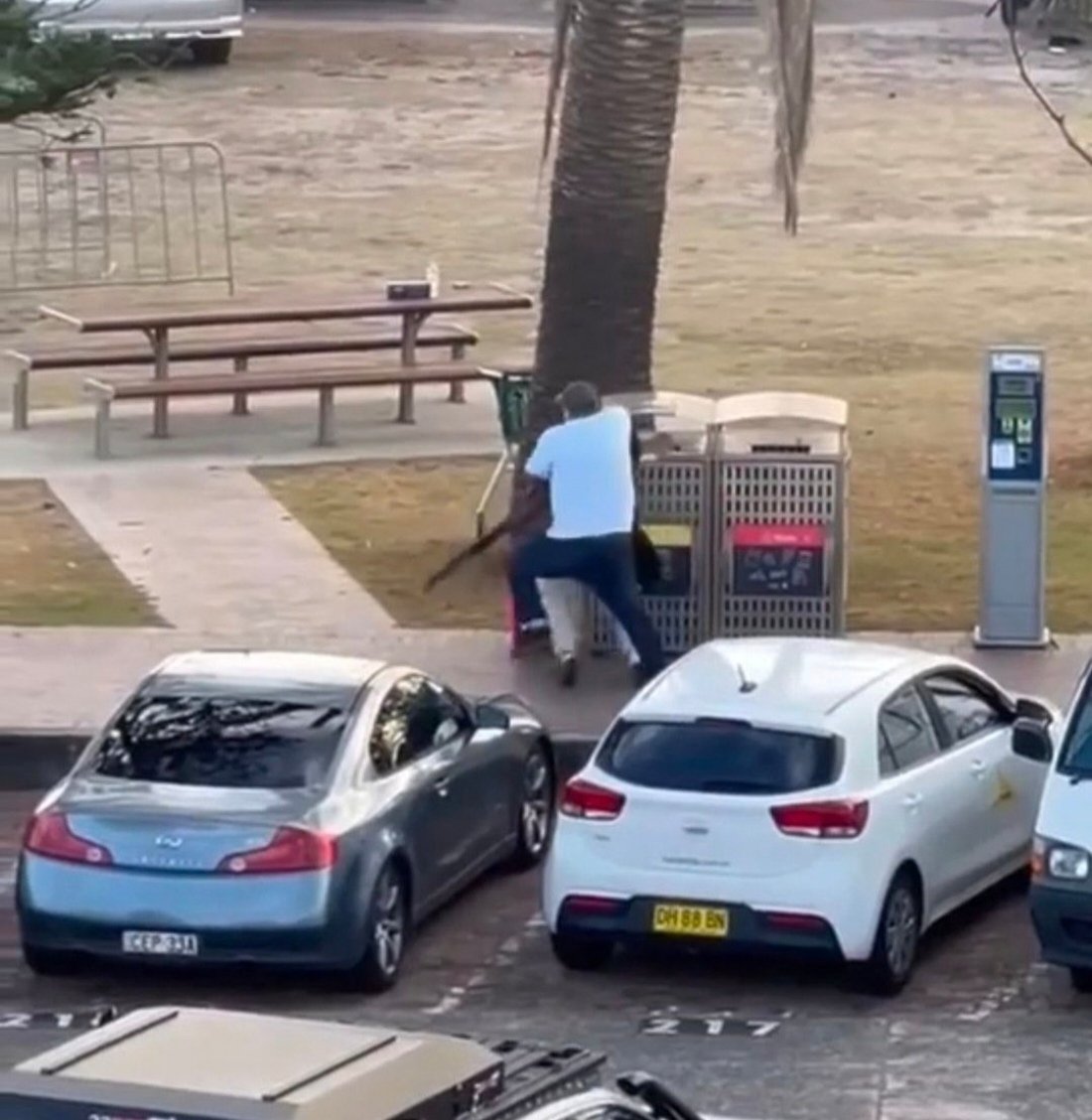
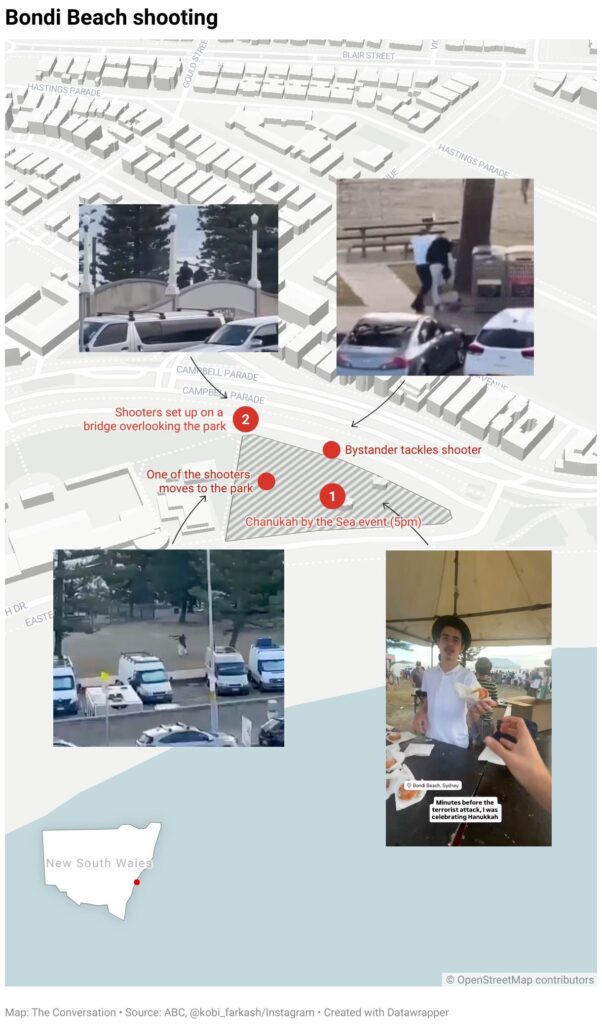
As Sunday’s Bondi Beach attack unfolded, many will have seen footage of a man acting alone, moving toward one of the gunmen and wrestling the weapon from his hands.
It was an extraordinary act of bravery that resulted in him being shot twice.
The man was named as 43-year-old Ahmed al Ahmed, a local fruit shop owner.
Incredible bravery, but there are risks
We have no way of knowing how many additional lives were saved as a result of Ahmed’s bravery. But it almost certainly prevented further loss of life.
The moment is reminiscent of when a bystander similarly intervened at great personal risk during the Bondi Junction shopping centre attack in 2024.
When acts of courage like these occur, we rightly take notice and commend them.
But they also raise important and often overlooked questions: what motivates ordinary people to take such selfless, high-risk actions, is bystander intervention a good strategy, or does it go against official advice during mass violence events?
Two types of ‘bystander effect’
Many people would have heard of the “bystander effect”, which occurs when the presence of others discourages someone from intervening in an emergency situation, against a bully, or during an assault or other crime.
But decades of behavioural research complicate the popular idea that people inevitably freeze or look away when others are present during dangerous situations.
A large meta-analysis of bystander behaviour shows in genuinely dangerous, unambiguous emergencies (like those involving a clear perpetrator), the classic (passive) bystander effect is substantially weakened, and in some cases even reversed.
In other words, violent attacks are precisely the kinds of situations where people become likelier to act.
One reason is danger clarifies responsibility. When a situation is clearly life-threatening, people recognise it faster and are less likely to wait for social cues or reassurance from others.
We see time and again that in clear high-risk emergencies (particularly those involving violence), responsibility often sharpens rather than disappears.
An analysis of more than 100 suicide attacks in Israel shows bystander intervention can significantly reduce overall casualties.
Across these documented incidents, intervention rarely prevented an attack altogether but it frequently disrupted the attacker’s control over timing and location, triggering premature action in less crowded settings and saving lives as a result.
The same analysis, however, also shows bystander intervention often came at a direct personal cost to the interveners.
But active bystander behaviour takes many forms and can occur at different stages.
It may also involve:
- someone who knows the perpetrator noticing and reporting concerning behaviour in the lead-up to an attack
- guiding others to safety or sharing information as events unfold
- providing assistance and coordination in the aftermath.
However, getting involved does seem to fly in the face of official advice from Australian authorities.
In fact, only a few weeks ago, the Australia–New Zealand Counter-Terrorism Committee launched a new national public safety campaign.
A new safety message
The new public safety campaign explicitly recognises that Australia is a safe country but there remains a risk of weapons attacks in crowded places, and that knowing how to respond can save lives.
The campaign introduced the guidance “Escape. Hide. Tell.” which means:
- escape: move quickly and quietly away from danger but only if it is safe to do so
- hide: stay out of sight and silence your mobile phone
- tell: call police by dialling Triple Zero (000) when it is safe.
The aim of this advice is to help people respond in the critical first moments before police arrive, make informed decisions, and increase their chances of staying safe.
The official Australian guidance does not include any instruction to confront an attacker.
By contrast, US public safety messaging such as the FBI’s “Run. Hide. Fight” guidance does include a “fight” step, but only as a last-resort option when escape and hiding are not possible and life is in immediate danger.
Australian authorities have chosen not to include such a step, emphasising avoidance and reporting rather than confrontation.
Some practical advice
My previous experimental research has identified more specific behavioural guidance that can improve survival chances in violent attacks, particularly in crowded environments.
Using computer modelling and controlled experiments with real crowds, I have identified several strategic areas to improve their survival chance in such events.
First, moving slowly away from danger is not ideal – people need to move away from the source of threat as quickly and safely as possible.
Second, hesitation – whether to gather information, inspect what is happening, or film events – increases the risk of harm.
Third, people need to remain agile in their decision-making and navigation while they are moving and be willing to adjust their movement as situations evolve and information becomes clearer. This means continuously scanning your surroundings and adjusting direction as new information becomes apparent, rather than stopping to reassess.
Finally, when moving with family or friends, travelling in a single-file formation – staying close in a back-to-back snake formation rather than holding hands side by side – benefits everyone by reducing congestion and improving flow.
Be prepared
The events in Sydney are horrific and they underline a difficult reality: preparedness for violent risks in crowded places needs to become more mainstream.
Crowded spaces will always remain vulnerable to deliberate violence, whether driven by terrorist intent or other motivations.
Messaging needs to reach more people to be evidence-based, nuanced, and widely accessible.
With several major public events and large mass gatherings approaching (including New Year’s Eve) it is more important than ever for people to be aware of these risks and remain vigilant.
Milad Haghani, Associate Professor and Principal Fellow in Urban Risk and Resilience, The University of Melbourne
This article is republished from The Conversation under a Creative Commons license. Read the original article.