
Emily Servante, University of Cambridge
It’s an exciting time to be a microbiologist working in rice research. A global push towards the cultivation of water-saving rice is enabling farmers to harness the power of microbes that thrive in less water.
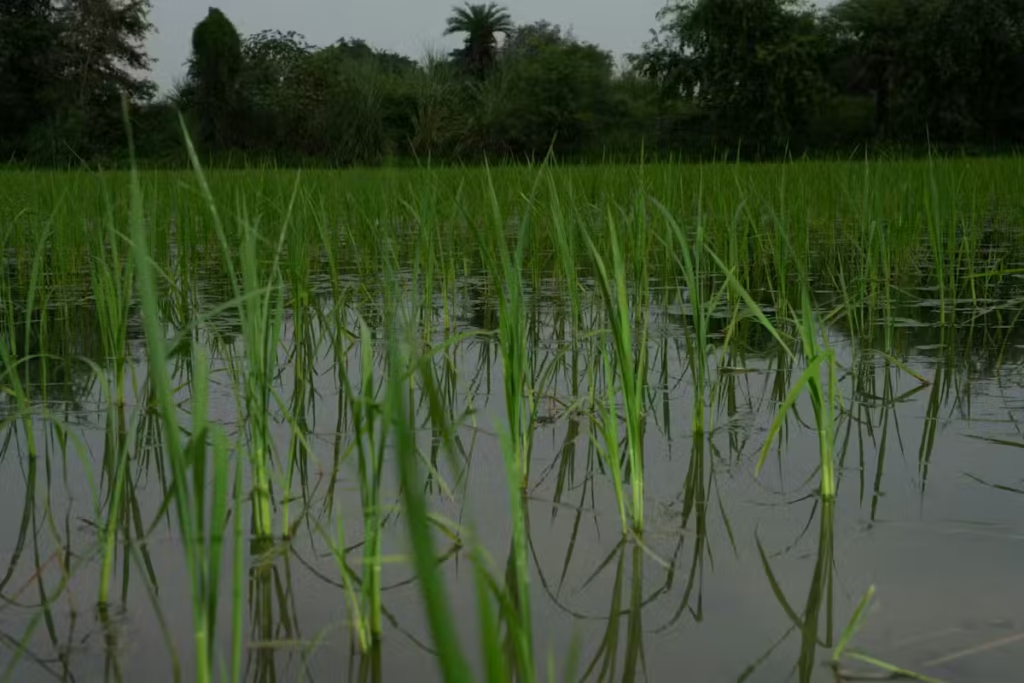
Some farmers already use rice production systems that reduce or eliminate the length of time rice is submerged in a flooded paddy field. At the sowing stage, planting of pre-germinated seeds (direct seeding) rather than traditional transplanting of small plants into flooded paddies reduces the need for waterlogged fields. Waterlogged rice paddies emit huge amounts of methane, a potent greenhouse gas.
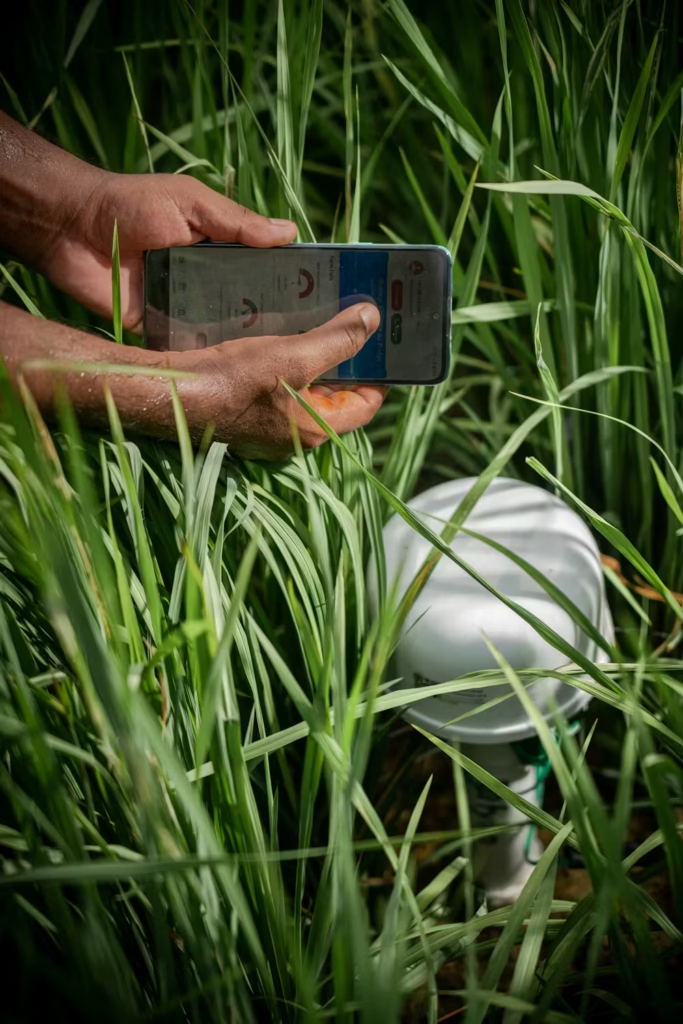
Similarly, an irrigation practice known as alternate wetting and drying uses pipes drilled into fields to encourage water management and intermittent flooding, reducing water usage and methane emissions.
Among microbes thriving in less water are arbuscular mycorrhizal fungi. These are beneficial soil fungi that live inside plant roots and help to extend plants’ reach into the soil to collect nutrients, acting as “natural biofertilisers”.
Arbuscular mycorrhizal fungi are aerobic, meaning they require oxygen for survival. This makes them more likely to be well suited to the drier, more aerated soils (with air spaces to allow efficient exchange of nutrients, water and air) that are increasingly promoted in sustainable rice systems.
To test this theory, I stepped out of the Crop Science lab at the University of Cambridge and into the field at the International Rice Research Institute (IRRI) in the Philippines.
Using some ink stain and a microscope, I examined roots from IRRI 154, a direct-seeded water-saving rice variety developed by the institute.
The results were striking: in IRRI 154 grown in traditional flooded paddy conditions, there were no signs of arbuscular mycorrhizal fungi colonising the rice roots. But in irrigated, non-flooded “dry” conditions, the fungi were present in up to 20% of the root. This was a clear indication that water-reducing farming practices like dry direct-seeding can promote arbuscular mycorrhizal fungi colonisation in rice.
Similarly, a recent study reported that arbuscular mycorrhizal fungi help rice grown under alternate wetting and drying in Senegal to have increased resilience to changes in water and nutrient levels.
Arbuscular mycorrhizal fungi don’t just help plants access nutrients. They can also provide resistance to pathogens and increased survival in harsh climate conditions such as drought. Encouraging them to colonise rice plants could therefore enhance the overall resilience of rice, an increasingly important trait in the face of climate change and water shortages.
By supporting and even boosting beneficial microbes like these, our team at the Crop Science Centre also hope to reduce the use of synthetic nitrogen fertilisers. Fertilisers are a major source of nitrous oxide (N₂O), a potent greenhouse gas. One alternative is for farmers to apply biofertilisers, products containing live beneficial microorganisms such as arbuscular mycorrhizal fungi to promote growth.
Determining and testing optimal formulations and application strategies is a big challenge for researchers like me. The effectiveness of biofertilisers depends on several critical quality-control factors. This includes avoiding contamination, preventing spoilage during storage, successful establishment in the soil and efficient colonisation of plant roots.
The soil is a complex environment. Solutions need to be tailored to local landscapes and specific situations. That’s where an ongoing partnership with Tilda, a UK rice brand, comes in. Tilda successfully implemented water-saving alternate wetting and drying with thousands of basmati farmers in India. Since this encourages the arbuscular mycorrhizal fungi, it has enabled my colleagues and I to put our science into practice.
I visited farmers in Haryana and Uttar Pradesh to ask about their thoughts on using local arbuscular mycorrhizal fungi-based biofertilisers to reduce the use of synthetic fertiliser. To my surprise, many had heard of “mycorrhizae” and were optimistic about its potential.

Our first mission was to check the presence of arbuscular mycorrhizal fungi in Pusa 1, a popular basmati variety grown in the area. Together with the rice farmers in Haryana, we turned the local rice market (mandi) into a lab, setting up ink staining and microscopes for people to see. I found the characteristic tree-like structure of arbuscular mycorrhizal fungi in a root, and ran outside to tell the crowd of over 20 farmers and agronomists to take a look.
From lab to field
Having confirmed that the fungi were present in Pusa 1 basmati, and with advice from Tilda’s local agronomists, we decided to test two locally available “mycorrhizae” biofertilisers in 31 pilot farms.
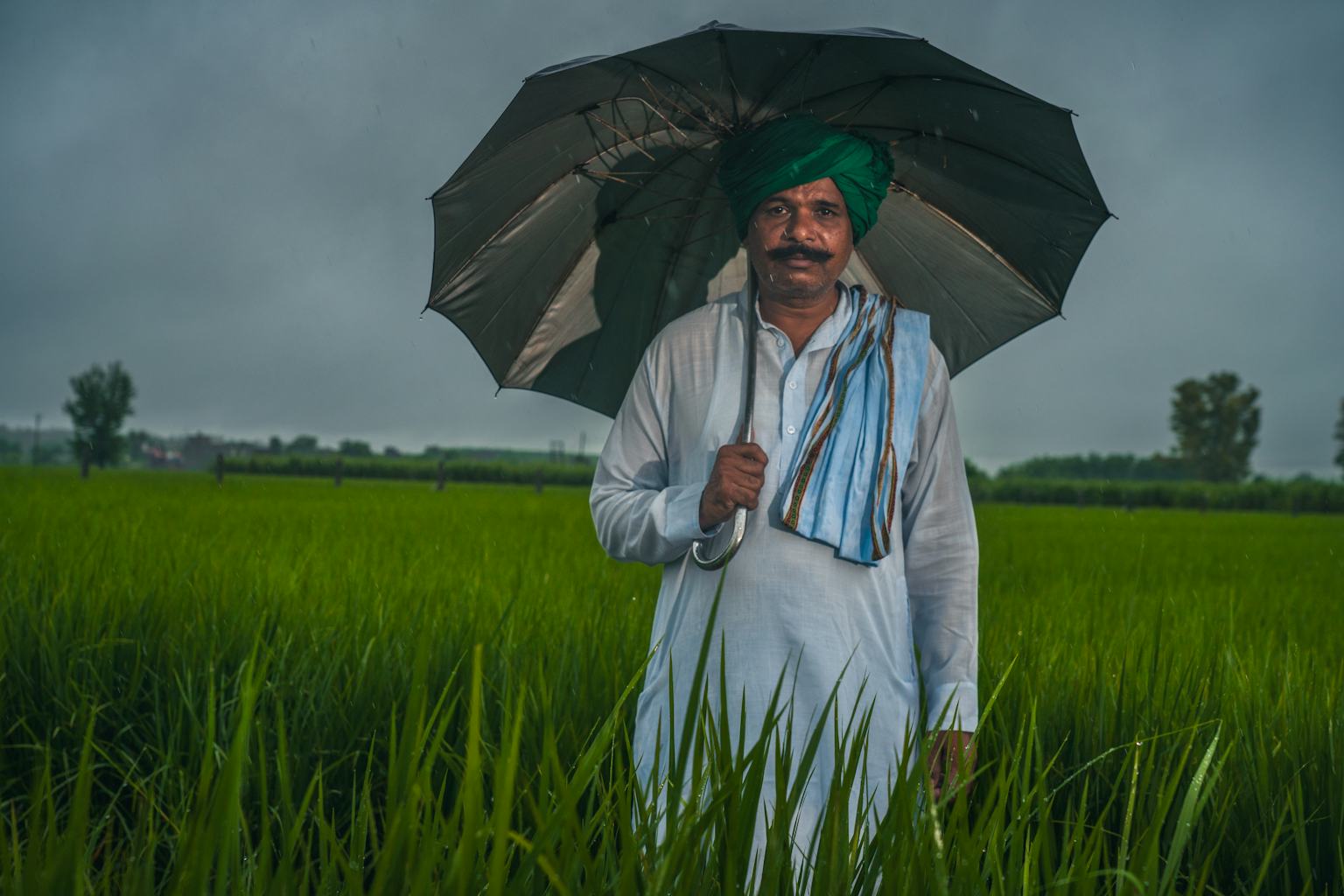
We visited the farmers involved in this pilot in September 2025. In Uttar Pradesh, we visited the family farm of Bhoti Devi, a female farmer, and gathered under a tree for shade while discussing field observations with her and some other farmers in the area.

The farmers told me that the rice with added mycorrhizae biofertiliser appeared to have increased root growth and a higher number of tillers (farm machinery with rotating blades that churn up and aerate the soil), indicating a potential boost in yields. I shared images from my own tests in Cambridge which showed similar results. It was so exciting to share and compare our observations.
In Haryana, ten farmers similarly described improved root growth. This visible improvement gives us and farmers confidence that these biofertilisers could be improving crop performance while water-saving techniques are being used. Now, we’re gathering data from this season to confirm these initial observations.
Our next steps for the biofertiliser testing are two-fold: to investigate whether we can apply them to reduce the use of synthetic fertiliser, and to examine the composition and sustainability of the available commercial biofertiliser products. This will ensures they reduce the use of synthetic fertiliser and associated greenhouse gas emissions. With more than 4,000 farmers in Tilda’s network, tests can be scaled up to assess the effects of reduced synthetic fertiliser on rice yields.
Translating our lab-based research into a real-world, scalable application is a dream scenario. From breeding programmes at IRRI in the Philippines to farmer fields in India, water-saving rice systems like direct seeding and alternate wetting and drying are promoting the presence of arbuscular mycorrhizal fungi in rice roots.
Together with rice farmers in India, we can explore how to use more natural biofertilisers to reduce synthetic fertilisers and build more sustainable farming systems.
This article is republished from The Conversation under a Creative Commons license. Read the original article.