
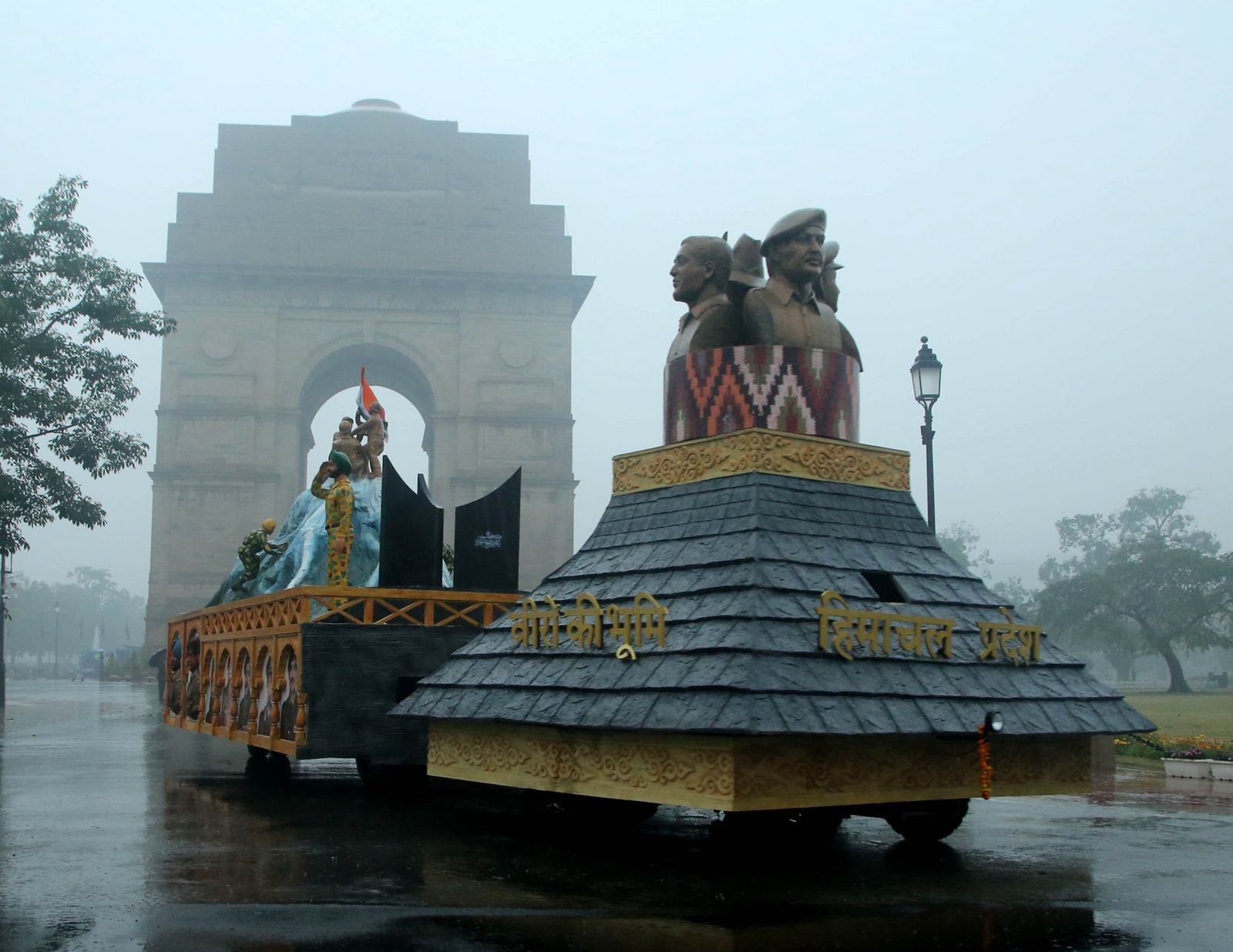
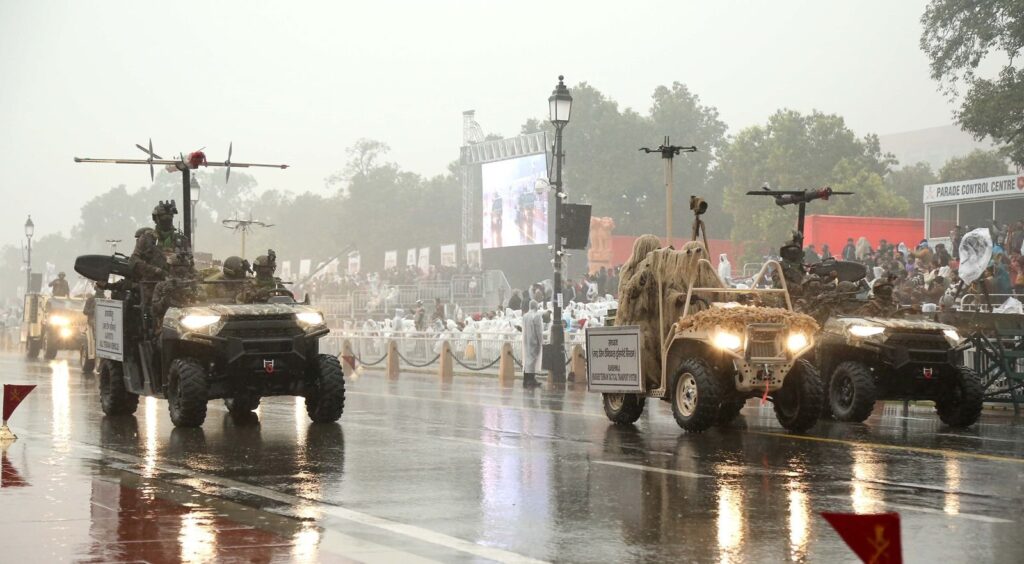
Republic Day on January 26 is an official colossal event in India every year to celebrate the adoption of its Constitution on January 26, 1950, marking the nation as an independent democratic republic.
Looking at the country over the years, the overall picture of India remains the same. Maybe not.
Especially when there has been quite an ideological transformation to reweave India’s social and secular fabric in the last just over 12 years since Modi became the nation’s prime minister.
A nation of extremes
The cliché that India is a country of extremes, when explored, makes it so complex and contradictory that all the realistic but conflicting arguments and statistics just balance each other out.
And that leaves a juggernaut of overviews or images of the country, making it one of the most complex societies in the world.
The extremes of India can be as high as the Himalayan peaks. Or these can be as deep as the Indian Ocean. They cover all aspects of the nation and its 1.41 billion people, spread over an area of 3,214 kilometres from north to south and 2,993 kilometres from east to west.
Language, culture and diversity
These billion-plus people speak over 185 different languages. Twenty-nine of these are categorised as “official”. That means each one of them has over one million native speakers.
The linguistic breakdown continues with countless dialects within the family of each official language.
The plethora of languages and dialects results in multi- and multicultural distinct communities retaining their ethnicities in India’s diverse environment.
Religion and pluralism
In addition to the linguistic and cultural divide, India’s population is further splintered along the world’s major and minor religions. These religious affiliations are then subdivided into hundreds of regional and ethnic sects.
Hindus dominate the religious demography, accounting for 80.5 per cent of the population. Hinduism has the most sects. Muslims are the second-largest group, with 172.2 million followers according to the 2011 census. That earns India the distinction of having the third-largest Muslim population in the world after Indonesia and Pakistan.
India is the birthplace and cradle of four religions—Hinduism, Buddhism, Jainism and Sikhism. Christianity touched its soil about 2,000 years ago, almost at the same time it entered Europe.
Whereas the country’s religious, linguistic and cultural plurality seeks peaceful preservation under the nationalistic jingle of “unity in diversity”, occasional bursts of communal violence dampen that spirit.
Progress alongside deprivation
However, the realities of contemporary India lie in its voluminous changes and no change at all. It is a wide-open scene of extreme disparity in all fields and occupations.
Even though the poor in India spend 80 per cent of their income on groceries, the food they buy is not nutritious or protein-rich.
With the ever-increasing population, India faces significant challenges in meeting the growing needs of its people.
Despite tremendous progress in infrastructure, India has a poor record of road safety.
Corruption and criminalised politics
As we move on to realise and comprehend India, corruption, black money, and unethical, dirty and criminally polluted politics blight the country, giving a message of hopelessness about whether the nation will ever cure itself of these ills.
With the whopping sums of black money, it sure feels like India is a rich country filled with the poor.
With corrupt and black money comes the criminalisation of politics, as a nexus exists among criminals, politicians and bureaucrats. Criminals enjoy the patronage of politicians of all parties and the protection of government functionaries. Gang leaders have become political leaders, and over the years, criminals have been elected to local bodies, provincial assemblies and even the national parliament.
The corruption, black money and contaminated politics in the country, along with pathetic and deplorable widespread poverty, while being denounced, resented and protested, are at the same time accepted as inevitable norms.
And these issues are as tolerable as the open garbage littering the streets of India. Still, life goes on, despite being intentionally ignored as visible realities.
The glittering face of modern India
The striking realities of the nation include the whopping increase in mobile phone subscribers and internet users, now running into the millions. There are impressive, exciting and trendy big shopping malls. Several lanes of modern highways, freeways and flyovers are changing the urban and countryside landscape.
Many five- to seven-star hotels with fluent English-speaking staff, the latest models of luxury cars, and plenty more are visible realities.
Famous brand-name expensive clothing and most household accessories; millions of barrels and bottles of the finest wines, whiskies and scotch; multi-storey commercial and residential buildings with ultra-modern amenities and luxurious décor; and skyrocketing real estate values—among the highest in the world—add to the cultural, economic and architectural scene of modern India.
American and European culture seems to be part of the Indian cultural mosaic, especially among young, educated, well-paid professionals and businesspeople.
That is the new reality of contemporary India, represented by the rich and middle-class sections of the population. But it creates the illusion that the nation is a land of enormous prosperity.
This illusion is reinforced by the media through their various programming, commercials and advertising, which portray India as spotlessly clean and its people as quite well-off and happy, dancing to the Bollywood tunes of Indian cinema.
Democracy under strain
The current disparities, contrasts and extremes of present-day India offer both apprehensions and challenges for the nation.
The most anguished aspect of this scene lies in its institutional damage, which is a primary cause of concern for the survival and functioning of democracy in India.
The judiciary, the election commission, the media and statistics are among the most operational institutions of democracy, which keep it authoritative, functional, dynamic and accountable. If any or all these systems are damaged, corrupted, compromised or abused, democracy becomes meaningless—or even collapses.
And that is the most serious reality as India celebrates another year of Republic Day with pageantry and parades.