

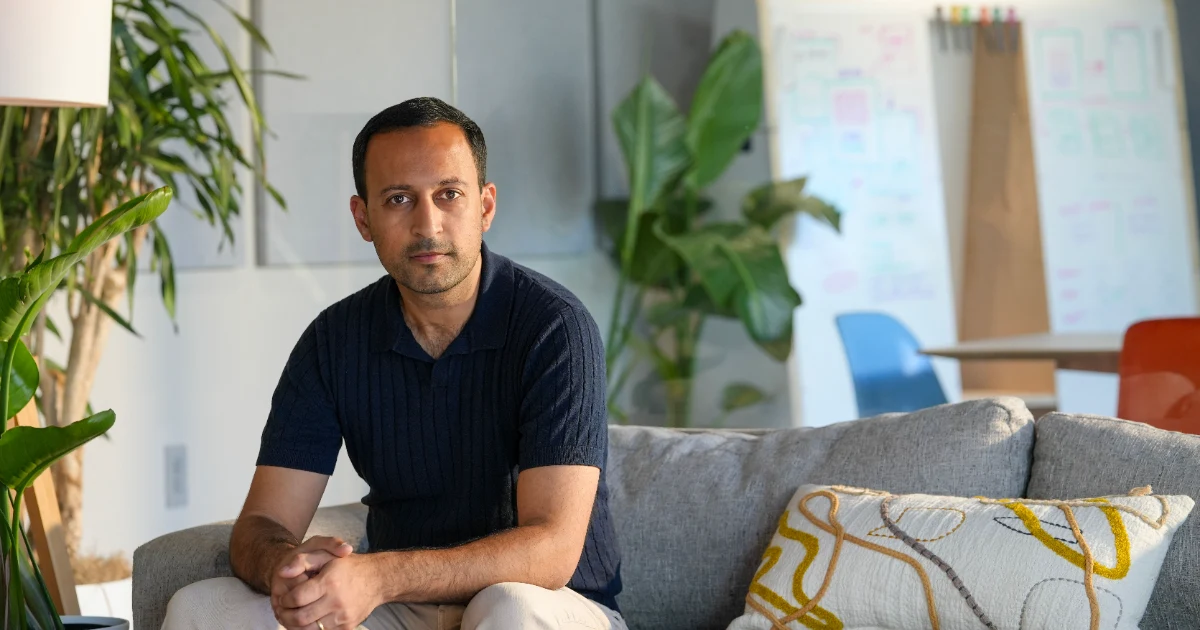
Indian-origin entrepreneur Gagan Biyani’s new AI academy, the Horowitz Andreessen Academy, will give its inaugural class of roughly 50 students a free year of tuition, $50,000 in computing credits and a $5,000 travel budget starting Fall 2027, before the programme shifts to fees comparable to Stanford University once it expands to a two-year format in 2028.
Biyani, born in Fremont, California, to Indian immigrant parents, worked briefly at Accenture and then as a technology journalist before moving into startups; his reporting on paid fake reviews in Apple’s App Store helped prompt a Federal Trade Commission investigation. He co-founded the online learning platform Udemy in 2009, advised ride-hailing company Lyft on growth in 2013, then co-founded Sprig, a home-cooked meal delivery startup that raised $57 million before shutting down in 2017 amid competition from larger delivery platforms.
He now serves as the Horowitz Andreessen Academy’s founder and chief executive, with Andreessen Horowitz co-founder Marc Andreessen and general partner Erik Torenberg joining him on the board. This is the second time this Indian-origin entrepreneur has built an education company from the ground up, after co-founding Udemy in 2009.
The Academy will select its founding cohort on what it calls “proof of work” rather than grades, standardised test scores or college essays, prioritising high school seniors. There will be no traditional grades, tests or homework once students arrive. The Academy’s own materials confirm that current university students and international applicants are also eligible to apply, opening the door to prospective students currently outside the United States.
Coursework covers designing AI systems, founder-led sales, go-to-market strategy for business clients, storytelling and new media, and the mechanics of starting a company, including cap tables, fundraising and finance. The academic year runs September to April on the San Francisco campus, May abroad, and June to August in paid co-op placements with ten founding partner companies: Anthropic, OpenAI, Google, Meta, Nvidia, Stripe, Coinbase, Palantir, Anduril and Replit.
Altman and Nadella are both listed on the Academy’s own site among more than 250 people in its lecturer network, alongside Nvidia’s Jensen Huang, Uber co-founder Travis Kalanick and Figma’s Dylan Field. The Academy describes their involvement as visiting lectures and fireside chats rather than semester-long teaching. Structured, multi-session coursework is being run separately by named faculty including former Instacart co-founder Max Mullen and Steven Sinofsky, a former Microsoft Windows division president.
What does “unaccredited” mean, and why does it matter here?
Accreditation is the review process an independent body uses to certify that an institution’s teaching and degrees meet a recognised academic standard, and it is what allows students at accredited colleges to access federal student loans and grants, and what allows employers and other universities to trust a degree at face value. The Horowitz Andreessen Academy holds no such accreditation, awards no degree, and does not accept federal financial aid, meaning families must judge the programme entirely on its own outcomes rather than any external stamp of approval.The Academy has said it intends to seek regulatory approval once its paid, two-year programme begins in 2028.
The $42 million raised for the Academy came from Andreessen Horowitz and a group of individual investors that includes Quora co-founder Adam D’Angelo, Shopify chief executive Tobi Lutke, DoorDash chief executive Tony Xu, former OpenAI applications chief Fidji Simo, Y Combinator’s Garry Tan, and Palantir chief technology officer Shyam Sankar, among others.
The founding class carries real financial upside for its roughly 50 students: a free year, six-figure computing and travel budgets, and access to co-ops at some of the biggest names in technology. It also carries the trade-offs of an unproven, unaccredited programme with no degree at the end of it, at a moment when the paid version launching a year later is expected to cost as much as a year at Stanford, without the accreditation Stanford carries. Both facts describe the same institution; how a family weighs them will depend on what they are optimising for and how much risk they can absorb on an unproven model.
What happens next for this Indian-origin entrepreneur’s academy
Applications for the founding class are open now for the September 2027 start. The Academy has not yet published a firm application deadline or acceptance timeline, and has not disclosed pricing for the 2028 two-year programme beyond describing it as comparable to an elite private university. More detail on the Academy and further updates from NRI Affairs will follow as applications progress.
What Indian-origin families are asking about Biyani’s new academy
Is the Horowitz Andreessen Academy really free?
Only for the founding class. The roughly 50 students who start in Fall 2027 pay no tuition and receive $50,000 in computing credits and a $5,000 travel budget. When the Academy expands to a two-year programme in 2028, it has said fees will be comparable to an elite private university.
Will Sam Altman and Satya Nadella actually teach classes?
They are both listed among the Academy’s network of more than 250 visiting lecturers, alongside figures such as Jensen Huang and Travis Kalanick, and are described as giving talks and fireside chats rather than running structured courses. The Academy’s actual teaching faculty for multi-session coursework includes former Instacart co-founder Max Mullen and ex-Microsoft executive Steven Sinofsky.
Does the Academy give students a recognised degree?
No. It is unaccredited, awards no degree, and does not qualify for federal student aid. The Academy has said it will seek regulatory approval once its paid two-year programme begins in 2028.