
A social media post by a former Japanese minister accusing India of “sheer recklessness” in the Mumbai-Ahmedabad bullet train project went viral on 17 July 2026, drawing 1.5 million views and a formal rejection from India’s Ministry of External Affairs the same day.
Hideki Makihara, a member of Japan’s ruling Liberal Democratic Party and a former Justice Minister, posted on X on 14 July in response to an opinion article by Isao Tsujimura, a Japanese railway engineer and Delhi-based metro vehicle consultant, published in Japan’s Toyo Keizai Online. Makihara said he had been personally involved in discussions on the project and described what he characterised as a pattern of broken commitments by the Indian side.
“What stood out in international meetings and negotiations was the sheer recklessness of the Indian side, repeated over and over. They don’t keep promises, no matter what. Even if they make a promise, they flip it right away. They push their own self-interest to the very end. The minister in charge was awful. With someone like that at the top, you can’t conduct proper negotiations,” Makihara wrote in Japanese.
MEA spokesperson Randhir Jaiswal addressed the post at a media briefing in New Delhi on 17 July. “We have seen the post. It is an individual opinion and is at considerable variance with facts. India-Japan discussion on Ahmedabad-Mumbai high-speed rail is in fact progressing well,” Jaiswal said.
What the dispute is actually about
Makihara’s post and the Tsujimura article it responds to centre on two specific technical decisions that have changed the shape of the project from its original 2015 design.
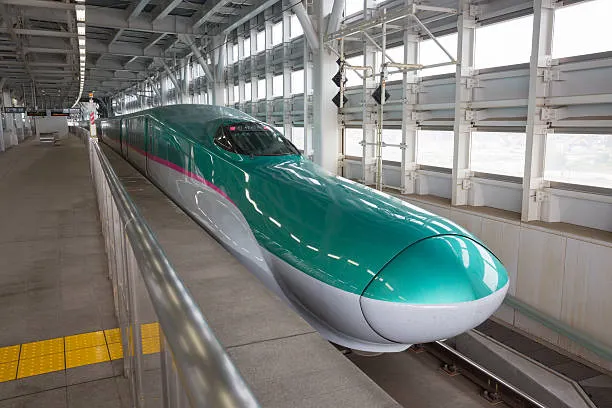
The first is the rolling stock. The original India-Japan agreement envisioned the use of Japan’s E5 Shinkansen trainset for the Mumbai-Ahmedabad corridor. Negotiations over the E5 broke down in 2024 after India found the price prohibitively high and could not reach agreement on the modifications it required. Japan subsequently offered its next-generation E10 trainset, also referred to as E20 in some reporting. The MEA confirmed the E10 is still under development and would not be ready for Indian conditions until the early 2030s. India moved ahead with the civil infrastructure rather than wait for rolling stock that was years from delivery.
The second is the signalling system. The original agreement included Japan’s proprietary Digital Shinkansen Automatic Train Control system, known as DS-ATC. In January 2025, the National High Speed Rail Corporation Limited floated a tender specifying the European Train Control System Level 2, known as ETCS-L2, as the signalling standard for the corridor. Makihara argued that Japan’s Shinkansen trains and its signalling system are “inseparable” and that India’s adoption of a European signalling standard effectively excludes Japan’s proprietary technology from a project built around Japanese infrastructure.
What is the Mumbai-Ahmedabad bullet train project?
What is the Mumbai-Ahmedabad High-Speed Rail project?
The Mumbai-Ahmedabad High-Speed Rail corridor is India’s first bullet train project, a 508-kilometre line connecting Mumbai’s Bandra Kurla Complex with Ahmedabad through 12 stations across Maharashtra, Gujarat and Dadra and Nagar Haveli. It is being built using Japanese Shinkansen technology with financial assistance from the Japan International Cooperation Agency, which provided a soft loan of approximately USD 12 billion at 0.1% interest repayable over 50 years. The project was inaugurated by Prime Minister Modi and then-Japanese Prime Minister Shinzo Abe in September 2017. It is designed for operational speeds of up to 320 kmph and is expected to reduce travel time between Mumbai and Ahmedabad from approximately eight hours to around two hours.
Where the project actually stands
The MEA confirmed the first section of the high-speed rail corridor is scheduled to open in 2027. Jaiswal said Japan would supply the next-generation E10 Shinkansen train series only in the early 2030s, as the train is still under development.
Construction has accelerated considerably in recent years after earlier delays caused by land acquisition challenges. As of mid-2026, civil infrastructure across viaducts, tunnels and stations is advanced across the Gujarat and Maharashtra sections. India is also preparing for domestic manufacturing of future high-speed trainsets through the Integral Coach Factory and BEML, while continuing to receive technological support from Japan.
The project’s cost is approximately Rs 1.08 lakh crore. JICA’s soft loan covers the majority of that cost. The financial architecture of the project, built around Japanese concessional lending, remains intact regardless of the dispute over rolling stock and signalling specifications.
India’s position on the technical changes
The MEA’s framing of Makihara’s remarks as “individual opinion” rather than reflecting the official Japan-India bilateral position on the project is significant. Makihara is a former minister who was personally involved in the project in an earlier period. He is not currently a government official and his post does not represent the position of the current Japanese government or the Japan International Cooperation Agency.
Japanese Prime Minister Sanae Takaichi visited India earlier in July 2026. Her visit produced no statement from either government citing concern over the signalling or rolling stock decisions, suggesting the official bilateral position does not reflect Makihara’s public characterisation of the project.
India’s decision to move to ETCS-L2 signalling and to proceed without waiting for the E10 trainset reflects a calculation that a corridor sitting idle pending unavailable Japanese components would serve neither country’s interest. The civil infrastructure has been completed on a timeline that outpaced the availability of the originally specified rolling stock and signalling systems. The technical specifications were adjusted to match the project’s actual delivery timeline.
What it means for India-Japan relations
The India-Japan relationship is one of the most significant bilateral partnerships in Asia. Japan remains one of India’s largest sources of foreign direct investment and official development assistance. The Mumbai-Ahmedabad bullet train project is the flagship symbol of that partnership.
The public dispute over the technical decisions does not reflect any deterioration in the official bilateral relationship, which both governments have publicly described as strong. What it reflects is the natural tension in a project of this scale and complexity, where the original specifications drafted in 2015 have been adjusted over a decade of implementation in response to cost, availability and timeline realities.
For the Indian diaspora in Japan, and for Indian professionals in the infrastructure, engineering and finance sectors across Australia, the UK, the UAE and the US who follow the India-Japan economic relationship, the dispute is a reminder that flagship bilateral projects involve negotiation, adjustment and disagreement, and that those processes are not the same as diplomatic rupture.
What the two sides said
Hideki Makihara, former Japanese Justice Minister, in a post on X on 14 July 2026:
“What stood out in international meetings and negotiations was the sheer recklessness of the Indian side, repeated over and over. They just don’t keep promises, no matter what. Even if they make a promise, they flip it right away. They push their own self-interest to the very end. The minister in charge was awful. With someone like that at the top, you can’t conduct proper negotiations.”
MEA spokesperson Randhir Jaiswal, at a media briefing in New Delhi on 17 July 2026:
“We have seen the post. It is an individual opinion and is at considerable variance with facts. India-Japan discussion on Ahmedabad-Mumbai high-speed rail is in fact progressing well.”
Jaiswal on the E10 trainset:
“Japan would supply the next-generation E10 Shinkansen train series only in early 2030s, as the train is still under development.”
What this means for the project timeline
The first partial section of the Mumbai-Ahmedabad bullet train corridor is expected to open in 2027. The full corridor’s timeline depends on the resolution of the rolling stock question. With the E5 negotiations terminated in 2024 and the E10 not expected until the early 2030s, the civil infrastructure is expected to be ready significantly before the trains that will run on it.
India’s option of using an alternative trainset, whether domestic or from a third supplier, is under consideration. No formal announcement on interim rolling stock has been made.