
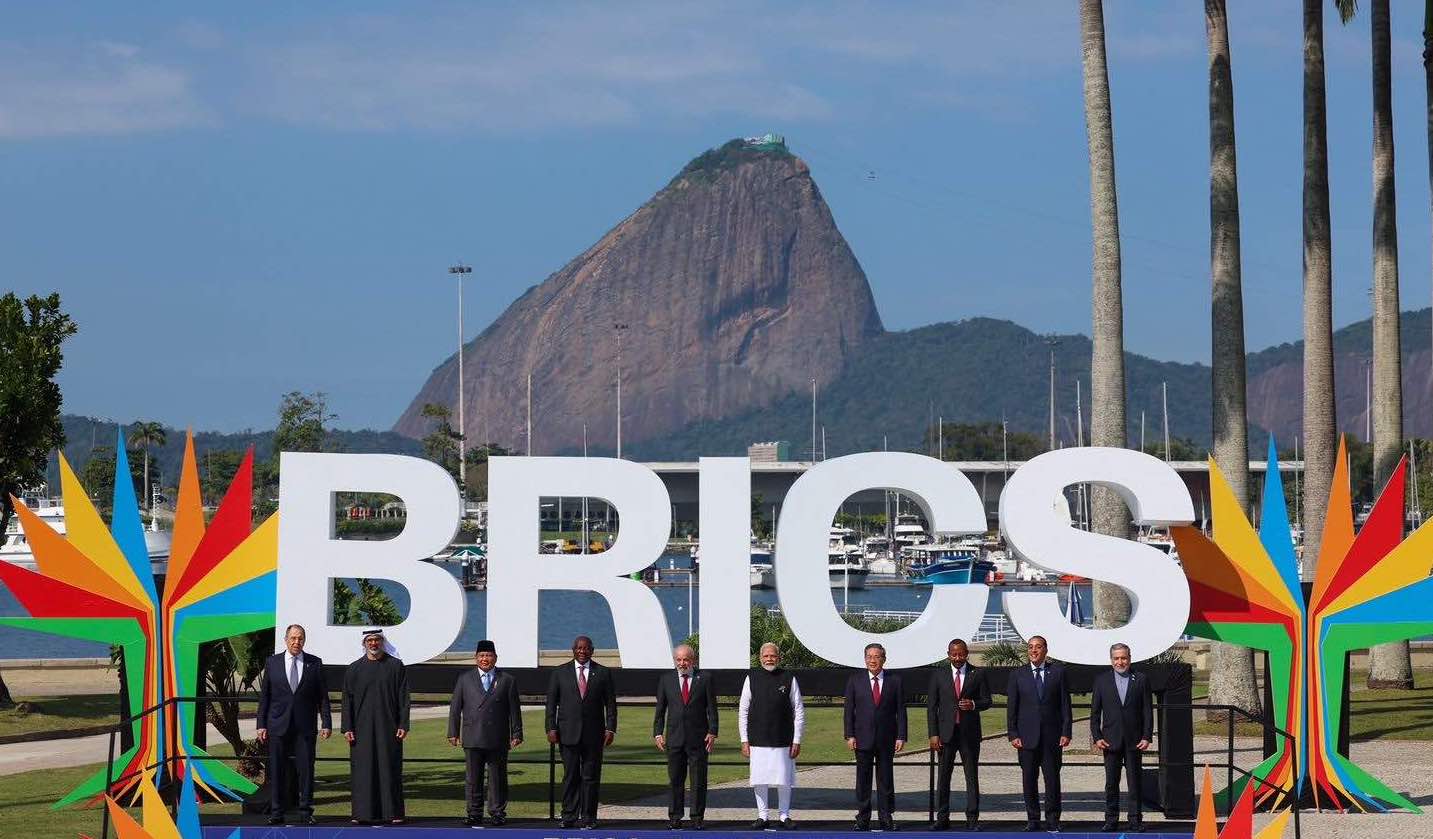
A high-level BRICS meeting in New Delhi ended without a joint statement after sharp disagreements over how to describe Israel’s military actions in Gaza and Lebanon, with India’s position emerging as a key point of contention.
According to reports, India sought to soften language critical of Israel, including proposals to dilute references to airstrikes in Gaza and Lebanon and remove mention of “East Jerusalem” as the capital of a future Palestinian state. These changes were resisted by several member states, leading to a breakdown in consensus.
Diplomats involved in the April 23–24 meeting of deputy foreign ministers and special envoys said India also attempted to replace direct references to Israel with broader terms such as “occupying power”, a move that marked a departure from previously agreed BRICS language.
The failure to issue a joint communiqué is being seen as unusual for BRICS, where consensus statements are typically released after such meetings.
Congress slams government stance
The opposition Congress party sharply criticised the Modi government, alleging that India’s insistence on diluting language on Israel and Palestine contributed directly to the deadlock.
Congress leader Jairam Ramesh said it was “shocking and shameful” that India’s position was unacceptable to other BRICS members, including Russia, China, Brazil, South Africa, Egypt, Ethiopia, Indonesia, the UAE and Iran.
He also accused the government of maintaining “steadfast solidarity” with Israel despite the ongoing conflict in Gaza, and described the absence of a joint statement as a diplomatic setback.
India’s Ministry of External Affairs, however, maintained that the lack of a joint statement was due to broader disagreements among member states over the West Asia conflict, noting that only a “Chair’s Summary” could be issued in the absence of consensus.
Analysts flag shift in India’s traditional position
Political analyst and commentator Ashok Kumar Pandey said the developments point to a significant shift in India’s long-standing support for Palestine.
Citing reports, Pandey noted that India — currently chairing BRICS — pushed to “water down” condemnation of Israel, a move opposed by the other 10 member countries.
He highlighted that India has historically backed the two-state solution, including recognition of East Jerusalem as Palestine’s capital, but appeared reluctant to include such language in the latest discussions.
“The bottom line: 10 out of 11 countries opposed India’s position, which is why no resolution was issued. India stood alone,” Pandey said, calling it a “significant diplomatic failure”.
Pandey also linked the episode to a broader recalibration in India’s foreign policy, suggesting the country is “slowly moving towards Israel” while losing influence within multilateral groupings like BRICS.
Growing fractures within BRICS
The disagreement reflects deeper divisions within BRICS over the Israel–Palestine conflict, particularly as the bloc expands and includes countries with divergent geopolitical alignments.
While countries such as Iran have pushed for stronger condemnation of Israel, others have taken more cautious positions, complicating consensus-building.
India’s stance — seen by some as an attempt to balance strategic ties with Israel and its Global South leadership ambitions — has drawn scrutiny for potentially weakening its traditional diplomatic positioning.
With upcoming BRICS meetings scheduled in May and the annual summit later this year, the episode underscores the challenges the bloc faces in maintaining unity on contentious global issues.