
A few years ago, our neighbour, Angelo, invited us to join his 80th birthday celebrations. The venue was not his home in Vancouver, but a tourist resort in Cuba.
The invitation was quite tempting. Without a second thought, we booked our dream destination—the warm weather and powdery-soft sand beaches of the island nation—for the holidays and to celebrate our friend’s landmark birthday.
We landed at Varadero, the designated tourist resort town about 147 km from Havana, the capital city of Cuba. The room we were given at the Iberostar resort had a self-service bar loaded—yes, you guessed it—with rum, along with vodka, Coke, other soft drinks, and water bottles.
The next morning, we took a guided bus tour of the sugarcane fields and a couple of rum breweries.
A glimpse of the countryside, small towns, and almost worn-out rum factories, along with meeting and shaking hands with local folks, gave us a sense of the hardships and scarcity Cubans endure in their day-to-day lives.
The US is often blamed for more than half a century of embargoes and sanctions, resulting in a life of privation.
Despite poverty and its rundown appearance, the Spanish-speaking nation still showcases its vibrant culture in music, dance and food, where coffee, rum and cigars remain enduring pleasures.
The cultural and social aspects of Cuban life carry a certain aristocracy and sophistication. It is, ideologically, a classless society established under the revolutionary regime that began with Fidel Castro almost 67 years ago.
Legacy of Castro
Cuba secured liberation from the dictatorial rule of Fulgencio Batista through the 1953–1959 revolution led by Fidel Castro. His regime aligned with the Soviet Union, embracing communism while politically and economically isolating itself from its closest neighbour, the United States.
Cuba lies within viewing distance of Florida’s southern tip, Key West.
From one autocrat to another under the garb of socialism-communism, Castro ruled Cuba for over 47 years before handing power to his brother, Raúl Castro.
Fidel Castro, a hero to sections of the global Left, did not transform the political revolt into an economic one. As is typical of authoritarian communist regimes, freedom of speech and expression remained restricted.
Since the early 1960s, generations have been raised on leftist ideology. Yet these policies have failed economically while denying political emancipation. Protests over shortages of food, fuel, medicines and frequent blackouts erupt periodically but are often suppressed, with many protesters jailed.
According to Amnesty International, thousands of Cubans have been imprisoned over the years for dissent—ironically echoing the repression Castro once opposed under Batista.
Cuba Is a Failed State
For decades, Cuba relied on financial and military support from the Soviet Union. After its collapse, Russia scaled back assistance, leaving Cuba economically vulnerable.
The country has since depended on rum and cigar exports, tourism and remittances from Cubans abroad. In recent years, however, these revenue streams have weakened significantly.
As a result, a record number of Cubans have fled—primarily to the United States—often undertaking perilous journeys through Nicaragua and Mexico to cross heavily fortified borders. That pathway has now narrowed under stricter US border policies.
According to the Cuban Observatory of Human Rights, 89% of Cubans live in extreme poverty, struggling to access basic necessities such as food, medicine and shelter. Many seek to emigrate due to declining living conditions and lack of opportunity.
Cuba’s population has declined sharply from over 11.2 million in 2012 to under 9.75 million by the end of 2024 (source: Wikipedia), driven largely by emigration and falling birth rates.
Inside a Cuban Grocery Store
During our two-week stay, we visited Havana and witnessed the everyday realities faced by ordinary Cubans.
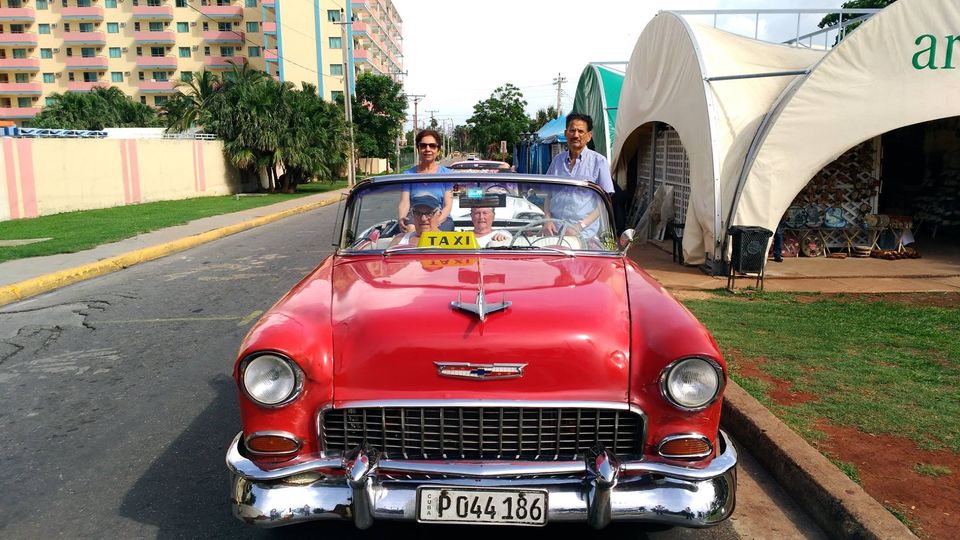
Many architecturally striking buildings were in urgent need of repair, with plaster peeling off their exteriors. The city’s iconic vintage cars—well restored and polished—were ubiquitous, often serving as taxis.
Walking through the capital, I noticed a government-run grocery store with a long queue. I joined the line. When my turn came, I stepped inside but bought nothing.
Only a few customers were allowed in at a time. The shelves were sparsely stocked—mostly with Coke bottles and a limited selection of groceries.
Cubans face acute scarcity and hardship. The promise of equality under socialism often translates into equality in poverty.
Since the COVID-19 pandemic, the government has struggled to maintain electricity, water, healthcare and public transport.
Compounding the crisis is a tightening US oil embargo, contributing to prolonged blackouts and further strain on public services.
Cuba Under Trump’s Radar
Cuba has recently re-emerged as a key issue on US President Donald Trump’s foreign policy agenda. For decades, the United States has sought to draw the Caribbean nation into its economic orbit.
Washington appears intent on pressuring Cuba towards internal change, including encouraging popular unrest against the current regime. It has also warned countries against supplying oil to Cuba.
Regime-change strategies may include direct negotiations with Cuban leadership.
“We’re talking to Cuba right now, and Marco Rubio is talking to Cuba right now, and they should absolutely make a deal, because it’s really a humanitarian threat,” Trump told reporters on February 16.
He stopped short of endorsing direct intervention, noting it “wouldn’t be a very tough operation” but suggesting it may not be necessary.
The Cuban government has agreed to talks, hoping to ease mounting US pressure.
However, any agreement could prove politically costly for Cuba’s leadership.
Without support from allies such as Russia or Venezuela, Cuban officials may have little choice but to re-engage with the United States.
What unfolds next remains uncertain. But significant political change appears increasingly likely.
Angelo Visits Cuba Again
Angelo, our seasoned traveller, returned to Cuba a couple of years later to escape the Canadian winter.
He booked a two-week stay in Havana—but his experience quickly soured.
“The ‘five-star’ hotel was really in bad shape, with everything peeling off. The ‘all-inclusive’ package did not include food. I had to search for restaurants, but there were hardly any.
“The grocery shops looked empty and always had long lines of Cubans waiting for basic supplies. I wanted to leave after just three or four days.
“Fortunately, I found a flight to Mexico and spent the rest of my holiday there. Never again—never again to Cuba.”