
“Any regimes that need changing, including the US, Israel and ours, need to be changed by the people, not by some bloated, lying, cheating, greedy, resource-grabbing, bomb-dropping imperial power and its allies trying to bully the whole world into submission.”
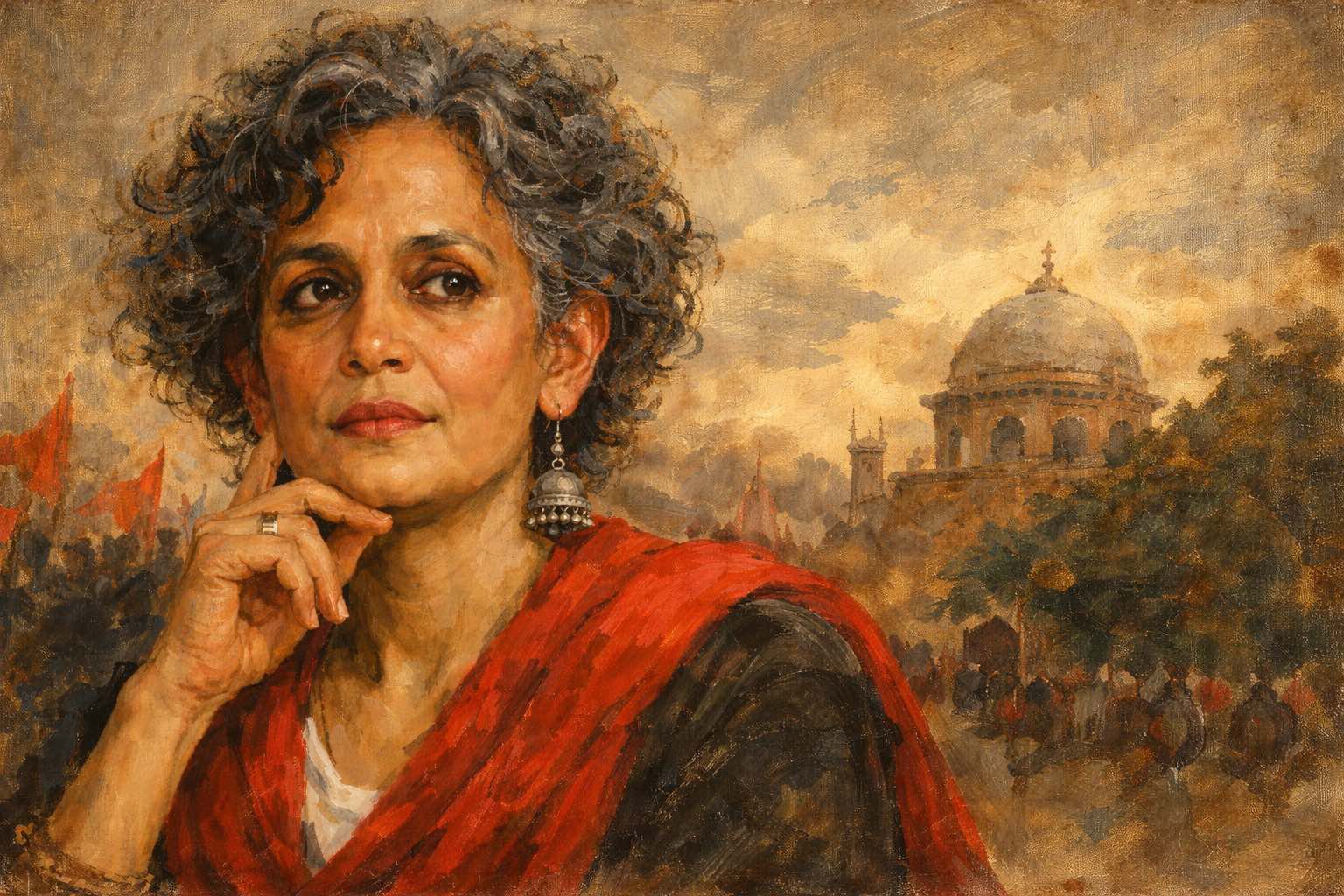
Celebrated author Arundhati Roy recently made this powerful statement at the launch of her new book, Mother Mary Comes to Me.
I broadly agree with Roy’s argument that regime change should ultimately come from the people of the land themselves, particularly when government policies create unbearable conditions for citizens.
In democratic countries, such change is expected to occur through fair and lawful electoral processes. But the reality is not always so simple. In many autocratic states, or even in what might be called pseudo-democracies, the ballot box often becomes a hollow ritual.
India today, many critics argue, increasingly reflects a troubling trend in which elections may still occur, yet the institutional ecosystem surrounding them appears compromised, manipulated, or deeply corrupted.
When democratic avenues begin to fail, public frustration inevitably spills onto the streets. People power gathers momentum through protests, demonstrations and mass mobilisation. Eventually, an anti-establishment uprising begins to take shape.
Yet history shows that once mass movements reach a boiling point, they often turn turbulent. In recent times, these uprisings have been largely energised by young, passionate citizens, particularly Generation Z, who see little hope in traditional political channels.
Predictably, entrenched regimes — whether authoritarian or nominally democratic — respond with brute force. Police and military crackdowns become the state’s preferred answer to public dissent. The outcome is rarely orderly.
Even when such movements succeed in dislodging rulers, the path is often soaked in chaos. Violence erupts, public property is destroyed, lives are lost, and societies are left deeply scarred.
Recent events in Bangladesh and Sri Lanka illustrate this pattern.
Popular anger eventually toppled corrupt and ineffective governments, but the collapse unfolded amid mob fury, destruction, bloodshed, and the dramatic flight of rulers from their own countries.
A similar story has unfolded repeatedly in Iran, where massive demonstrations have erupted several times against the harsh regime led for decades by the Supreme Leader Ali Khamenei. Many of these protests were largely peaceful in intent, yet they were brutally suppressed, leaving thousands dead and thousands more imprisoned.
Whether successful or crushed, mass revolutions almost inevitably carry a high human cost — violence, injuries, destruction, and the loss of innocent lives.
As someone who leans strongly toward pacifism, I find it difficult to embrace violent upheaval by citizens as the primary path toward regime change.
I believe Roy herself would also favour a transformation that avoids bloodshed — one where killings, imprisonment of protesters, and the destruction of public property are not the tools of political change.
This raises a difficult but important question: if internal revolt leads to violence, and foreign military intervention — such as the involvement of US-Israel forces in Iran — leads to imperial domination, is there a middle path?
Perhaps there is.
Non-violent external intervention — through diplomatic pressure, international mediation, sanctions, global public opinion, and support for democratic institutions — may sometimes offer a less destructive alternative. It happened in South Africa during the struggle against apartheid, which eventually led to the democratic transition and the election of Nelson Mandela as the country’s first Black president.
Such outside involvement would be very different from the familiar model of military invasion or regime engineering by powerful states. Instead, it would rely on moral pressure, international legitimacy, and global solidarity with oppressed citizens.
When a regime systematically crushes peaceful dissent and blocks democratic change, the world community cannot simply look away.
In such situations, carefully designed non-violent international support for democratic change may not be an intrusion to reject outright, but rather an option to consider — certainly preferable to the blood-stained path of violent revolutions or the destructive arrogance of military intervention.
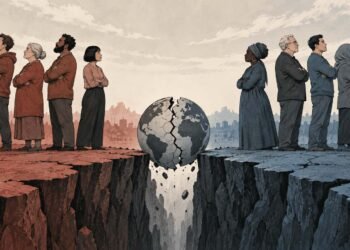
Between imperial war and violent uprising, humanity must still search for a third way: the path of peaceful change supported by the people within a country and the conscience of the world beyond it.