
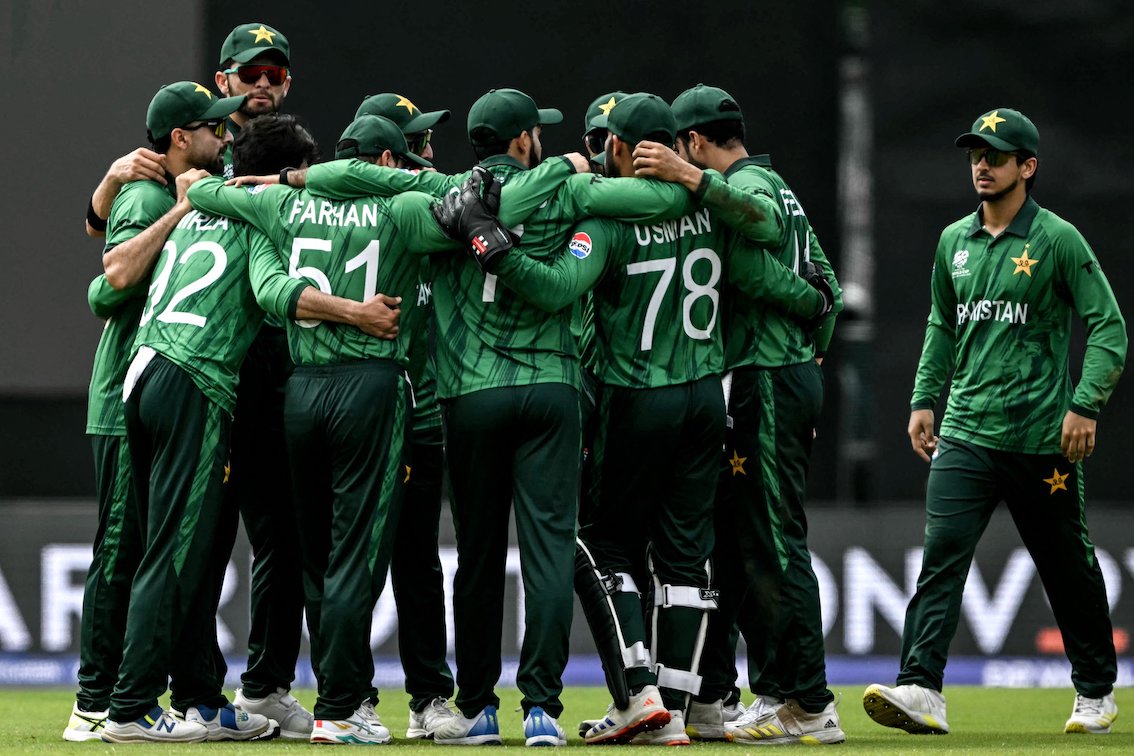
Pakistan will face India in the ICC Men’s T20 World Cup 2026, reversing an earlier decision to boycott the high-profile match amid political tensions, after intervention by the Pakistani government and negotiations involving the International Cricket Council (ICC).
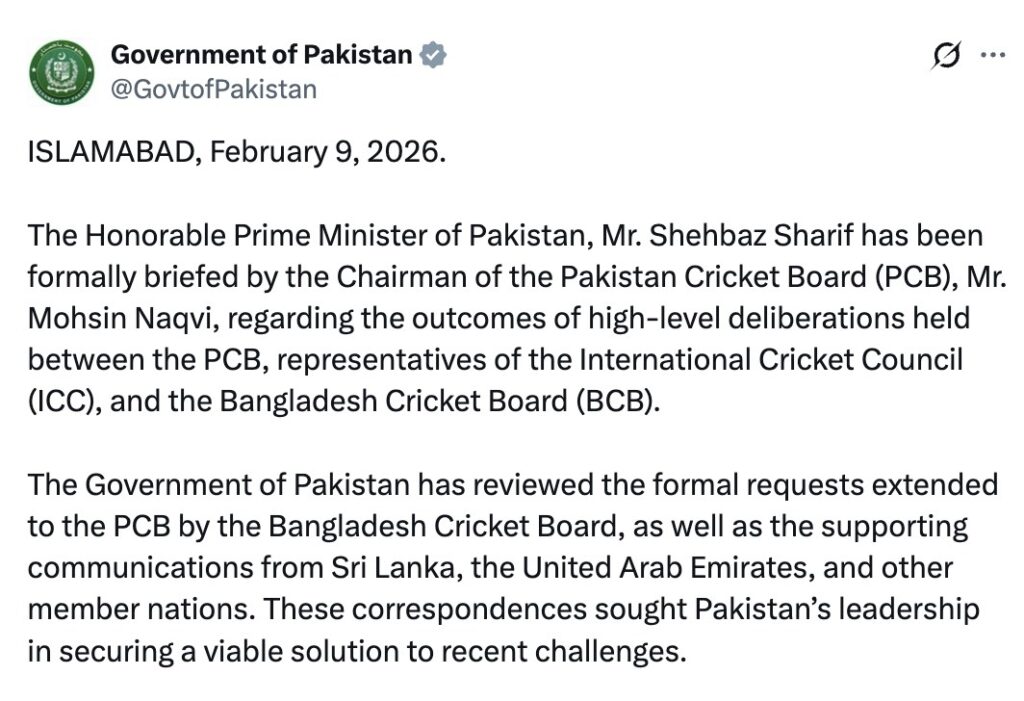
In a statement issued late on February 9, the Government of Pakistan said Prime Minister Shehbaz Sharif had been formally briefed by the chairman of the Pakistan Cricket Board (PCB), Mohsin Naqvi, following high-level discussions with the ICC and the Bangladesh Cricket Board. The government said it had reviewed formal requests from Bangladesh and supporting communications from Sri Lanka, the United Arab Emirates and other member nations urging Pakistan to help resolve the impasse.
Citing the outcomes of multilateral discussions and appeals from “friendly countries”, the government directed the Pakistan national team to take the field on February 15 for its scheduled group match against India. The decision, it said, was taken to protect the spirit of cricket and to support the continuity of the global sport across all participating nations.
The announcement brought to an end a brief but intense standoff that had cast uncertainty over the tournament’s most commercially significant fixture. Pakistan had earlier indicated it would participate in the World Cup but would not play India, a position that raised concerns among other ICC members about the sporting and financial consequences of a boycott.
The ICC subsequently confirmed that talks with the PCB had been “open, constructive and congenial”, and said all parties had reaffirmed their commitment to honour participation obligations for ICC events. In its February 9 press note, the ICC emphasised that the priority remained the successful delivery of the Men’s T20 World Cup and the preservation of unity within the international cricket fraternity.
In an earlier statement, the ICC had expressed concern that selective participation was difficult to reconcile with the principles of sporting integrity, competitiveness and fairness that underpin global tournaments, while noting it respected the role of governments in matters of national policy.
According to reporting by ESPNcricinfo, the PCB had initially linked its stance on the India match to Bangladesh’s absence from the tournament, arguing that the situation reflected double standards. The report also said the PCB raised concerns during negotiations about the equity of the ICC’s revenue-sharing model, although neither the Pakistan government nor the ICC publicly referenced financial issues in their statements. The PCB also denied speculation that bilateral or trilateral series with India formed part of the negotiations.
The broader backdrop to the dispute includes long-running tensions over cricket’s financial structure. Under the ICC’s proposed finance model for the 2024–27 cycle, India’s board is projected to receive the largest share of ICC revenues, with Pakistan among the next tier of beneficiaries—an imbalance that has periodically fuelled friction within the sport’s governance.
With Islamabad’s directive and the ICC’s confirmation, the India–Pakistan clash—widely regarded as the commercial centrepiece of the tournament—will now proceed as scheduled, restoring certainty to the World Cup calendar and easing pressure on organisers, broadcasters and other member boards.
Bangladesh also publicly thanked Pakistan for its role in helping resolve the impasse. In a statement posted on social media, the Bangladesh Cricket Board expressed gratitude to the Pakistan government and the PCB for what it described as Pakistan’s leadership and support during the negotiations, saying it had helped safeguard unity within international cricket at a critical moment.