

Anne Twomey, University of Sydney
What impact will the criminal hate provisions in the Albanese government’s Combatting Antisemitism, Hate and Extremism Act 2026 have on the ability of ordinary Australians to protest?
An earlier version contained a criminal offence of promoting or inciting racial hatred. The government dropped this part of the legislation after both the Coalition and the Greens opposed it.
However, inciting racial hatred remains relevant to the other key provisions, which permit the banning of “prohibited hate groups”.
How can a group become a prohibited hate group?
A group can be prohibited under the new law if the governor-general makes a regulation prohibiting it. The governor-general acts on the advice of the minister for the Australian Federal Police. There are a number of conditions that must be met before a group can be banned.
First, the minister must be satisfied on reasonable grounds that the group has engaged in conduct constituting a “hate crime”, or has been associated with a hate crime, by preparing, planning, assisting, or advocating engaging in such conduct. This is the initial trigger for banning a group.
Second, the minister must be satisfied that banning the group is reasonably necessary to protect the Australian community from social, economic, psychological and physical harm.
The bill was altered to water down this requirement in two ways. It now also applies to protecting “part of the Australian community” from such harm. In addition, it says this social, economic, psychological and physical harm can simply be the continued presence in Australia of the group that has engaged in or been associated with the conduct constituting a hate crime. The minister would therefore have little difficulty being satisfied of this second condition.
The third condition is that the minister must have received advice from the director-general of security (who is the head of ASIO) recommending consideration of banning the group. The director-general must be satisfied the group has engaged in activities that are likely to increase the risk of politically motivated violence or communal violence, and has either itself advocated for or engaged in such violence, or there is a risk that it may do so in the future.
In addition, the minister must get the attorney-general’s agreement to ban the group, and arrange a briefing for the opposition leader about it. Any regulation banning a group could be disallowed (that is, overturned) by either House of Parliament.
Banning a group is therefore not easy. However, as we have seen in other countries, such protections could be overcome by appointing politically motivated cronies to positions, and contending that all opposition or dissent increases the risk of politically motivated violence and community harm.
What is a ‘hate crime’?
The key issue is whether action is a “hate crime”, as this is necessary to satisfy the initial trigger. A hate crime is defined as including acts of violence against people based on their race, colour or national or ethnic origin, or serious damage to their property. It includes threatening or advocating such violence or damage. Displaying Nazi or terrorist organisation symbols also qualifies as a hate crime.
The original bill made promoting or inciting racial hatred a hate crime. This raised concerns, due to uncertainty about the scope of the offence. While the government dropped it as a standalone offence, it slipped inciting racial hatred back in as a “hate crime” for the purpose of banning groups.
It did so by saying that a hate crime includes conduct that involves publicly inciting racial hatred that would constitute an offence against a Commonwealth law (for example, it might also breach a law about sending offensive communications by post). It would also include conduct that would constitute a specified state or territory offence. The conduct must also cause a reasonable person from the targeted racial group to be intimidated, fear harassment or violence, or fear for their safety.
This reliance on state offences makes the law very messy. This is because in the listed offences from Queensland, South Australia and the ACT, incitement to racial hatred is tied to threatening physical harm, whereas in New South Wales, Victoria and Western Australia, no threat of harm is required. No relevant laws are listed for Tasmania or the Northern Territory. This means that whether a group can be banned on this basis may depend on where the conduct took place.
To complicate matters, the act says no crime need actually have been committed, and no one needs to have been convicted. In addition, conduct can be a “hate crime” even though it happened in the past when it wasn’t a crime. It is enough for the minister to be satisfied on reasonable grounds that the group has engaged in or been associated with the conduct constituting a “hate crime”.
This leaves it up to the minister to decide what was done and by whom, whether they had the necessary intent, whether their conduct can be attributed to the group, whether any defences apply, and whether the conditions of the law of the relevant jurisdiction have been met.
Ordinarily, we leave such assessments to independent courts and judges. For example, should a minister be the one deciding whether a defence of acting in good faith should apply, when the minister has a political interest in banning a particular group?
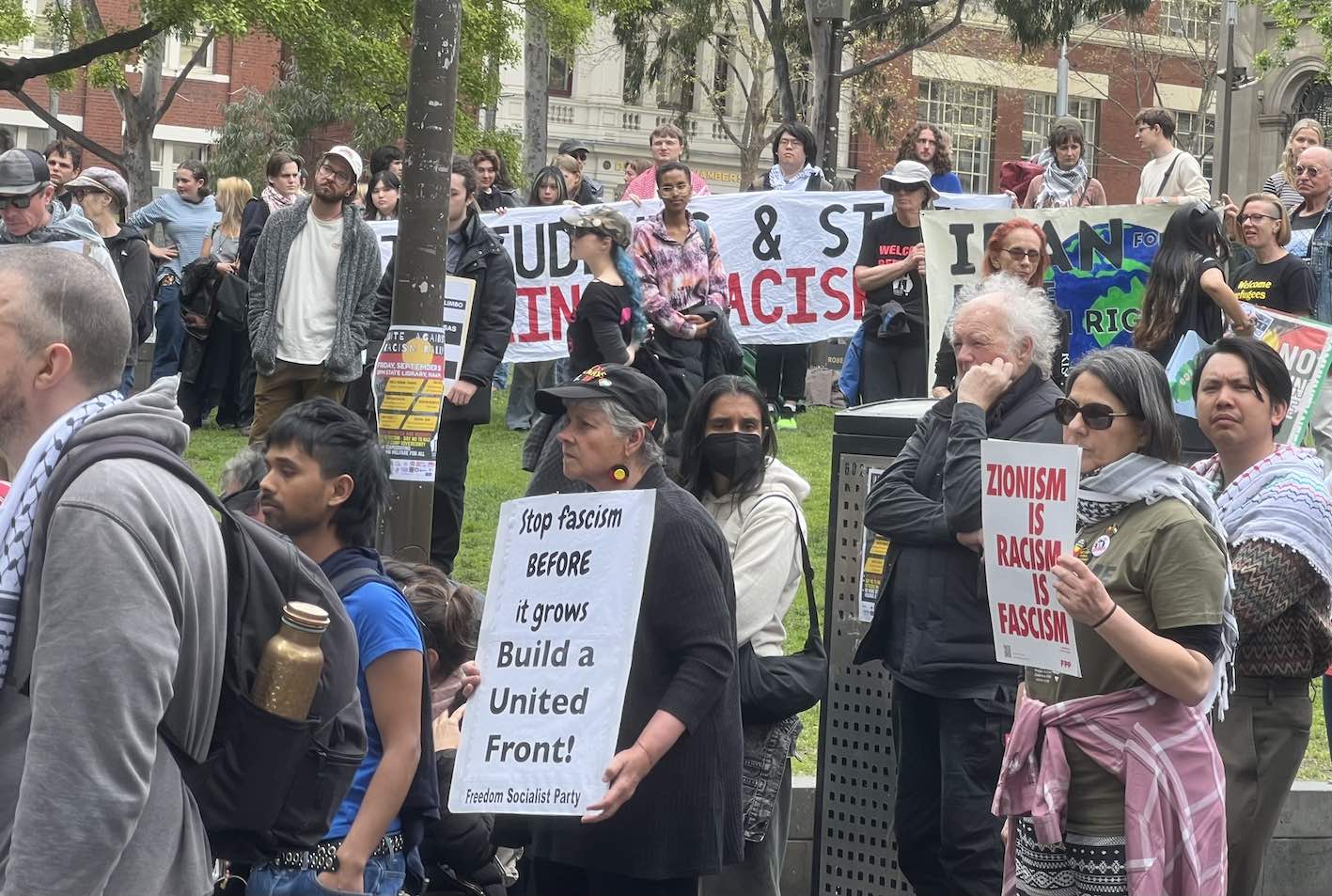
Would criticism of a country’s actions amount to a hate crime?
Is it a “hate crime” under the act to criticise the actions or policies of another country? Ordinarily, one would assume such criticism, which is a political communication, would not be regarded as inciting hatred against a group because of their race, colour, ethnic or national origin.
But in recent times, contrary arguments have been made.
Attorney-General Michelle Rowland was asked on the ABC’s 7.30 program whether a group could be banned if it accuses Israel of genocide or apartheid, and as a result, Jewish Australians feel intimidated. She replied that a number of other factors would need to be satisfied. This would include advice by the director-general of security. She also noted it would depend on the evidence gathered.
The attorney-general was asked again whether, if protesters were saying “Israel is engaged in genocide, or condemning Israel, saying it shouldn’t exist” and it led to Jewish Australians feeling harassed or intimidated, they could be banned. She replied “If those criteria are satisfied, then that is the case”. This seems to suggest she would consider the initial trigger of engaging in a hate crime by inciting racial hatred would be satisfied by such public criticism, but that the other parts of the test would still need to be satisfied.
Concern about such an interpretation and its consequential impact on the freedom of Australians to criticise the conduct of foreign governments, led to amendments to the bill being moved in the Senate. Senator Lidia Thorpe moved several amendments to the bill, including inserting the following statement:
As per the judgement of the Federal Court in Wertheim v Haddad [2025] FCA 720, criticism of the practices, policies, and acts of the state of Israel, the Israeli Defence Forces or Zionism is not inherently criticism of Jewish people and is protected political speech, and not hate speech.
This amendment was rejected by 43 to 12, with the major parties opposing it.
This leaves uncertain what conduct is intended to be caught. Freedom of political communication by those who wish to protest against the conduct of a nation’s government could potentially be chilled.
If the minister were satisfied that such conduct did constitute a hate crime and a regulation was made that a group was a prohibited hate group, that decision might be challenged on administrative law grounds. There might also be a constitutional challenge to the relevant provisions in the act. Until then, one can only speculate about the potential impact of this new law.
Anne Twomey, Professor Emerita in Constitutional Law, University of Sydney
This article is republished from The Conversation under a Creative Commons license. Read the original article.