
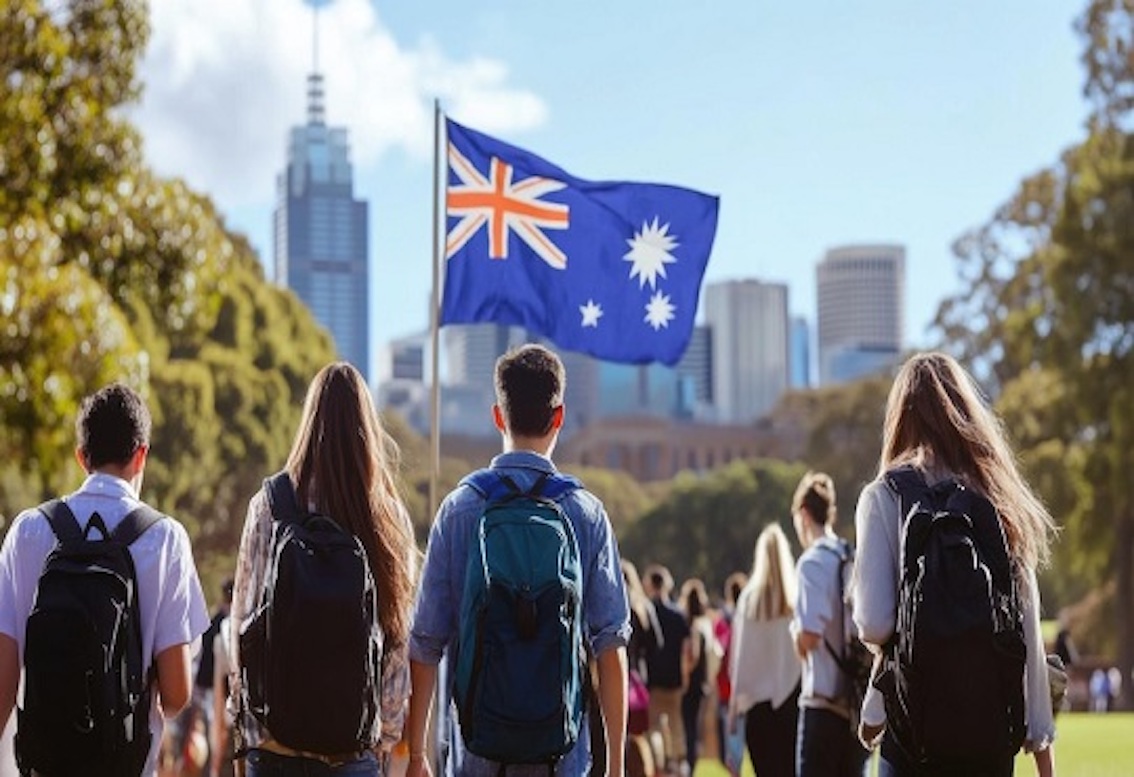
Australia has tightened its student visa regime, moving India into the highest-risk category under its Simplified Student Visa Framework (SSVF), a decision that will subject Indian applicants to significantly higher levels of scrutiny from January 8, 2026. The reclassification places India in Evidence Level 3 — alongside Nepal, Bangladesh and Bhutan — marking a major shift in Australia’s approach to one of its largest international student cohorts.
The change affects prospective students rather than those already enrolled. More than 140,000 Indian students are currently studying in Australia, including over 31,000 who enrolled in 2025, and their visa status will remain unaffected. However, future applicants from India are expected to face longer processing times, additional documentation requirements and more intensive background checks.
Under Evidence Level 3, visa officers are likely to conduct manual verification of bank statements, seek additional English-language evidence, and contact education providers and referees directly. Processing times, which previously averaged around three weeks, could now stretch to as long as eight weeks, according to media reports.
Confirming the move, an Australian Home Affairs spokesperson said that the Evidence Levels of several South Asian countries were altered in an “out-of-cycle” decision to address “emerging integrity issues”, while continuing to facilitate genuine students seeking a quality education in Australia. Former Immigration Department deputy secretary Abul Rizvi described the timing of the change as “highly unusual”.
While Australian authorities have not publicly cited a single trigger for India’s reclassification, reports point to rising concerns about fraudulent academic and financial documents, as well as broader shifts in global student mobility. With the United States, the United Kingdom and Canada tightening their own student visa regimes, Australia has emerged as an alternative destination, prompting closer scrutiny of applications.
Education sector representatives have argued that the higher risk rating is designed to strengthen filtering mechanisms rather than shut the door on Indian students. Nevertheless, the move is expected to have a chilling effect on applications from India, which alone accounts for nearly one-third of Australia’s international student enrolments when combined with Nepal, Bangladesh and Bhutan.
For Indian students and families, the shift means higher costs, longer waits and greater uncertainty in navigating Australia’s student visa system — even as education ties between the two countries remain economically and strategically significant.