
More than 85 international organisations have issued a joint statement condemning what they describe as systematic extrajudicial killings and state militarisation targeting indigenous Adivasi communities in India’s resource-rich regions.
The global solidarity call, released on 8 December 2025, centres on the November killing of Madvi Hidma, an indigenous Adivasi activist and Naxalite leader, along with his partner Madakam Raje and 11 others. According to the statement, Indian authorities declared the operation a military victory in their campaign to eliminate the Naxalite movement by March 2026.
However, signatories including International Solidarity for Academic Freedom in India (InSAF India), India Labour Solidarity UK, and the Indian American Muslim Council dispute the official narrative. The organisations claim Hidma and others were captured unarmed, taken to forests in Andhra Pradesh, and killed following torture over two days.
“Human rights defenders and India’s civil society have strongly noted that Hidma and the others were captured unarmed and taken to the Maredumilli forests, Alluri Sitarama Raju District, Andhra Pradesh, where they were tortured and killed extrajudicially,” the statement reads.
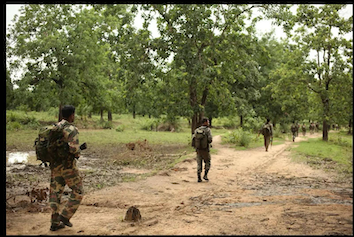
The coalition argues these killings form part of a broader pattern of violence in the Bastar Division of Chhattisgarh state, home to indigenous Gond and Mariya communities. According to Indian government figures cited in the statement, over 550 people were killed in anti-Naxalite operations until September 2025, with killings in Chhattisgarh’s Bastar region increasing tenfold from 20 in 2023 to 217 in 2024.
The organisations allege a “rewards-for-killing policy” incentivises security forces to carry out extrajudicial executions, often described by authorities as encounters or exchanges of fire with insurgents.
Central to the coalition’s concerns is the relationship between state violence and resource extraction. The statement argues that military operations facilitate the appropriation of mineral-rich Adivasi lands by corporations. Chhattisgarh’s mineral revenue reached 12,941 crore rupees (approximately $153 million USD) in 2022-23, with nearly half generated from Bastar’s Dantewada district, yet the region’s indigenous peoples remain among India’s most impoverished.
“The Indian State is systematically erasing Adivasi land rights and human, civil, and political rights for capitalist interests,” the statement contends.
The signatories, spanning organisations from the UK, USA, Canada, Australia, Europe, Southeast Asia and India itself, are calling on the Indian government to immediately end extrajudicial killings and arbitrary arrests, institute an independent judicial inquiry into the deaths, and initiate genuine political dialogue with Adivasi communities regarding constitutionally guaranteed autonomy and land rights.
The coalition includes labour organisations, student groups, indigenous rights networks, environmental organisations, and South Asian diaspora collectives. Australian signatories include The Humanism Project, Alliance Against Islamophobia and ATSIIEO (Australia).
The statement frames the Naxalite movement as rooted in indigenous socio-political exploitation and argues that India’s refusal to pursue political settlement stems from corporate interests in resource extraction.
India’s government has maintained that its operations target armed insurgents and that it is working towards development and security in affected regions. The statement, however, accuses authorities of treating entire Adivasi communities as targets, with militarisation permeating daily life through surveillance, restricted movement, and fear of arbitrary detention.
The global call represents mounting international pressure on India regarding its handling of indigenous rights and counterinsurgency operations in resource-rich tribal regions.