
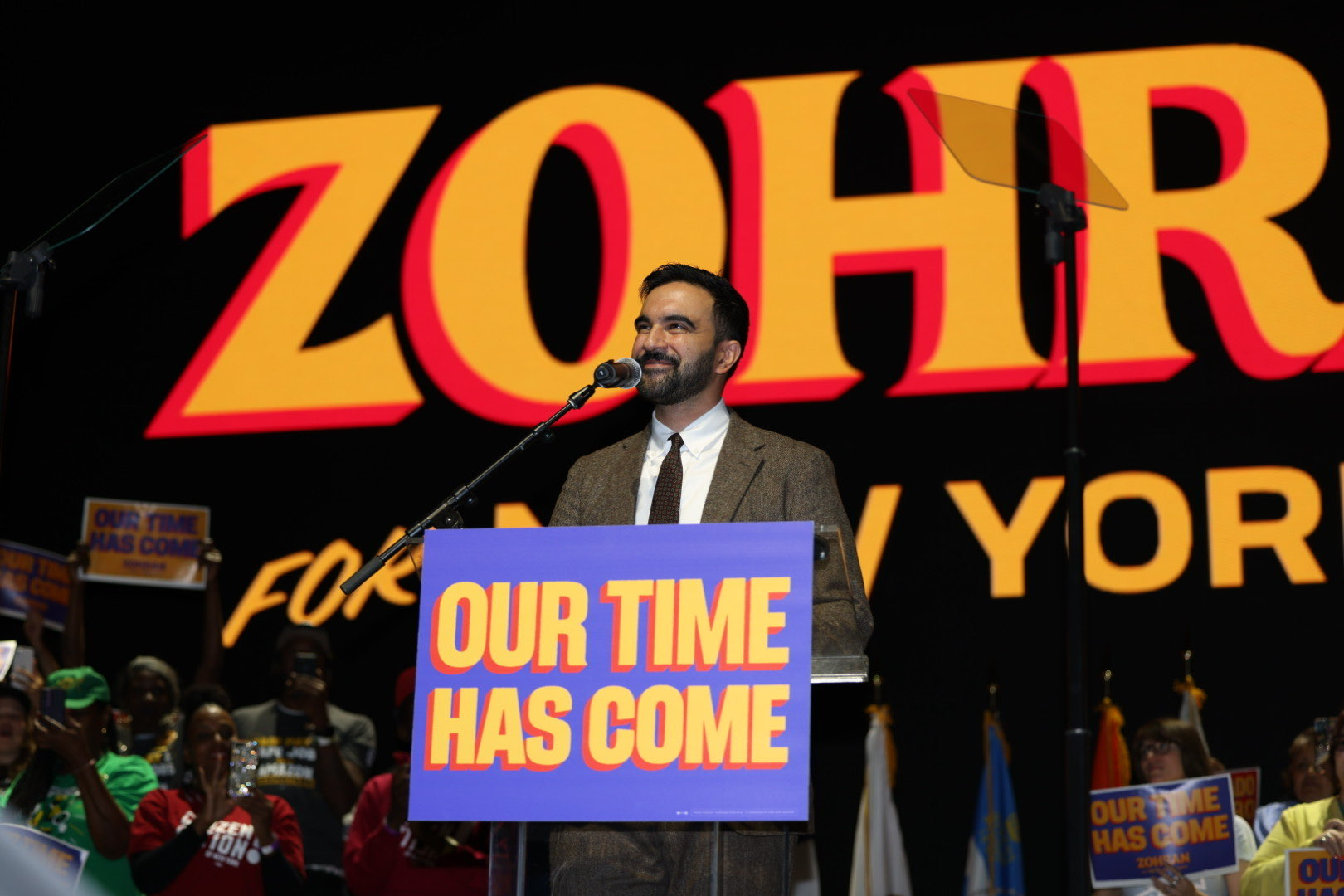
The 2025 New York mayoral race witnessed an unprecedented surge in coordinated disinformation campaigns targeting Zohran Mamdani, a progressive candidate of South Asian heritage and Muslim faith. The Equality Labs report provides a detailed examination of how online hate, racial and religious discrimination, and orchestrated disinformation tactics were weaponized against a diverse political candidate. This analysis reveals troubling patterns not just at the local level, but demonstrates how international actors coordinated efforts to undermine his candidacy, raising critical questions about the future of inclusive democracy in America.
In the aftermath of Zohran Mamdani’s victory in the Democratic primary for New York City mayor, researchers documented a pronounced surge of online hate attacks. The report reveals approximately 17.1 million mentions across 12 platforms from January to October 2025, with a substantial portion comprising coordinated disinformation campaigns.
The Scope and Scale of Digital Harassment
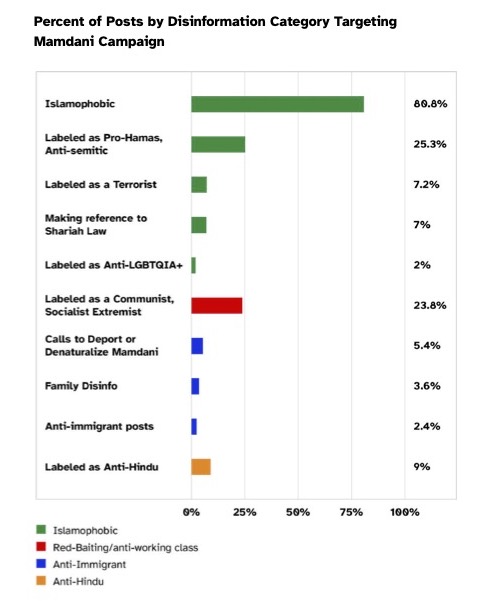
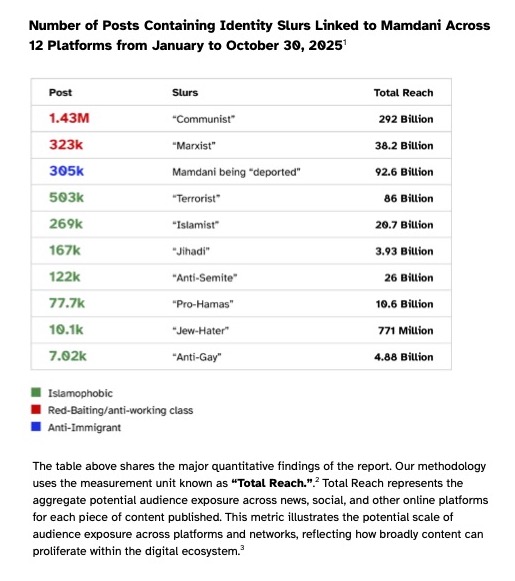
The sheer magnitude of the disinformation campaign is staggering. Between January and October 2025, approximately 17.1 million posts across various digital platforms referenced Mamdani. This enormous digital footprint translated into measurable reach and impact:
- Communist Accusations
- 1.43 million posts associated with the term “communist”
- Combined reach: 292 billion impressions
- Terrorist Labeling
- 503,000 posts labeled him a “terrorist”
- Combined reach: 86 billion impressions
- Anti-Immigrant Rhetoric
- 305,000 posts containing anti-immigrant messaging
- Approximately 5% explicitly suggested deportation
- Combined reach: 92.6 billion impressions
- Islamophobic Content
- 1.15 million posts infused with Islamophobic messaging
- Combined reach: Over 152 billion impressions
These numbers underscore how targeted messaging can mobilize hate and fear at a scale that directly impacts political discourse, voter perception, and democratic processes.
Five Primary Disinformation Themes
The report identifies five interconnected thematic pillars that structured the disinformation campaign against Mamdani:
1. Islamophobic Narratives
A substantial proportion of social media content employed derogatory terminology and inflammatory language that conflated Mamdani’s Muslim identity with terrorism and anti-American sentiment. This strategy deliberately distorted his candidacy and political platform by associating it with negative religious stereotypes. The campaign systematically worked to alienate both mainstream voters and those unfamiliar with Mamdani’s actual policy positions, relying instead on fear-based messaging tied to post-9/11 anxieties and Islamophobic tropes.
2. Xenophobic and Anti-Immigrant Rhetoric
Posts undermining Mamdani’s legitimacy frequently referenced his South Asian immigrant background, suggesting he lacked authentic belonging in American politics. This narrative positioned his immigrant status as a fundamental liability rather than recognizing it as a contribution to society’s cultural and political diversity. The xenophobic attacks portrayed his policies as threats to traditional American identity, leveraging nationalist sentiment to delegitimize his candidacy.
3. Red-Baiting and Anti-Working Class Attacks
Opponents strategically labeled Mamdani as a “communist” or “Marxist” to evoke historical Cold War fears and contemporary anxieties about socialism. This red-baiting strategy aimed to neutralize his economic arguments supporting working-class empowerment by equating them with extremist ideologies. The tactic was particularly effective in reaching centrist and conservative voters who might be persuaded through appeals to anti-communist sentiment rather than policy-based critique.
4. Hindu Nationalist Messaging
Right-wing Hindu circles, particularly those aligned with Narendra Modi’s political ideology, targeted Mamdani with accusations of betraying his Hindu roots due to his critical stance on Modi administration policies. Notably, approximately 10% of these posts originated from accounts associated with the Indian community, revealing how heritage-based identity could be weaponized against him. This strategy attempted to fracture potential support within South Asian communities by portraying Mamdani as a traitor to his cultural and religious heritage.
5. Anti-South Asian Discourse
Mamdani’s candidacy became a vehicle for amplifying broader sentiments against the South Asian community, complicating his multicultural identity rather than celebrating it. His prominence in the political sphere was leveraged to fuel xenophobic narratives that affected not just his campaign but the broader South Asian diaspora’s sense of belonging and safety in American civic life.
The Global Dimension: International Coordination
One of the most alarming findings in the report is the transnational nature of the disinformation campaign. A total of 26 international politicians and officials from various countries engaged with and amplified disinformation narratives about Mamdani. This participation reveals:
- Interconnected Far-Right Networks – The involvement of international actors demonstrates how global right-wing networks leverage local political contexts to foster xenophobia and Islamophobia.
- Strategic Amplification – International participation extended the reach and legitimacy of domestic disinformation, creating a coordinated effort that transcended national boundaries.
- Shared Ideological Goals – The participation of Hindu nationalist figures, anti-immigrant political actors, and conservative politicians suggests a shared ideological commitment to opposing progressive candidates from marginalized communities.
This global coordination underscores how disinformation campaigns in one nation can draw support and amplification from international actors with aligned ideological interests.
Mechanisms of Intimidation and Democratic Erosion
Beyond direct attacks on Mamdani himself, the disinformation campaign employed broader intimidation tactics:
Targeting Grassroots Organizations
Right-wing influencers deliberately targeted community groups mobilizing support for Mamdani, labeling them as insurgents or terrorists. This strategy served multiple purposes:
- Intimidation Effect – Community organizers faced heightened harassment and security concerns, potentially deterring future civic participation.
- Suppression of Mobilization – By making grassroots organizing riskier and more hostile, opponents sought to dampen voter turnout and enthusiasm.
- Chilling Effect on Democracy – Such tactics intimidate not just individual candidates but entire communities from engaging in democratic processes.
Erosion of Democratic Debate
The systematic nature of these attacks undermines the foundation of democratic discourse. Rather than engaging with policy positions, opponents employed identity-based smear campaigns designed to:
- Rally ideologically aligned constituencies through fear-based messaging
- Discourage broad coalitions from mobilizing around inclusive policies
- Reduce political debate to matters of identity rather than substantive governance
Patterns Reflecting Broader Challenges for Diverse Leadership
The Equality Labs report contextualizes Mamdani’s experience within a troubling broader trend: progressive candidates from racially diverse backgrounds consistently experience compounded layers of prejudiced disinformation. This pattern reflects:
- Intersectional Vulnerability – Candidates who belong to multiple marginalized communities face coordinated attacks that weaponize each aspect of their identity simultaneously.
- Strategic Targeting – Right-wing actors recognize that diverse candidates pose a threat to their political agenda and therefore concentrate disproportionate resources on undermining them.
- Systemic Bigotry – The coordination and scale of attacks suggest that racism, xenophobia, and Islamophobia are not incidental to opposition politics but rather central strategic elements.
- Democratic Implications – When the most diverse and progressive candidates face the most intense and coordinated disinformation, the result is a skewing of the political marketplace toward less inclusive candidates and policies.
Impact on Democratic Integrity and Civic Participation
The findings reveal a systematic strategy designed to:
Dismantle Credibility
By flooding digital spaces with inflammatory language and false accusations, opponents aimed to render Mamdani’s political message incoherent and his candidacy illegitimate in the eyes of persuadable voters.
Fracture Coalition-Building
Diverse political movements depend on cross-community solidarity and shared commitment to inclusive governance. Identity-based disinformation campaigns strategically target these coalitions by:
- Weaponizing cultural heritage against candidates
- Creating wedges within ethnic and religious communities
- Making certain communities feel unwelcome in progressive political spaces
Depress Democratic Participation
When civic engagement becomes a target for harassment and disinformation, participation rates decline. This outcome benefits opponents regardless of electoral outcome, as lower turnout generally favors conservative politics.
Normalize Bigotry in Political Discourse
The scale and coordination of these attacks effectively normalize the use of Islamophobia, xenophobia, and red-baiting as legitimate political tactics, setting precedents for future campaigns.
The Intersection of Race, Religion, and Politics
The Mamdani case exemplifies how contemporary political attacks exploit multiple dimensions of identity simultaneously. Rather than focusing on a single criticism, the disinformation campaign:
- Layered Attacks – Used every available identity marker (religion, ethnicity, immigration status, political ideology) as a vector for attack.
- Contradictory Accusations – Simultaneously portrayed him as both insufficiently American and a threat to America; both anti-Hindu and anti-Muslim.
- Transnational Identity Politics – Weaponized his connection to South Asia and Modi criticism to create divisions within diaspora communities.
This multifaceted approach reveals the sophisticated nature of modern political disinformation, which recognizes that marginalized candidates face multiple overlapping vulnerabilities that can be exploited simultaneously.
Implications for Democratic Future
The Equality Labs report on Zohran Mamdani serves as a crucial diagnostic tool for understanding the contemporary political landscape. Key takeaways include:
- Disinformation as Standard Practice – Coordinated disinformation campaigns targeting diverse candidates are no longer aberrations but appear to be becoming standard elements of electoral politics.
- International Coordination – The involvement of international actors demonstrates that these campaigns transcend national borders and reflect global ideological conflicts.
- Systemic Barriers to Inclusive Democracy – When candidates from marginalized communities face disproportionate and coordinated attacks, inclusive democracy becomes increasingly difficult to achieve.
- Need for Robust Countermeasures – Safeguarding democratic integrity requires developing sophisticated strategies to combat disinformation, hold international bad actors accountable, and protect grassroots organizing.
- Broader Political Stakes – The treatment of diverse candidates signals whether American democracy can genuinely embrace multiracial leadership or whether structural barriers will continue to privilege less inclusive candidates.
The report ultimately argues that addressing these disinformation campaigns is not merely a matter of protecting individual candidates but of defending the democratic process itself. As political polarization deepens and right-wing networks become increasingly transnational, the ability of diverse communities to participate authentically in democratic governance depends on creating ecosystems where political debate centers on substantive issues rather than identity-based disinformation and hate.
Read the full Equality Labs Report.