
• About
  • Advertise
  • Contact
  • Login
Newsletter
NRI Affairs
Youtube Channel
  • News
  • Video
  • Opinion
  • Culture
  • Visa
  • Student Hub
  • Business
  • Travel
  • Events
  • Other
No Result
View All Result
  • News
  • Video
  • Opinion
  • Culture
  • Visa
  • Student Hub
  • Business
  • Travel
  • Events
  • Other
No Result
View All Result
NRI Affairs
No Result
View All Result
Home Opinion

Who really starts wars—nations or names?

A closer look at how language blurs accountability by turning nations into actors while letting leaders fade into the background

Promod Puri by Promod Puri
April 6, 2026
in Opinion
Reading Time: 3 mins read
A A
0
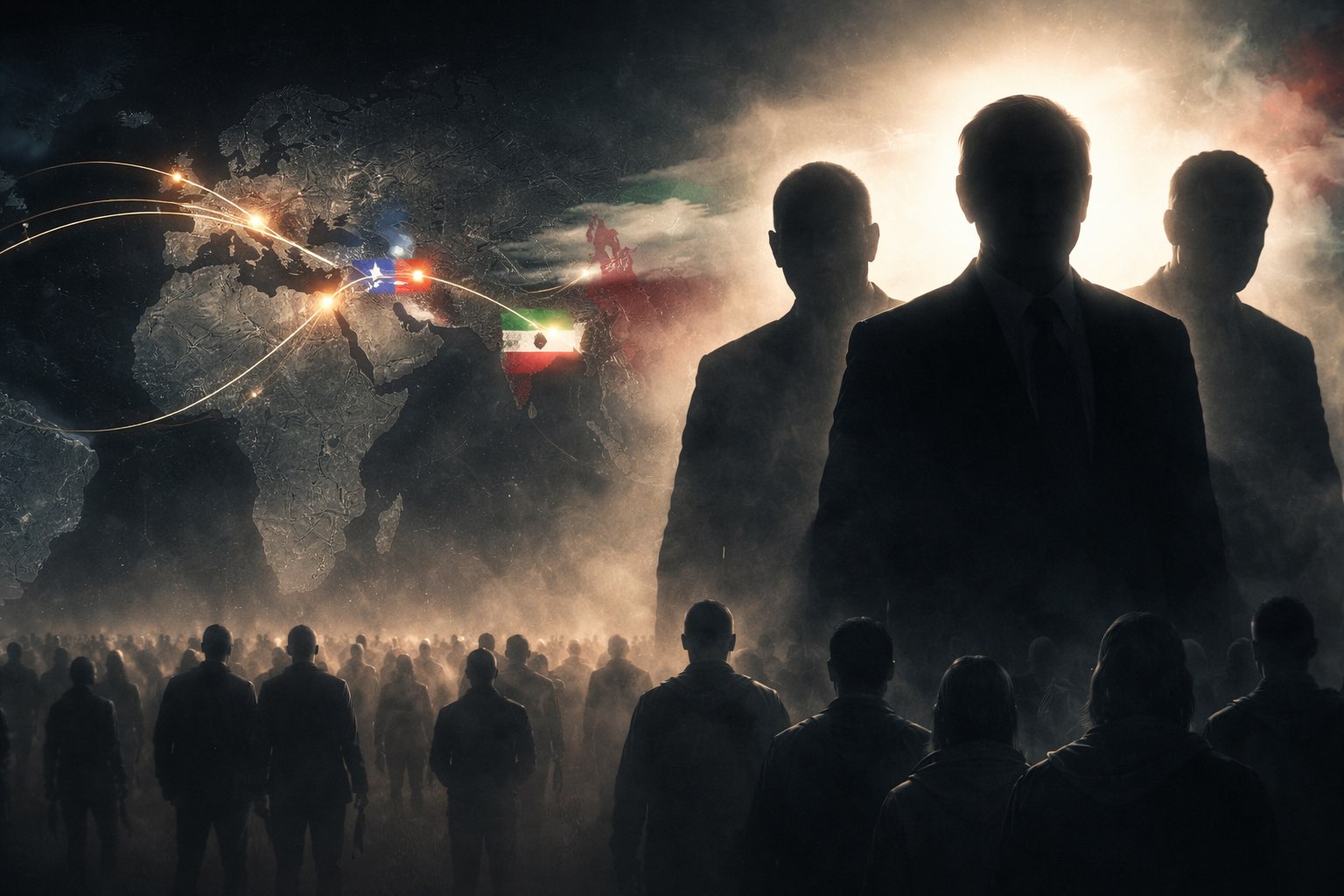
Who really starts wars—nations or names?

AI Generated

Share on FacebookShare on Twitter

The illusion of collective decision-making

Imagine, for a moment, that neither America nor Israel started the current war with Iran.

It sounds absurd because that is exactly how we are conditioned to think.

We say “America and Israel jointly attacked.” “Iran retaliated.”

But pause and look closer: did millions of ordinary citizens in these countries collectively sit down and decide to launch missiles? Of course not.

The same holds for Iran. The Iranian people are not a single, unified actor choosing war. Yet we speak as if the entire population rises as one to fight.

So, who really triggered all this?


Anthropomorphism and the language of war

The answer lies in a subtle but powerful phenomenon called anthropomorphism—the tendency to assign human traits and intentions to non-human entities.

We treat countries like individuals with minds, motives, and emotions. Nations “feel threatened”, “seek revenge”, or “decide to attack”.

In reality, nations don’t act; ruling leaders do.

Understanding this psychological shortcut helps us see how responsibility gets blurred.

When we say, “they started the war”, the pronoun “they” quietly shifts blame from specific decision-makers to entire populations. It is convenient, but dangerously misleading.

As the writer George Orwell once warned, “Political language is designed to make lies sound truthful and murder respectable.” One way it does this is by hiding real actors behind abstract non-human entities, such as “the nation”.


History’s misleading shorthand

History is full of such examples.

We say “America fought in Vietnam”, but it was the decisions of leaders in Washington.

We say “Iraq was invaded”, but it was a strategic call by a handful of policymakers.

We remember Rwanda or Cambodia as sites of horror, yet the architects of those tragedies were specific regimes and individuals—not the land, and not every citizen.

Even today, in conflicts involving Ukraine, Gaza, Israel, Iran, Pakistan, or Afghanistan, entire nations carry the burden of blame.

Meanwhile, the individuals who authorised, escalated, or prolonged these conflicts often fade into the background over time.


What history remembers—and what it forgets

Fast forward a few decades, or a century, and what remains in history books?

Only countries.

Names—today’s powerful decision-makers—gradually blur, debated by historians and forgotten by the public. But nations remain permanently stamped as aggressors or victims.

This is the quiet consequence of anthropomorphism:

We immortalise countries as culprits while allowing real decision-makers to slip through the cracks of time and evade the scrutiny they deserve.

In a few decades or a hundred years from now, names like Donald Trump, Benjamin Netanyahu, and Vladimir Putin may fade, while the nations involved in conflicts will remain fixed in collective memory.


Reclaiming accountability

Wars are not started by “America”, “Israel”, or “Iran” as abstract beings.

They are initiated by leaders.

By humanising nations, we unintentionally dehumanise accountability.
promod
Promod Puri

Promod Puri resides in Vancouver, Canada. He is the former editor, publisher and founder of The South Asian Canadian newspaper The Link, published from Surrey, Canada. Puri is the author of ‘Hinduism beyond rituals, customs and traditions’. Websites: promodpuri.com, progressivehindudialogue.com

Promod Puri

Promod Puri

Promod Puri resides in Vancouver, Canada. He is the former editor, publisher and founder of The South Asian Canadian newspaper The Link, published from Surrey, Canada. Puri is the author of ‘Hinduism beyond rituals, customs and traditions’. Websites: promodpuri.com, progressivehindudialogue.com

Related Posts

Undoing a decade of progress for transgender rights in India
Opinion

Undoing a decade of progress for transgender rights in India

March 27, 2026
Our Vacation Reveals Life in Cuba
Opinion

Our Vacation Reveals Life in Cuba

March 26, 2026
Pakistan‑Afghanistan conflict is rooted in local border dispute – but the risks extend across the region
Opinion

Pakistan‑Afghanistan conflict is rooted in local border dispute – but the risks extend across the region

March 23, 2026

Leave a Reply Cancel reply

Your email address will not be published. Required fields are marked *

Recommended

Australia Launches MATES – Important information for Indian professionals to work in Australia

Australia Launches MATES – Important information for Indian professionals to work in Australia

2 years ago
parents

Petition to allow parents under family reunion visa to be presented in Parliament

5 years ago
US will grant 64,716 more H-2B visas for fiscal year 2023

US will grant 64,716 more H-2B visas for fiscal year 2023

3 years ago
Prime Minister Modis-Russia-Visit-Strategic-Meetings-with-President-Putin-and-Indian Diaspora-Engagements

Prime Minister Modi’s Russia Visit: Strategic Meetings with President Putin and Indian Diaspora Engagements

2 years ago

Categories

  • Business
  • Events
  • Literature
  • Multimedia
  • News
  • nriaffairs
  • Opinion
  • Other
  • People
  • Student Hub
  • Top Stories
  • Travel
  • Uncategorized
  • Visa

Topics

Air India Australia california Canada caste china cricket Europe Gaza Hindu Hindutva Human Rights immigration India Indian Indian-origin indian diaspora indian student Indian Students Israel Khalistan London Migration Modi Muslim Narendra Modi New Zealand NRI Pakistan Palestine politics Racism Singapore South Asia student students trade travel trump UAE uk US USA Victoria visa
NRI Affairs

© 2025 NRI Affairs.

Navigate Site

  • About
  • Advertise
  • Contact

Follow Us

No Result
View All Result
  • News
  • Video
  • Opinion
  • Culture
  • Visa
  • Student Hub
  • Business
  • Travel
  • Events
  • Other

© 2025 NRI Affairs.

Welcome Back!

Login to your account below

Forgotten Password?

Retrieve your password

Please enter your username or email address to reset your password.

Log In
WP Twitter Auto Publish Powered By : XYZScripts.com