Mitu Sengupta, Toronto Metropolitan University
For more than two centuries, authorities in India have tried to remove free-ranging dogs from public life. Yet efforts to eliminate them have repeatedly encountered not only practical difficulties, but fierce resistance.
Why have dogs proven so difficult to dislodge from India’s streets?
Colonial culling drives provoked the Bombay dog riots of 1832, prompting authorities to experiment with relocating dogs rather than simply killing them.
In 2007, a culling drive in Bangalore, launched after a child was killed by a dog pack, drew activist protests over indiscriminate killing and cruelty. It was suspended until more shelters could be built.
More recently, in August 2025, the Indian Supreme Court’s order to remove street dogs permanently from Delhi sparked protests across India. Within days, the court reinstated the existing policy of sterilizing, vaccinating and returning healthy dogs to their neighbourhoods.
Later rulings partially reversed that retreat, allowing dogs to be permanently removed from institutional spaces while recognizing inadequate shelter capacity. The principle that healthy street dogs should ordinarily remain in their neighbourhoods survived — though only narrowly.
The people/dog bond
To understand the street dog’s persistence and the determined defence it inspires, it’s important to recognize what removal policies repeatedly underestimate. These dogs are deeply embedded in the places they inhabit and in the relationships of the people who live alongside them.
For some Indians, the street dog represents precisely what modern India was meant to leave behind: unruly nature intruding into organized human space. The dogs can also be embarrassing to governments anxious about how Indian cities appear to the outside world.
Ahead of the 2023 G20 summit, for example, authorities moved to round up street dogs so Delhi would present well to visiting dignitaries.
Yet street dogs are not outsiders to human space. Indian cities make this especially clear, since much of urban life is negotiated rather than formally planned, running on relationships, accommodations and workarounds as much as rules.
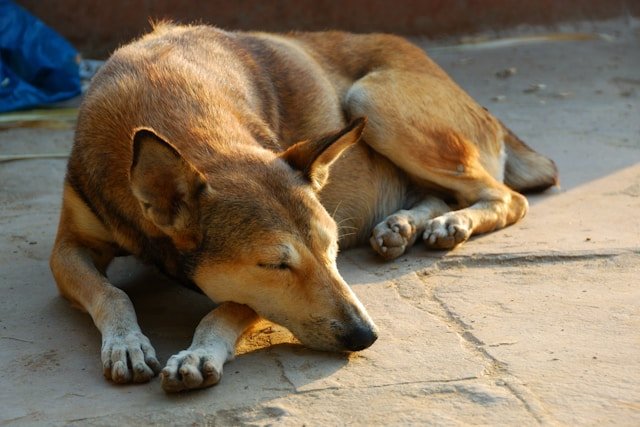
Consider a shared auto running a fixed but unofficial route, tolerated by authorities and filling a transport need that the formal system leaves unmet.
Indian urban theorist Ananya Roy argues this kind of informality is often treated as a residual failure awaiting correction, when it is actually produced by the processes that transform cities.
Street dogs are also part of this improvised urban landscape, though in a different way. They are sustained by resources produced by the city, particularly food waste that formal collection leaves behind. Eliminating dogs does not remove the conditions that sustain them. As long as food remains available, the ecological niche remains, allowing dog populations to replenish.
But this ecological niche alone cannot explain why attempts at removing the dogs generate such intense resistance.
For that, we need to consider care.
Sources of companionship
Indians form relationships with particular dogs, feeding them, naming them and effectively making them part of the communities in which they live. This is why many activists prefer the term “community dog.”
A 2019 study in Chennai found human-dog attachments across socioeconomic groups, including strong relationships among poorer residents, who described particular dogs as sources of companionship and security.
There may even be a biological dimension to this attachment. Research has found that mutual gazing between dogs and humans can produce an oxytocin-mediated bonding response in both.
For some, the roots run deeper still in the cultural traditions of the subcontinent. In Hindu tradition, dogs are the sacred companion of Bhairava, while for Parsis, they are said to be gatekeepers of the heavens. But the more immediate explanation may simply be familiarity: affection grows through proximity and repeated contact.
This combination of ecological and social embeddedness helps explain why street dogs have proved so resilient.
India is hardly alone in producing environments in which animals come to thrive. In Canadian cities, coyotes are drawn into urban spaces partly by abundant food, including rodents thriving on urban waste. Researchers increasingly argue that culling provides no lasting solution and advocate co-existence instead, which means accepting the presence of coyotes while reducing the conditions that bring them into conflict with humans.
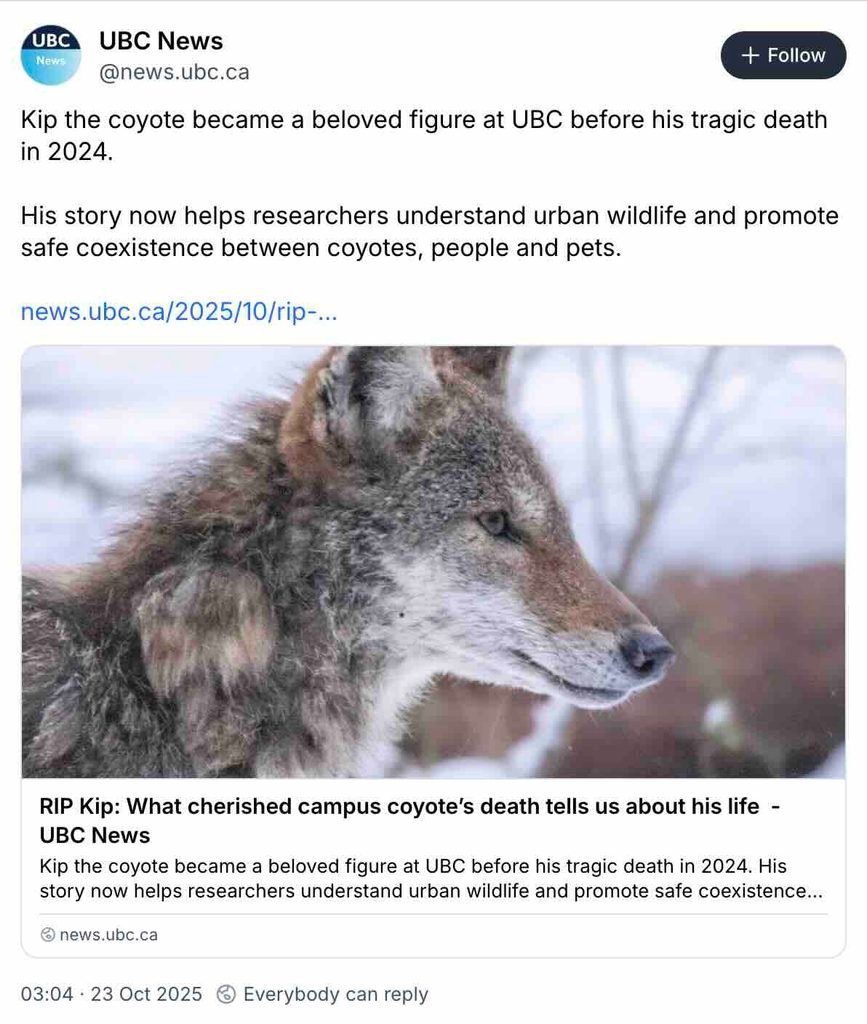
Care matters here too. A coyote nicknamed Kip became a familiar campus presence at the University of British Columbia after years of being fed by people. But that care also left him vulnerable. Habituation made him less wary of human environments, and he was killed by a car in 2024.
Street dogs likely here to stay
Like Canada’s urban coyotes, India’s street dogs are entangled with human life, for better and for worse. People love and protect them, but that same proximity leaves them vulnerable to traffic, deliberate cruelty and the sudden reach of the law.
There is no pristine animal world on one side and organized human space on the other. Street dogs inhabit a world humans have helped to make.
India may eventually have far fewer street dogs. Effective sterilization may reduce populations over time, while better waste management and changes in the built environment may shrink the ecological spaces that sustain them. For now, however, the street dog cannot simply be ordered out of existence.
Mitu Sengupta, Professor, Politics and Public Administration, Toronto Metropolitan University
This article is republished from The Conversation under a Creative Commons license. Read the original article.