

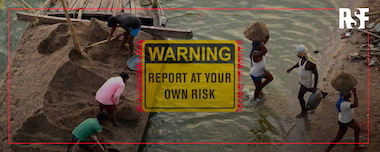
Nearly half of the journalists killed in India since Narendra Modi came to power in 2014 were reporting on environmental issues, according to a new report by Reporters Without Borders (RSF).
The report finds that at least 13 of the 28 journalists killed over the past decade were investigating environmental topics such as illegal mining, land seizures and resource exploitation.
RSF says many of these killings are linked to powerful criminal networks, including India’s so-called “sand mafia”, which profits from illegal sand extraction for the construction industry and is often alleged to have close ties to political actors.
“Half of the journalists murdered in the past ten years were investigating environmental issues, often linked to criminal groups that enjoy almost total impunity,” said Célia Mercier, head of RSF’s South Asia desk, calling the situation “appalling”.
Journalists targeted for exposing environmental crimes
The report documents a pattern of violence against reporters probing environmental corruption and organised crime.
Among the cases cited:
- Freelance journalist Jagendra Singh died in 2015 after sustaining severe burns during a police raid while investigating illegal sand mining.
- Reporter Sandeep Sharma was run over by a truck in 2018 after covering sand mafia activities in Madhya Pradesh.
- Investigative journalist Shashikant Warishe died in 2023 after being hit by a vehicle linked to a real estate lobbyist connected to illegal land deals.
Other journalists were shot dead by hired hitmen or killed after raising concerns for their safety, often in connection with reporting on illegal mining or land grabs.
Impunity and broader threats to press freedom
RSF notes that the remaining 15 journalists killed since 2014 were targeted for reporting on corruption, elections, organised crime and insurgency-related issues.
One of the most high-profile cases was the 2017 killing of journalist Gauri Lankesh, who was shot dead outside her home in Bengaluru after facing sustained online harassment linked to far-right networks.
The report places these killings within a broader decline in press freedom. India ranked 161st out of 180 countries in RSF’s 2023 World Press Freedom Index.
Calls for urgent action
RSF has called for the creation of a robust system to ensure both physical and digital protection for journalists, particularly those covering high-risk areas such as environmental crime.
The organisation also urged political candidates to prioritise ending impunity for attacks on journalists and to ensure thorough, independent investigations into past killings.
The findings come amid ongoing concerns about the safety of journalists in India, particularly those reporting on issues involving powerful economic and political interests.