
Ipshita Basu, University of Westminster and Sudheesh R.C., National Law School of India University
In the early hours of July 30 2024, a landslide in the Wayanad district of Kerala state, India, killed 400 people. The Punjirimattom, Mundakkai, Vellarimala and Chooralmala villages in the Western Ghats mountain range turned into a dystopian rubble of uprooted trees and debris.
A coalition of scientists that quantifies the links between climate change and extreme weather, known as World Weather Attribution, highlighted that human-induced climate change caused 10% more rainfall than usual in this area, contributing to the landslide.
Known for its welfare achievements such as universal literacy, public health and education, Kerala’s disaster management involved a swift relief response and the announcement of rehabilitation measures. But our research into the consequences of long-term environmental change reveals the crevices in this state-citizen relationship.
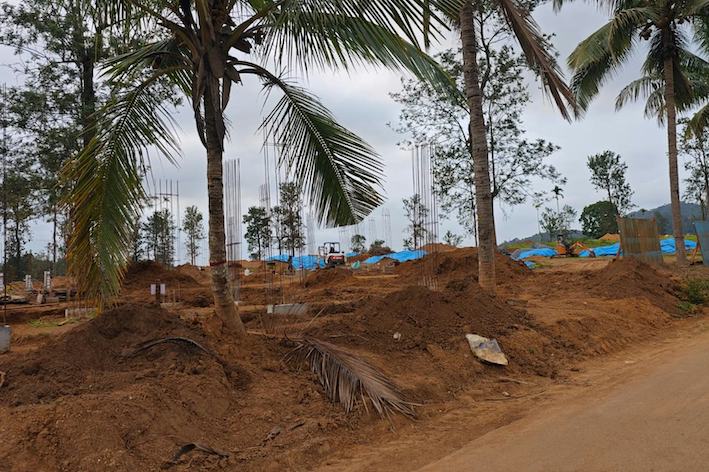
The Kerala government’s response to the landslide has focused on two townships – one in Kalpetta and the other in Nedumbala – that are promised to be of high-quality construction, with facilities characteristic of upmarket, private housing projects. Of the total 430 beneficiary families, each will be given a 93m² concrete house in a seven-cent plot (a cent is a hundredth of an acre). There will be marketplaces, playgrounds and community centres at both sites.
An AI-generated video of the Kalpetta township promised a glittering new life for its residents. Construction of the two sites was entrusted to the Uralungal Labour Contract Cooperative Society, a labour union known for building quality infrastructure, to raise credibility.
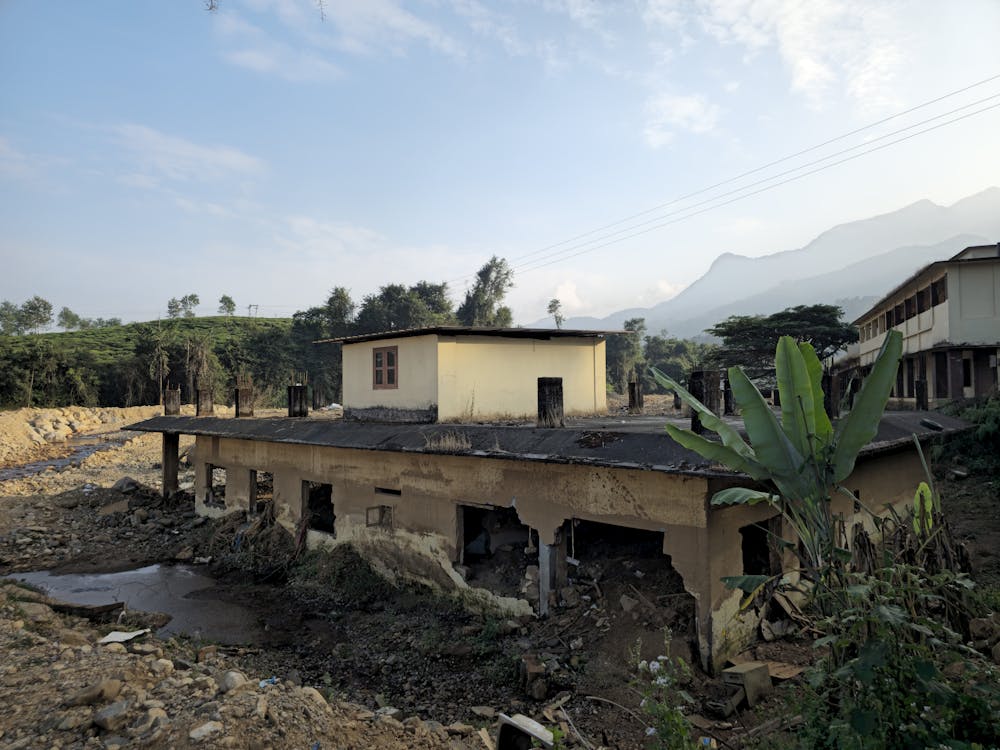
A man we spoke to as part of our ongoing research in Vellarimala was happy about the money he will make from rising property prices once his household receives a new home. “It is a great deal,” he told us. “We get seven cents of land and a new house. We estimate the property [will] hit a value of 10 million rupees (£85,600) in a few years. Also, since the government provided the house, we just have to protest if there is a complaint.”
We also spoke to two citizen groups that mobilised victims after the landslide, enabling settlers – who came to the area as plantation labourers during colonial rule in the 20th century – to voice their grief, loss and trauma. This highlighted their history of migration from the plains of Kerala. Although they sought optional cash compensation initially, they have largely accepted being given a new home in the township, drawn by its future value.
But while township development seems to be an apt response, Kerala will struggle to cope with recurring cycles of disasters and disaster management without addressing the factors that trigger or amplify these calamities.
The townships are being built on 115 hectares of two tea plantations that have been bought by the Kerala government. With roots in British colonial rule, plantations represent a significant alteration of Wayanad’s ecology. The landslide’s route was full of tea plantations and most affected families were non-Indigenous plantation workers.
Tourism is also booming here, with hundreds of resorts, homestays and hotels, and a glass bridge that welcomes tourists to visit the forests and plantations of Vellarimala.
Less than three miles away, a landslide in 2019 in Puthumala killed 17 people. Although it was a warning, construction of buildings has continued unchecked. A tunnel that connects Wayanad with the plains of Kerala has been proposed, despite a state government committee report highlighting it would pass through areas that are at a moderate-to-high risk of landslides.
Differing values
Resettlement plans that focus on glitzy townships can fail to consider the most marginalised people, especially in societies like India that are marked by social hierarchies. A couple of Indigenous families, referred to as Adivasis in India, were initially offered space in the township. They refused it, citing their separation from the means of livelihood and cultural resources that the nearby forests provide.
For a long time, they have resisted efforts to relocate them from the forests – first in the name of animal conservation, and now because of the threat of climate disasters. This is despite the efforts of the government’s forest department to portray the shifting of these families as a heroic rescue effort.

Two versions of the value attached to land are clashing here. Settlers see land as a commodity, so prize the two townships announced in Wayanad for their increasing land value. But Indigenous families hold deep cultural ties with the lands they are being asked to leave behind.
This is not just a romanticised connection with nature. Indigenous families will have to forgo hard-won forest rights. Leaving means losing access to honey, resins and medicinal plants that they trade for cash when food from the forests is insufficient.
Disasters like the Wayanad landslide expose the faultlines in both crisis management and state-citizen relationships. How a disaster is handled shows the state believes people can be easily moved from one site to another, while extraction and capitalist accumulation must continue.
Disasters also reveal whose loss is valued by the state and whose is not. While settlers’ losses were compensated through townships that hold the possibility of rising property value, Indigenous citizens’ loss of deeper ties with the land and forests remains unaddressed.
We believe this calls for an urgent rethink. Disaster responses demand more than relocation of people from one vulnerable site to another, perpetuating an endless series of calamities and reconstruction. It demands a fundamental change in the model of development.
Don’t have time to read about climate change as much as you’d like?
Get a weekly roundup in your inbox instead. Every Wednesday, The Conversation’s environment editor writes Imagine, a short email that goes a little deeper into just one climate issue. Join the 47,000+ readers who’ve subscribed so far.
Ipshita Basu, Associate professor (Reader) in Global Development and Politics, University of Westminster and Sudheesh R.C., Assistant Professor of Social Sciences, National Law School of India University
This article is republished from The Conversation under a Creative Commons license. Read the original article.