

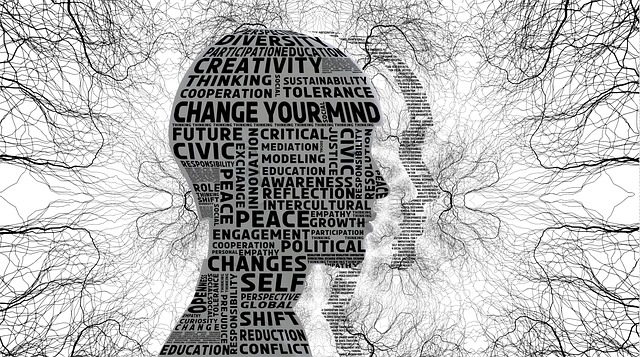
What is the difference between you and me, and a spoon, a table, a stone, or any other object? All are forms of physical matter. But we have consciousness; others don’t — or at least, we assume they don’t.
This distinction separates us from what we call “non-conscious” objects. But how is this distinction created? How does consciousness emerge and direct physical matter to become a mindful entity?
Why do humans appear to have consciousness while everything else remains silent? Or is that silence simply our own limitation?
Defining consciousness
Before exploring competing theories, it helps to understand what we mean by consciousness.
According to Wikipedia, consciousness is an “inward awareness of an external object, state, or fact,” encompassing perceptions, thoughts and feelings. The keyword here is “inward awareness,” suggesting consciousness is already present within us.
A dictionary definition describes it as the “full activity of the mind and senses.” Through the mind’s engagement with external and internal influences, consciousness develops. It is both a biological and psychological phenomenon, each reinforcing the other.
Theory 1: Dualism — consciousness comes from “outside”
Dualism argues that consciousness does not emerge from matter; instead, it is plugged into matter — a divine USB stick, so to speak. When unplugged, the body ceases to be conscious.
The idea is simple and spiritual. But science cannot detect where this “spark” originates or how it connects to the physical body. It’s an appealing concept for those who believe in divine forces, yet science has no explanation for where this plug comes from, who designed it, or why it chooses humans over household cutlery.
Theory 2: Panpsychism — a tiny spark in everything
The second perspective takes a different path: everything in the universe has some degree of consciousness, even if extremely faint.
Not fully formed thoughts — more like the faintest glimmer of awareness at a microscopic or particle level.
When billions of particles interact in complex ways, they create a rich consciousness like ours. When they do not, they remain basic and quiet, like the spoon.
This theory is known as panpsychism, meaning “mind everywhere.”
It does not claim that rocks think. Rather, it suggests the raw material of consciousness exists in rocks, spoons and everything else.
Is the universe a conscious network?
Some modern thinkers go further, suggesting the universe itself may be a single, vast conscious whole — and everything within it, from stones to stars to human beings, may be fragments of that cosmic awareness. A scientific echo of the Upanishadic phrase Om purnam adah, which speaks of totality and interconnectedness.
So… does the spoon feel?
Science cannot yet answer. Philosophy does not dismiss the possibility. And ancient wisdom tells us the universe is conscious in all its parts.
In short: you may be the only one in your kitchen with opinions — but you may not be the only one with a flicker of awareness.