

• About
  • Advertise
  • Contact
  • Login
Newsletter
NRI Affairs
Youtube Channel
  • News
  • Video
  • Opinion
  • Culture
  • Visa
  • Student Hub
  • Business
  • Travel
  • Events
  • Other
No Result
View All Result
  • News
  • Video
  • Opinion
  • Culture
  • Visa
  • Student Hub
  • Business
  • Travel
  • Events
  • Other
No Result
View All Result
NRI Affairs
No Result
View All Result
Home Opinion

Difference of opinion can’t override facts

When opinions replace evidence, truth becomes a casualty in the post-truth era.

Promod Puri by Promod Puri
November 13, 2025
in Opinion
Reading Time: 3 mins read
A A
0
Difference of opinion can’t override facts

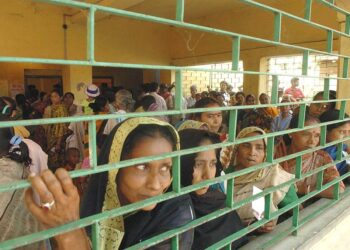
India's migrant workers were forced to walk hundreds of kilometres to their homes following India's sudden COVID lockdown in 2020 @Jairam_Ramesh

Share on FacebookShare on Twitter

In 2020, at the dawn of the COVID-19 pandemic, I was in a heated Facebook altercation with a friend over a post I wrote.

My post highlighted the Modi government’s abrupt lockdown measures, which forced hundreds of thousands of migrant workers in India to abandon their city jobs and head back to their villages—often on foot, in gruelling conditions, with little to no support.

My friend immediately dismissed the reports as “fake news,” despite my sourcing credible outlets like the BBC and Al Jazeera.

As the argument escalated, he moved from outright denial to a more evasive stance. He conceded, perhaps reluctantly, that his position was simply an “opinion.” In his words, “You’re entitled to your opinion, and I’m entitled to mine.”

What he called a “difference of opinion,” I saw as a blatant denial of reality.

This incident got me thinking: when does “difference of opinion” apply, and where does it lose its legitimacy when it overrides undeniable evidence?

The phrase “difference of opinion” has been tossed around so liberally in recent years that it risks becoming meaningless—even dangerous.

Author and philosopher Hannah Arendt once said, “The ideal subject of totalitarian rule is not the convinced Nazi or the dedicated Communist, but people for whom the distinction between fact and fiction, true and false, no longer exists.”

When someone equates a well-documented fact with mere opinion, it creates a slippery slope where evidence loses weight.

Somebody once put it simply: “Difference of opinion applies to topics like whether pineapple belongs on pizza or if you prefer Pepsi over Coke.

However, this does not extend to issues such as racism, homophobia, ableism, sexism, and human rights. Because that isn’t a difference of opinion—that’s a difference in morality.”

Matters of taste or preference are open to opinion; matters of humanity, truth, and rights are not.

Let’s consider what an opinion is. Merriam-Webster defines it as “a view, judgment, or appraisal formed in the mind about a particular matter.”

Opinions are shaped by our perspectives, knowledge, and biases—no two people will likely interpret every situation identically. But in cases like the mass migration of Indian workers during the lockdown, there’s no room for subjective interpretation; the events happened, and they were widely documented. Opinions on the political handling of the crisis may vary, but the suffering it caused was undeniably real.

The danger of reducing facts to mere opinion was eloquently captured by the late American senator and civil rights leader Daniel Patrick Moynihan, who famously said, “Everyone is entitled to his own opinion, but not to his own facts.”

In my friend’s case, his insistence on viewing worker migration as “fake news” wasn’t an opinion—it was a refusal to acknowledge reality.

Social media has amplified this issue, allowing personal views to masquerade as fact and giving rise to a “post-truth” culture where “alternative facts” and “fake news” narratives thrive.

It’s easier than ever for people to dismiss uncomfortable truths as mere opinions, which is why it’s critical to distinguish between the two. As journalist and historian Timothy Snyder points out, “To abandon facts is to abandon freedom.” When we fail to recognize this, we risk becoming indifferent to the truth.

The lesson is clear: a “difference of opinion” has boundaries, and those boundaries end where facts begin. Opinions can enrich debates on preference, policy, or philosophy, but facts form the backbone of reality.

It’s one thing to discuss whether pineapple belongs on pizza—it’s quite another to dismiss documented suffering as subjective.

For all of us, the responsibility remains: to uphold truth, respect facts, and remember that opinion, for all its worth, is no substitute for reality.

promod
Promod Puri

Promod Puri resides in Vancouver, Canada. He is the former editor, publisher and founder of The South Asian Canadian newspaper The Link, published from Surrey, Canada. Puri is the author of ‘Hinduism beyond rituals, customs and traditions’. Websites: promodpuri.com, progressivehindudialogue.com

Promod Puri

Promod Puri

Promod Puri resides in Vancouver, Canada. He is the former editor, publisher and founder of The South Asian Canadian newspaper The Link, published from Surrey, Canada. Puri is the author of ‘Hinduism beyond rituals, customs and traditions’. Websites: promodpuri.com, progressivehindudialogue.com

Related Posts

Pauline Hanson’s no ‘good’ Muslims comment shows how normalised Islamophobia has become in Australia
Opinion

Pauline Hanson’s no ‘good’ Muslims comment shows how normalised Islamophobia has become in Australia

February 25, 2026
Bucking ‘Huge Consensus’ at India Summit, Trump Admin Opposes Global AI Guardrails
Opinion

Bucking ‘Huge Consensus’ at India Summit, Trump Admin Opposes Global AI Guardrails

February 24, 2026
Exploring bacopa: the science behind the latest brain health trend
Opinion

Exploring bacopa: the science behind the latest brain health trend

February 20, 2026
Next Post
Monthly Overview of India News – October 2025

Monthly Overview of India News – October 2025

Worries about climate change are waning in many well-off nations – but growing in Turkey, Brazil and India

Worries about climate change are waning in many well-off nations – but growing in Turkey, Brazil and India

Gurmesh Singh Makes History as First Indian-Origin and Sikh Leader of a Major State Political Party

Gurmesh Singh Makes History as First Indian-Origin and Sikh Leader of a Major State Political Party

Leave a Reply Cancel reply

Your email address will not be published. Required fields are marked *

Recommended

Islamophobic hate surges on X during New York mayoral race

Islamophobic hate surges on X during New York mayoral race

4 months ago
pexels charlotte may 5965516

Indian students to be allowed entry to US to attend classes

5 years ago
India: Civic freedoms under threat during PM Modi’s second term

India: Civic freedoms under threat during PM Modi’s second term

2 years ago
Cricket and Beyond: How the Indian Diaspora in Australia Is Making Sporting Waves

Cricket and Beyond: How the Indian Diaspora in Australia Is Making Sporting Waves

1 year ago

Categories

  • Business
  • Events
  • Literature
  • Multimedia
  • News
  • nriaffairs
  • Opinion
  • Other
  • People
  • Student Hub
  • Top Stories
  • Travel
  • Uncategorized
  • Visa

Topics

Air India Australia california Canada caste china cricket Europe Gaza genocide Hindu Hindutva Human Rights immigration India Indian Indian-origin indian diaspora indian origin indian student Indian Students Israel Khalistan London Migration Modi Muslim Narendra Modi New Zealand NRI Pakistan Palestine Racism Singapore student students trade travel trump UAE uk US USA Victoria visa
NRI Affairs

© 2025 NRI Affairs.

Navigate Site

  • About
  • Advertise
  • Contact

Follow Us

No Result
View All Result
  • News
  • Video
  • Opinion
  • Culture
  • Visa
  • Student Hub
  • Business
  • Travel
  • Events
  • Other

© 2025 NRI Affairs.

Welcome Back!

Login to your account below

Forgotten Password?

Retrieve your password

Please enter your username or email address to reset your password.

Log In
WP Twitter Auto Publish Powered By : XYZScripts.com