
India in the World
- On the 2nd of November, the Bharatiya Janata Party (BJP) announced that a delegation of foreign diplomats from Japan, Indonesia, Australia, the United Kingdom, Bhutan and South Africa is on a two-day visit to Bihar. Dr. Vijay Chauthhaiwale, in-charge of the Foreign Affairs department of the BJP, said that “the visit aims to familiarise the diplomats with the functioning, outreach, and organizational strength of the BJP, as well as to provide an on-ground understanding of India’s electoral engagement at the grassroots level”. The visit is being conducted under the “Know BJP” initiative launched by National President J.P. Nadda aiming at introducing foreign diplomats and political figures to the BJP.
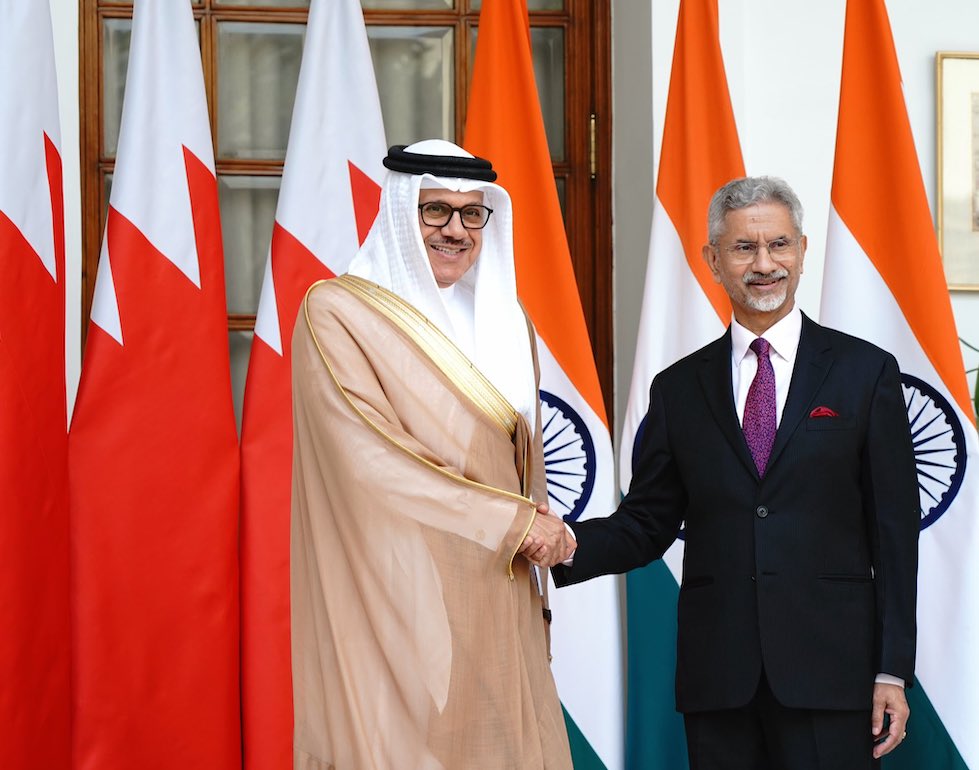
- On the 3rd of November, Indian External Minister S Jaishankar met with Bahrain’s Foreign Minister Abdullatif Bin Rashid Alzayani to discuss cooperation in defense and security. The two countries have agreed to combat the threat of terrorism through enhanced bilateral and multilateral cooperation, including intelligence sharing, capacity building and cyber security. A joint statement after the talks specified that the visit of three Indian naval ships to Bahrain in September 2025 has helped deepen engagement between the two sides. The External Minister of India added that there has been a steady growth of bilateral trade and investments between the two countries.
- On the 3rd of November, the Delhi High Court asked the Central Government to urgently intervene to secure the return of 22-year-old- Indian student Sahil Mahmadhusen Majothi, who is believed to be detained by Ukrainian forces amid the Russia-Ukraine conflict. After hearing the pleas of Sahil’s mother, judges believe the youth may have been coerced into joining Russian military operation. The family’s counsel said that, before approaching the High Court, they tried to reach out to the Indian Embassy in Moscow and St. Petersburg, and a government lawyer in Moscow. All the efforts made by the counsel went in vain.
- On the 17th of November, a senior government official said that the first tranche of a trade deal between India and the U.S. is “more or less near closure”. Talks on the reciprocal tariffs aspect of the proposed Bilateral Trade Agreement (BTA) were derailed in August following the levy of a total 50% tariff on imports from India.
Civil society, human rights defenders, and journalists
- After the “Special Intensive Revision” (SIR) of voter rolls in Bihar, the number of registered women voters dropped sharply, with the gender ratio falling from 907 women per 1,000 to 892. This decline disproportionately affected constituencies that had previously seen higher female turnout, raising concerns that the very group that had become politically influential is being excluded. Bihar has experienced a remarkable reversal in its gender gap in voting: while in 1962, far fewer women voted than men, by 2020 women’s turnout had surged past men’s. This shift was driven by targeted policies such as cash transfer, support through self-help groups, and livelihood programs, which empowered women to engage politically. The recent reduction in women voters is seen as a serious regression in democratic inclusion. Analysts argue that this is not simply an administrative cleanup but risks being a form of institutional disenfranchisement, undermining the political gains women had achieved over decades of increasing participation.
- On the 3rd of November, journalist and Washington Post columnist Rana Ayyub told the Committee to Protect Journalists (CPJ) that she received multiple threats via her phone from someone who knew her address. In the calls and messages, she was asked to write a column on the 1984 anti-Sikh riots, in which about 3,000 Sikhs were killed after the assassination of the then Prime Minister Indira Gandhi. The caller stated Ayyub’s home address and threatened to send people to attack her and to kill her father if she failed to publish the article. The Committee to Protect Journalist, after acknowledging the incident, has sought immediate steps by Indian authorities to guarantee the safety of journalist Rana Ayyub and her family. CPJ’s India representative Kunal Majumder said that the threats made against Rana Ayyub and her father from an unknown international number are “deeply concerning”. “Authorities must act swiftly to identity and hold accountable those responsible to ensure the safety of all journalists in India so that they can work without fear of intimidation or violence”, he stated.
- On the 8th of November, at an event hosted by the Indian Women’s Press Corps, Justice Surya Kant warned against normalising the “incessant and malicious” trolling of women journalists. He noted that their private data is being misused and fake incriminating material created to target them. These harms, he said, must not be dismissed as the inevitable cost of being online. “These perpetrators, instead of engaging with their actual work or the opinions expressed by women journalists, utilise these methods of ‘online violence’ to belittle, induce fear, and discredit them professionally. This type of digital abuse not only undermines the confidence and security of women journalists but also threatens press freedom by stifling the diversity and nuance of public discourse,” Justice Kant said.
- A SIR supervisor’s dying declaration has brought focus on the extraordinary pressure that workers handling this revision exercise are in. On the 27th of November, The Wire published a piece on the multiple cases of booth level officer (BLOs) citing work pressure, threat of suspension and police action in multiple states including Uttar Pradesh, Madhya Pradesh, Rajasthan, Gujarat and Kerala. Reports have noted four deaths among SIR workers in Uttar Pradesh, eight in Madhya Pradesh and four in Rajasthan. Low-paid government staff such as panchayat secretaries, assistant teachers, and anganwadi workers are usually assigned as Booth Level Officers during elections, but many are reporting unusually high pressure during the current SIR process. One primary school teacher in Uttar Pradesh explained that the work now requires technical skills they were never trained for. Some officers still use basic phones yet are expected to collect voter information, process forms, and upload large amounts of data through mobile apps, all while facing strict supervision and deadlines they consider unrealistic. The EC has not acknowledged these deaths as having been a result of the SIR.
- On the 25th of November, tensions have escalated in Madhya Pradesh after it was found that different persons reportedly linked to the BJP and RSS were appointed as assistants to both level officers for the ongoing special intensive revision (SIR) of electoral rolls. This news sparked criticism from the opposition, alleging that the ruling BJP was influencing the electoral revision. The district administration later described the inclusion as an “inadvertent mistake”, and initiated action to remove the names. State Congress president Jitu Patwari wrote that even a constitutional exercise like the SIR was being “politically manipulated” by the administration. “When the party in power begins to colour every institution in its own shade, democracy suffers” he alleged, adding that the Congress would oppose any attempt to “misuse the electoral process”.
- On the 20th of November, the Delhi High Court passed an order which protected the personality rights of podcaster and entrepreneur Raj Shamani and directed removal of certain objectionable posts against him on social media. The court passed the interim order while hearing Mr. Shamani’s plea seeking to restrain unauthorised use of his image, persona, likeness and voice without his consent, and AI-generated content. The court also observed that Mr. Shamani’s rights are protected under the Copyright Act. It directed the social media entities to block or remove or take down the infringing content generated through AI and deepfake.
Hate Crimes and Hate Speech against Minorities
- On the 4th of November, Christian rights activists assembled at the Press Club of India to release a report about an alarming annual surge in incidents of violence against the religious minority in India. A statement released at the press conference alleged that there has been a 500% rise in the number of hate crimes targeting Christians since 2014. According to the statement, between 2014 and 2024, incidents of violence against Christians increased from 139 to 834. The total number of documented incidents across this 12-year period reached 4,959 cases, affecting Christian individuals, families, and institutions nationwide. This represents an average annual increase of 69.5 incidents, demonstrating a sustained and systematic escalation in violence.
- On the 19th of November, World Health Organisation (WHO) published the global report “Violence against women prevalence estimates, 2023”, which found that, in 2023, over a fifth of women in India aged 15-49 were subjected to intimate partner violence, while nearly one in three women around the world have suffered partner or sexual violence during their lifetime. This figure, the report said, has barely changed since 2000. In India, about four percent of women aged 15 and above are estimated to have suffered sexual violence from a non-partner.
- On the 25th of November, the Supreme Court, while hearing a plea filed by journalist Qurban Ali and others, quoting instances of systematic ostracization of the Muslim community in various States, said it was not inclined to legislate over or monitor every incident of hate speech across the country. A Bench of Justices said police stations and State High Courts were in place and competent to deal with them. The oral observations from the Bench came almost seven years after the Supreme Court had condemned hate crimes in 2018. The court had declared it the state’s “sacrosanct duty” to protect and lives of citizens from hate crimes. Four years later, in October 2022, witnessing the unabated ferocity of hate crimes, the Supreme Court had ruled the “tragic” level to which “we have reduced religion to” in the 21st century. It had said a “climate of hate prevails in the country”.
Religious Freedoms and Minority Rights
- On the 3rd of November, the Syro-Malabar Catholic Church strongly criticised the erection of signboards in eight villages in Chhattisgarh that ban entry to pastors and “converted Christians”, calling them the “most divisive boundary the country has seen since Partition”. “In a nation where lynch mobs, killers, persecutors of Dalits and Adivasis, and those forcing ‘ghar wapsi’ conversions are not prohibited, this verdict must be challenged in the Supreme Court”, the Church said. According to the High Court’s ruling on the 28th of October, the boards were put by gram sabhas (village councils) “as a precautionary measure to protect the interest of indigenous tribes and local cultural heritage”. The Church also warned against weakening resistance to Hindutva by aligning with other forms of communalism or religious extremism, arguing instead that the fight for secularism must rest “only in alliance with the Constitution of India”.
- On the 18th of November, an independent Indian news site reported on Sakina Begum, a woman from Assam who was declared a foreigner and allegedly pushed into Bangladesh, where she is now in police custody for entering without documents. Sakina was taken into custody by Assam Police in May and then disappeared; her family could not contact her for weeks. After finding shelter with a woman in Dhaka who tried to help her return home, Sakina was located by a BBC reporter investigating her case. Once the BBC story spread online, Bangladeshi police detained her and charged her with illegal entry. Sakina’s daughter says she had long struggled to prove her Indian citizenship. On the day she vanished, police took her for a “signature” and promised to return her, but later told the family she had been moved to a detention centre. A local helpline eventually informed them she had been handed over to the Border Security Force on the 26th of May near the Bangladesh border. This occurred amid Assam’s promotion of a “push-back policy,” in which more than 1,000 people are believed to have been forced across the India–Bangladesh border.
- The U.S. Commission on International Religious Freedom (USCIRF) warns that strong ties between India’s ruling Bharatiya Janata Party (BJP) and the Rashtriya Swayamsevak Sangh (RSS) are enabling discriminatory laws against religious minorities. Their report highlights how national and state laws, including citizenship rules, anti-conversion laws, and bans on cow slaughter, disproportionately restrict Muslim and Christians. The USCIRF also argues that the BJP-RSS relationship helps push a “Hindu State” agenda, making India less secular in practice. It points to cases like Umar Khalid’s long detention for protesting the Citizenship Amendment Act (CAA) illustrating how religious minorities face legal and political persecution. According to the report, hundreds of Christians and Muslims have been arrested under anti-conversion laws, with 70% of India’s inmates being pre-trial detainees and religious minorities disproportionately represented. Finally, the report recommends designating India as a “Country of Particular Concern” under U.S. rules, though the State Department has so far not acted on this recommendation.
- A decade after the India–Bangladesh Land Boundary Agreement was implemented and residents of former enclaves were formally inducted into the two countries, many of those who chose to live in India say their lives have been filled with uncertainty, with the Special Intensive Revision (SIR) now adding to their worries. The agreement swapped 162 enclaves and promised people who had lived for generations in a legal vacuum full citizenship and land rights, yet these promises have not been fulfilled. Former Indian enclave residents are living in government-allotted rehabilitation flats that, after only ten years, are already in terrible condition, with no registered ownership and no proof of citizenship. Many feel betrayed, as the Indian government had promised them a house, ₹5 lakh, and five kathas of land, none of which ever arrived. The rehabilitation camps, meant to be short-term transit centres before families received land and were integrated locally, have instead become permanent. Meanwhile, the Election Commission has made no clear statement on how SIR scrutiny applies to residents who were not Indian citizens in 2002, leaving officials to repeat that “nothing is final” and residents to live with growing anxiety that the uncertainty of the past decade is becoming permanent.
Internet and Technology
- On the 10th of November, the Supreme Court agreed to list a petition highlighting that indiscriminate use of Generative Artificial Intelligence (GenAI) in judicial work can lead to “hallucinations”, resulting in fictitious judgments, research materials and even perpetuate bias. The petition warned the opaque use of AI and Machine Learning technologies in the judicial system and governance would trigger constitutional and human rights concerns. The judiciary must use only data free from bias, and the ownership of that data must be transparent enough to ensure stakeholders’ liability. The petition highlighted how “this process of hallucinations would mean that GenAI would not be based on precedents but on a law that might not even exist”. It also pointed out that judicial reasoning and decisions cannot be left to the fluctuations of AI, the public have a right to know the reasoning behind judgements. Advocates specified how AI may assist in administrative efficiency, but it cannot replace the “prudence, moral judgment, and human discretion essential to judicial decision-making.” It flagged that one of the biggest dangers of integrating AI with judicial work was data opaqueness, largely due to the ‘black box algorithms’ employed in GenAI.
- According to the new report published by the US non-profit organisation Freedom House, global internet freedom has declined for the fifteenth consecutive year with 27 out of 72 countries assessed showing a dip, and India continuing to have the “partly free” status 51st ranking. The last time the organisation had claimed India to have a “free” status in internet control was 2021. The report found that the online information environment in the country is rife with misinformation and misleading content, particularly in the aftermath of the Pahalgam terrorist attack, and it noted that among the six key internet controls deployed by a country’s government, India uses all: blockages on social media or communications platforms, of political, social or religious content; ICT networks deliberately being disrupted; pro-government commentators who manipulate online discussions; blogger or ICT users being arrested, imprisoned, or kept in prolonged detention for political or social content; blogger or ICT users being physically attacked or killed (including in custody).
Political Parties
- On the 2nd of November, Tamil Nadu chief minister M.K. Stalin led a united front of allied parties in accusing the Election Commission of deploying a “mere trick to delete the names of genuine voters” through its special intensive revision (SIR) of electoral rolls just months before the assembly election. Chairing a multi-party meeting of 40 regional and national parties, Stalin condemned the exercise, claiming it was modelled on a similar process in Bihar that had disenfranchised citizens. “Voting is the body and soul of democracy, and that right is facing a threat”, he declared.
- After the NDA secured a strong majority of 202 seats in the 243-member Bihar assembly, its legislators met on the 19th of November and unanimously chose Janata Dal (United) leader Nitish Kumar to head the new government. He then met the Governor to stake claim to form the ministry, and arrangements were made for a swearing-in ceremony at Patna’s Gandhi Maidan. On the 20th of November, Nitish Kumar was sworn in as Chief Minister for the tenth time, marking another continuation of his long political tenure in Bihar. The ceremony was attended by Prime Minister Narendra Modi and other senior NDA leaders. Twenty-six ministers from alliance parties also took oath, including Samrat Chaudhary and Vijay Kumar Sinha as deputy chief ministers. Together, the two events completed the formal establishment of the NDA government following its election victory.
Police and authorities
- On the 10th of November, a high-intensity blast in a parked car near the Red Fort Metro Station in Delhi left at least eight people dead and several vehicles charred. The explosion triggered a fire that quickly spread to nearby cars. The Union home Minister Amit Shah said that the government is “exploring all possibilities and conduct a thorough investigation”. Shortly after issuing the statement, Shah visited the LNJP hospital to meet the blast victims. On the 11th of November, Prime Minister Narendra Modi spoke about the blast, saying that those responsible for the explosion won’t be spared and be brought to justice.
- On the 10th of November, hours ahead of the Delhi blast, the Jammu and Kashmir Police carried out a wide-scale crackdown in around 10 districts of the Valley. Around 100 locals were either detained or bound down in several districts as more than 70 locations were raided and searched. In north Kashmir’s Baramulla, police said an operation was launched and 16 properties linked to Pakistan-occupied Kashmir or Pakistan-based Kashmiri natives, and 23 locations with links to “over ground workers” were searched. In central Kashir’s Ganderbal district, police said 39 persons were taken into custody as a preventive measure, “after credible inputs suggested their involvement in activities detrimental to public space and security”. The police have also filed 16 applications for cancellation of bail granted to accused persons booked under the Unlawful Activities (Prevention) Act (UAPA) in south Kashmir.
Judiciary
- On the 3rd of November, advocates of the accused in the 2020 Delhi Riots “larger conspiracy” case presented their arguments to the Supreme Court. They all argued in favor of bail considering the passage of years since the cases were filed and the activists and students arrested, without any visible progress in the cases. Opposing the pleas, additional solicitor general S.V. Raju, for the Delhi police, argued that the accused had played the “victim card” while delaying proceedings, and that the gravity of the allegations – a planned “regime-change operation” against the State – warranted continued custody. He urged the court not to dilute the standards for bail under the UAPA. Advocates representing various accused explained the sequence of events related to their clients, saying that they were only arrested because they happened to be residents of the violence-affected areas, or were involved in the protests, but not in any “conspiracy”. Senior advocate Kapil Sibal, appearing for Umar Khalid, argued that his client had been targeted and kept in custody for more than five years despite a lack of direct evidence linking him to any act of violence.
- On the 10th of November, the Supreme Court of India declared that women represent the country’s “largest minority” and agreed to hear a petition seeking immediate implementation of a 33% reservation for women in the Lok Sabha (the national lower house) and state assemblies, rather than awaiting for delimitation after the next census. The petition argued that previous amendments to the Constitution enabling various forms of reservation were implemented without waiting for delimitation, and that delaying the women’s quota undermines the goal of ensuring their adequate political representation, noting that women currently hold only about 4 % of legislative seats despite constituting nearly half the population. Justice Nagarathna remarked that women do indeed form the country’s largest minority group, and that the declining number of tickets given to women candidates by political parties raises serious concerns.
Business & economy
- On the 2nd of November, the Indian Space Research Organisation (ISRO) launched a powerful communication satellite CMS-03, the heaviest to be carried by any Indian rocket so far.
- In November, India launched Exercise Trishul, a mega tri-service military drill along the western border with Pakistan, the first of its scale since Operation Sindoor in May, with around 20,000 troops participating to test offensive and defensive capabilities, interoperability, and coordination among the armed forces. Sources said the three services will operationally test the entire spectrum of resources for efficacy and capability, T-90 and Arjun tanks, attack helicopters, missile systems, Rafale and Sukhoi-30MKI fighters, drones and a range of warships. The tri-services’ assets will also be tested in the electromagnetic spectrum, and in the cyber and information warfare domain. Last month, Defence Minister Rajnath Singh had warned Pakistan and stated that a route to Karachi passes through Sir Creek. He had said that any aggression in the Sir Creek area would be met with a response that would “change both history and geography.”
- On the 17th of November, Indian public-sector refiners have signed a one-year agreement to import liquefied petroleum gas (LPG) from the United States, establishing the first formal, structured supply contract for US-sourced LPG in the Indian market. “In a significant development, Indian PSU oil companies have successfully concluded a 1-year deal for imports around 2.2 MTPA LGP, close to 10% of your annual imports, for the contract year 2026, to be sourced from the US Gulf Coast,” said Petroleum Minister Hardeep Singh Puri in a post on X. This deal is expected to reduce India’s dependence for LPG on its traditional West Asian suppliers as the country looks to diversify import sources in search of better prices. The deal also comes at a time when India is looking to reduce its trade surplus with the US amid delicate trade pact negotiations between the two countries.
- The Indian government has revealed in Parliament that the Life Insurance Corporation of India (LIC) has invested a total of Rs 48,284.62 crore in Adani Group companies, combining both equity and debt exposure. Of this amount, Rs 38,658.85 crore is invested in equity and 9.625.77 crore in debt instruments, including LIC’s subscription to Rs 5,000 crore worth of secured non-convertible debentures issued by Adani Ports and SEZ in May 2025. LIC’s exposure spans several Adani-linked companies, including Adani Enterprises, Adani Total Gas, Adani green Energy, Adani Energy Solutions, Ambuja Cements, ACC, and others. The government stressed that it does not direct LIC’s investment decisions, asserting that all investments follow strict due diligence, risk assessments and statutory regulations under the Insurance Act and IRDAI guidelines. It also declined to provide a detailed company-wise breakdown of LIC’s investments, arguing that such disclosures would not be “commercially prudent” and could harm LIC’s financial interests. This large concentration of public money in Adani Group Firms, an entity frequently scrutinised for its financial practices, has raised concerns about transparency. While the government insists that regulatory norms were followed, the refusal to release granular data has fuelled ongoing public and political debate over accountability and the safeguarding of public savings.